
Top billed cast
- Viktor Costa
- Claire Bauroff
- Lajos Gellért
- Ödön Bárdi
- Gusztáv Pártos
Similar to Pán
The House Behind the Cedars (1927)
Rena is a young woman of mixed race. Although she is romantically pursued by an upwardly mobile African American named Frank, Rena does not decide in his favor. Her appearance allows her to pass for white, as she is of majority European ancestry, although she has grown up in the black community. She meets and falls in love with George Tryon, a young white aristocrat. But as their relationship deepens, Rena believes she has to acknowledge her African ancestry. Considered a lost film.
Shadows of the Past (1914)
Mark Stetson, a scheming politician, entangles the Brandons, husband and wife, and their friend, Antoinette, in his smuggling schemes and engineers their arrest, to protect himself. Edited into Shadows of the Past (1919).
The Painted World (1914)
Raised to believe that her mother Elois, is dead, 18-year-old Yvette Muree is aghast to learn that mom is a burlesque queen.
A Million Bid (1914)
Agnes Belgradin is in love with a young doctor, Loring Brent. When Agnes' father dies, her mother takes her on a trip abroad. She insists that the young couple separate before they set sail, and promises that if they still love each other after a year they can reunite. But Mrs. Belgradin intercepts all the letters Agnes and Brent write one another, and convinces her daughter to marry a wealthy Australian millionaire.
Writing on the Wall (1916)
Irving Lawrence owns some of the most decrepit tenements in town and is an all-around bad guy. He won't cooperate with the efforts of his wife, Barbara, to help the poor and sees other women behind her back. Muriel, one of his cast-offs, meets and marries Barbara's brother, Payne. Lawrence makes trouble for Muriel and fabricates a scandal involving his kindly brother Schuyler and Barbara.
Baijin Long (1933)
A wealthy man's son, who has a sinecure as a hotel owner, poses as a bellhop to win the affections of a woman guest with whom he has fallen madly in love, but who seeks a common man who is earning his own way. This first Cantonese-language talkie was based on a successful 1930 stage musical written by and starring Xue JueXian (Sit KokSin), the plot of which was in turn inspired by a 1929 silent Hollywood romance called "The Grand Duchess And The Waiter" which Xue admired. The film was produced not in Shanghai, by the Tianyi studio, headed by the eldest of the Shaw Brothers, Shao Zuiweng (RunJe Shaw), and was so successful in the Cantonese-speaking parts of China that Shaw moved the Tianyi company to British-administered, Cantonese-speaking Hong Kong to make more Cantonese films in the face of the right-wing Chinese Nationalist government's ban on Cantonese language in favor of Mandarin. A sequel to Baijin Long was made in 1937, and the film itself was remade in 1947.
The Brute (1920)
The brute is a gambler, boxing manager and underworld boss who mistreats a young woman. She is forced into marriage with him for money after her original fiance is thought dead. When that man returns, he attempts to rescue her.
The Soul Master (1917)
Deserted by his wife Arline, who absconds with their baby daughter Ruth as well, Robert Travers loses all faith in women. Years later, Travers, now known as the man without a soul, is the owner of a chain of department stores in which young Ruth Carroll is employed as a ribbon clerk. Finding himself strangely attracted to the girl, he takes a fatherly interest in her and offers Ruth a position in his office. Laura Wilson, who wants Travers for herself becomes jealous and tries to lure the girl away but Travers comes to realize she is his own daughter.
Alam Ara (1931)
A period fantasy that told of the ageing king of Kamarpur, and his two rival queens, Navbahar and Dilbahar, and their rivalry when a fakir predicts that Navbahar will bear the king's heir. Dilbahar unsuccessfully tries to seduce the army chief Adil (Vithal) and vengefully destroys his family, leaving his daughter Alam Ara (Zubeida) to be raised by nomads. Eventually, Alam Ara's nomad friends invade the palace, expose Dilbahar's schemes, release Adil from the dungeon and she marries the prince of the realm.
Anna Karenina (1915)
In Imperial Russia, Anna, wife of the officer Karenin, goes to Moscow to visit her brother. On the way, she meets charming cavalry officer Vronsky, to whom she's immediately attracted. But in St. Petersburg’s high society, a relationship like this could destroy a woman’s reputation.
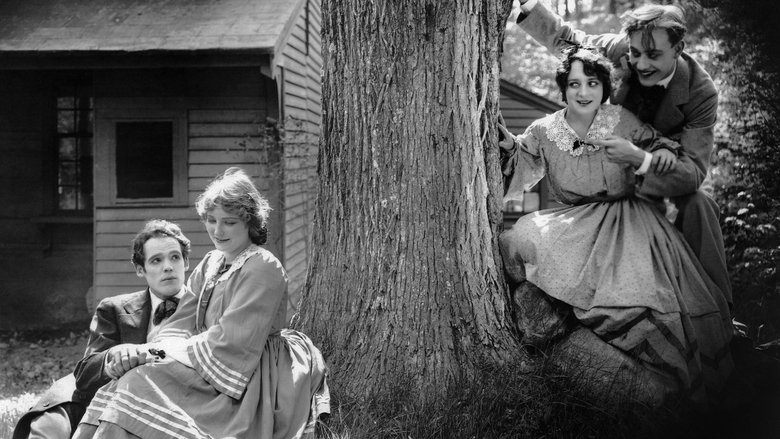
Little Women (1918)
Four sisters come of age in America in the aftermath of the Civil War.
Matija Gubec (1919)
Movie adaptation of the history novel by August Senoa, about Matija Gubec, the leader of peasant revolt of 1573.
Indian Summer (1913)
A Confederate soldier battles with amnesia, vagrants, and tramps as he makes his way back home and to his sweetheart, Virginia.
The Angel of Contention (1914)
Nettie is beloved by all the boys in the mining camp. Magoon, a big, jovial miner, loves her most of all, however, and asks her to become his wife. Nettie is in love with Colter, a young Easterner, and though it pains her to do so, tells Magoon of the fact. Magoon leaves town to become sheriff of the adjoining county. A murder is committed in the mining camp, and Colter is unjustly accused. Nettie rescues him from jail and sends him to Magoon. The sheriff with admirable self-sacrifice hides his rival, and, when the posse arrives, points out what Nettie has done for the boys of the mining camp. Colter is released, and all the boys escort him back to Nettie.
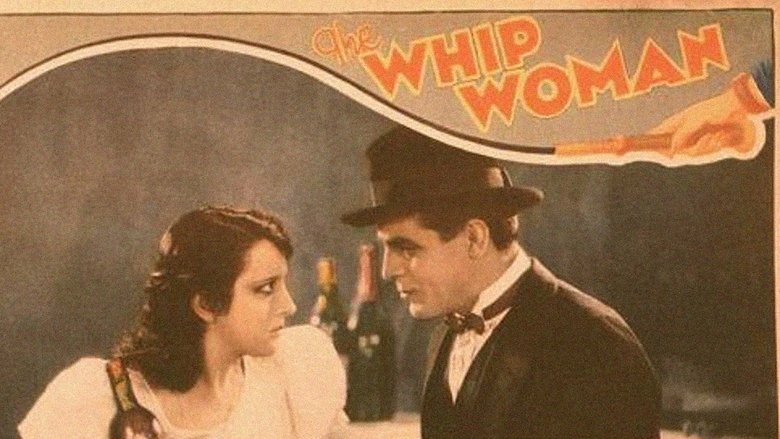
The Whip Woman (1928)
A different kind of a story about a different kind of a girl---a modern, young cavewoman who whipped her way into the heart of a man who wanted to forget about love!
His Lesson (1915)
This shows the regeneration of a gang leader, who remains true to his first sweetheart after his change of fortune.
Wallflowers (1928)
Sandra and her sister Dody (Theodora) leave the Virginia countryside to join Washington's social set. Dody determines to marry wealth, while Sandra wants romance. Both girls' fortunes are reversed when Sandra falls in love with wealthy Rufus Fisk, whose stepmother threatens to cut him off if he marries her. Dody loves Gale Markham, an ex-soldier, once wealthy, in whom the beautiful Stephanie Moore also takes an interest. Gale returns Dody's affection, but he is reluctant to propose marriage because of his depleted finances. Both girls find happiness when Rufus sacrifices his wealth for Sandra, and Dody her desire to marry money for Gale.
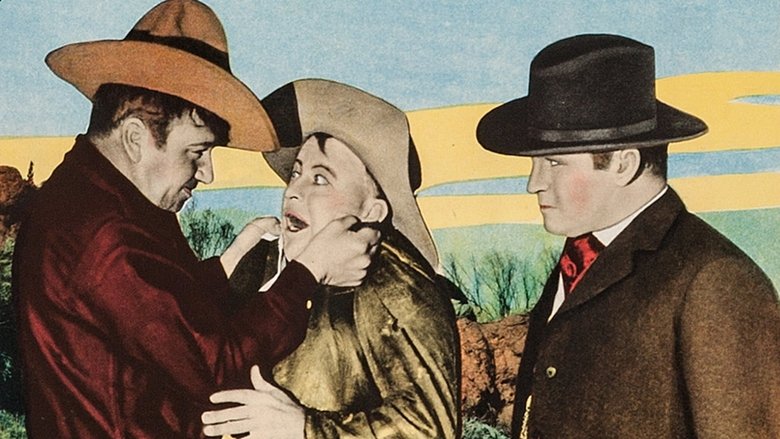
Stairs of Sand (1929)
An outlaw with a Heart of Gold sacrificing his own life for the happiness of two young people in love.
The Callbox Mystery (1932)
The Callbox Mystery (1932) is a British quota quickie crime film about a detective investigating murders linked to a mysterious callbox, likely involving suspects from a will, with a newspaper woman assisting and uncovering deeper secrets behind the apparent financial motives.

The Golem (1915)
This mostly lost film is often confused with director Paul Wegener third and readily available interpretation of the legend; Der Golem, wie er in die Welt kam (1920). In this version of the golem legend, the golem, a clay statue brought to life by Rabbi Loew in 16th century Prague to save the Jews from the ongoing brutal persecution by the city's rulers, is found in the rubble of an old synagogue in the 20th century. Brought to life by an antique dealer, the golem is used as a menial servant. Eventually falling in love with the dealer's wife, it goes on a murderous rampage when its love for her goes unanswered.