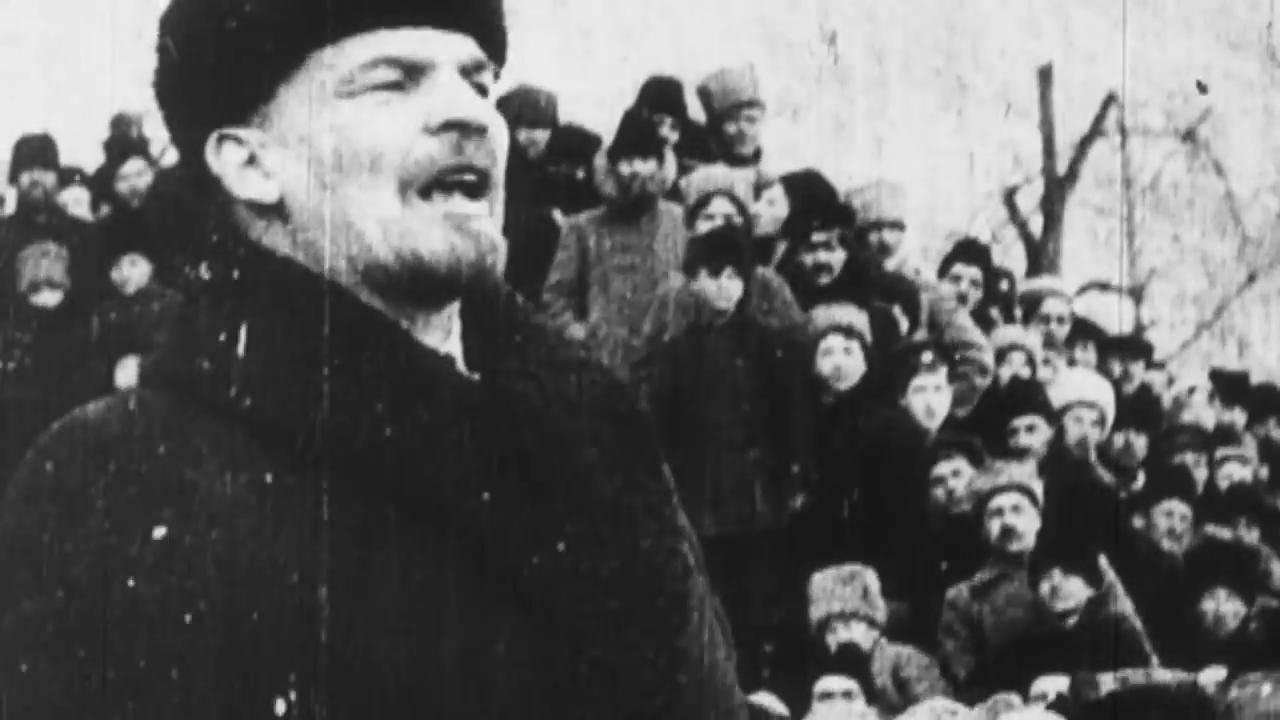
Tsar to Lenin (1937)
A documentary film account of the Russian Revolution, based on archival footage.
A documentary film account of the Russian Revolution, based on archival footage.
 Max EastmanNarrator
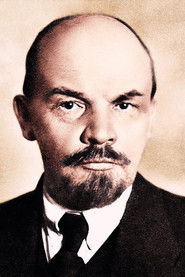 Vladimir LeninSelf (archive footage)
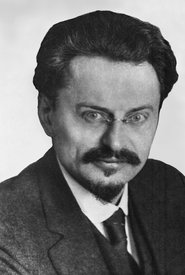 Leon TrotskySelf (archive footage)Alexander KerenskySelf (archive footage)
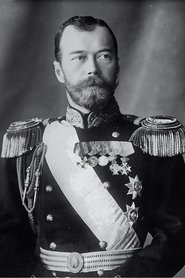 Czar Nicholas II of RussiaSelf (archive footage)
On June 5, 1989, one day after Chinese troops expelled thousands of demonstrators from Tiananmen Square in Beijing, a solitary, unarmed protester stood his ground before a column of tanks advancing down the Avenue of Eternal Peace. Captured by Western photographers watching nearby, this extraordinary confrontation became an icon of the fight for freedom around the world. FRONTLINE investigates the mystery of the tank man — his identity, his fate, and his significance for the Chinese leadership.
Documentary about the ten days the director spent in Moscow, during the 1986 Moscow Youth Festival, as kind of a gay delegate.
Moscow, January 1948. In the bitter cold, a large crowd attends the State Funeral of the Yiddish actor and director Solomon Mikhoels. An official proclamation mourns the death of "a great People's Artist of the Soviet Union." What people are really mourning is the death of the most popular Jewish theater in the Soviet Union, and the man who kept it alive against all odds for over 20 years. No doubt many suspected the truth: he had just been assassinated by Stalin's secret police.
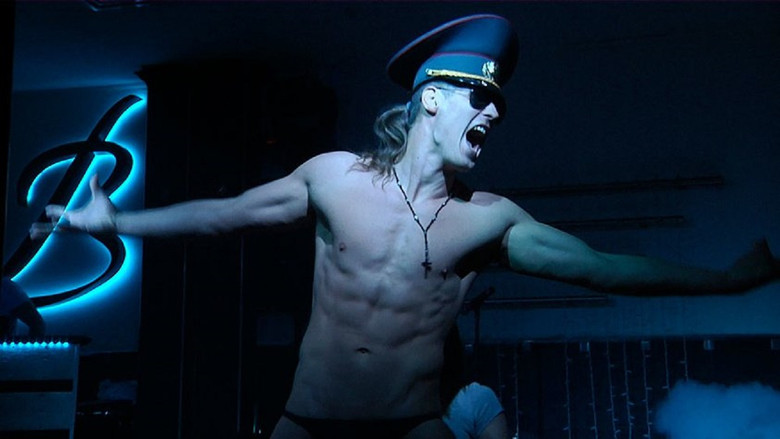
The film tells the story of a small family, consisting of a grandfather retired from the army, and his stripper grandson. It is not just a story of a relationship, but rather a reflection of entire Belarus and the post-Soviet, pro-Russian world. Moreover, it's a universally-recognized reflection of a generation gap.
In the summer of 1989 tens of thousands of tourists from communist East Germany came to Hungary. They were deeply disillusioned because they felt they had no future in East Germany. There was no freedom, no choice in the shops, salaries were low and they could not travel except to Eastern Europe. They wanted to go to a prosperous and free West Germany but they could not get passports, so they hoped that by travelling through Hungary, the least suppressed country of the Soviet Block, they could cross the Iron Curtain into Austria and then travel on into West Germany. For them the Hungary of twenty years ago was the new east-west passage. Written by Czes
The life of a female weaver is thrown onto the socio-political canvas of pre-war and post-war communist Poland through the use of expressive allegorical and symbolic imagery in this imaginative take on the documentary form.
With unprecedented access, this documentary looks into the hidden world of one of Russia's most impenetrable and remote institutions - a maximum security prison exclusively for murderers. Deep inside the land of the gulags, this is the end of the line for some of Russia's most dangerous criminals - 260 men who have collectively killed nearly 800 people. The film delves deep into the mind and soul of some of these prisoners. In brutally frank and uncensored interviews the inmates speak of their crimes, life and death, redemption and remorselessness, insanity and hope. The film tracks them though their unrelenting days over several months, lifting the veil on one of Russia's most secretive subcultures to reveal what happens when a man is locked up in a tiny cell for 23 hours every day, for life. A startling insight into inscrutable minds and the forbidding world they have been condemned to. (Storyville)
This FitzPatrick Miniature visits the Union of Soviet Socialist Republics (USSR), the largest geographically unbroken political unit in the world, covering one-sixth of the world's land mass.

Michael Moore's view on how the Bush administration allegedly used the tragic events on 9/11 to push forward its agenda for unjust wars in Afghanistan and Iraq.
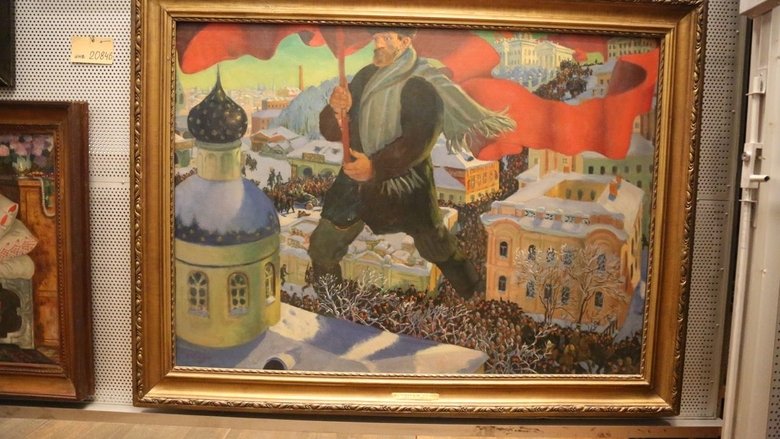
Drawing on the collections of major Russian institutions, contributions from contemporary artists, curators and performers and personal testimony from the descendants of those involved, the film brings the artists of the Russian Avant-Garde to life. It tells the stories of artists like Chagall, Kandinsky and Malevich - pioneers who flourished in response to the challenge of building a new art for a new world, only to be broken by implacable authority after 15 short years and silenced by Stalin's Socialist Realism.
Filmmakers Laura Mulvey and Mark Lewis use rare archival footage and interviews with artists, art historians, and museum directors to examine the fate of Soviet-era monuments during successive political regimes, from the Russian Revolution through the collapse of communism. Mulvey and Lewis highlight both the social relevance of these relics and the cyclical nature of history. Broadcast on Channel Four as part of the 'Global Image' series (1992-1994).
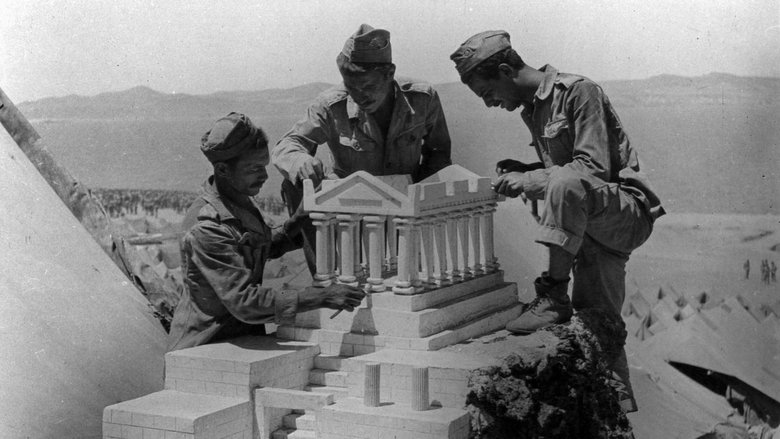
Between 1947 and 1951, more than 80 000 Greek men, women and children were deported to the isle of Makronissos (Greece) in reeducation camps created to ‘fight the spread of Communism’. Among those exiles were a number of writers and poets, including Yannis Ritsos and Tassos Livaditis. Despite the deprivation and torture, they managed to write poems which describe the struggle for survival in this world of internment. These texts, some of them buried in the camps, were later found. «Like Lions of stone at the gateway of night» blends these poetic writings with the reeducation propaganda speeches constantly piped through the camps’ loudspeakers. Long tracking shots take us on a trance-like journey through the camp ruins, interrupted along the way by segments from photographic archives. A cinematic essay, which revives the memory of forgotten ruins and a battle lost.
The band OK Go gives viewers a look at the behind-the-scenes work -- and 21 flights -- that went into filming their famous zero-gravity music video.
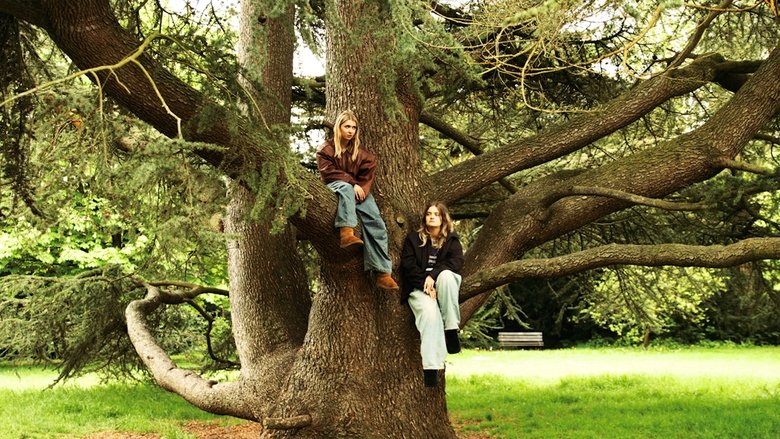
A Experimental Docu-Drama about the Red Army Faction's formation, and events leading up to their imprisonment and death, from 1970 to 1977.
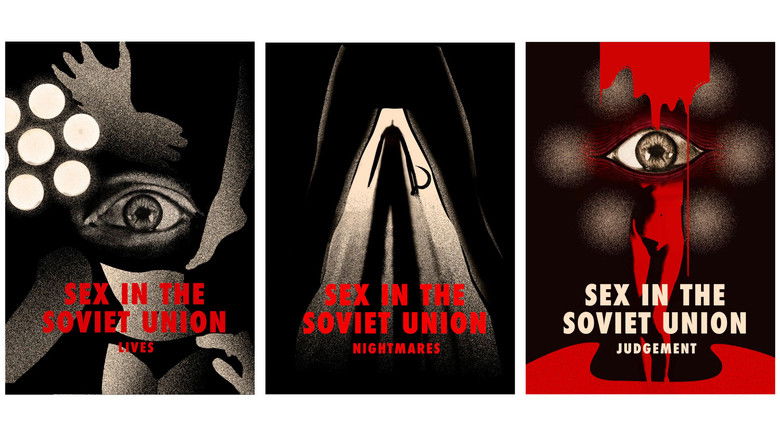
A gripping journey through seven decades of sexual ignorance, oppression, and suffering, brought to life through the words and experiences of the first Soviet sexologist. Ukrainian survivors of the regime courageously recount the harsh realities they endured, from the pervasive suppression of sexual expression to the rampant exploitation and abuse that plagued Soviet society.
Hitler's invasion of Russia was one of the landmark events of World War II. This documentary reveals the lead-up to the offensive, its impact on the war and the brinksmanship that resulted from the battle for Moscow. Rare footage from both German and Russian archives and detailed maps illustrate the conflict, while award-winning historian and author John Erickson provides insight into the pivotal maneuvers on the eastern front.
A documentary on the late American entertainer Dean Reed, who became a huge star in East Germany after settling there in 1973.
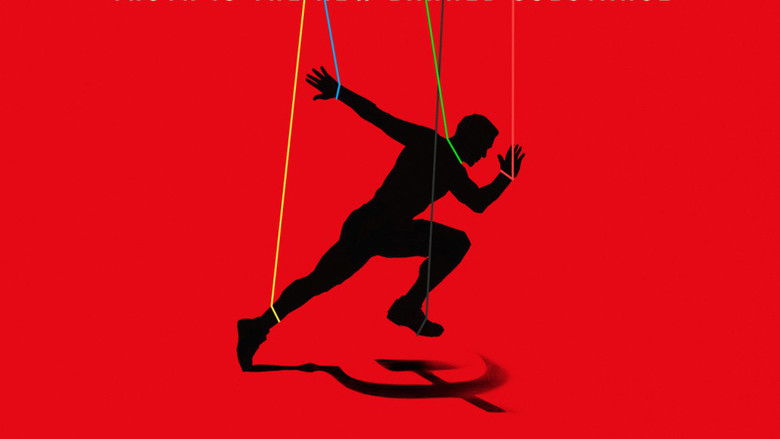
While investigating the furtive world of illegal doping in sports, director Bryan Fogel connects with renegade Russian scientist Dr. Grigory Rodchenkov—a pillar of his country’s “anti-doping” program. Over dozens of Skype calls, urine samples, and badly administered hormone injections, Fogel and Rodchenkov grow closer despite shocking allegations that place Rodchenkov at the center of Russia’s state-sponsored Olympic doping program.