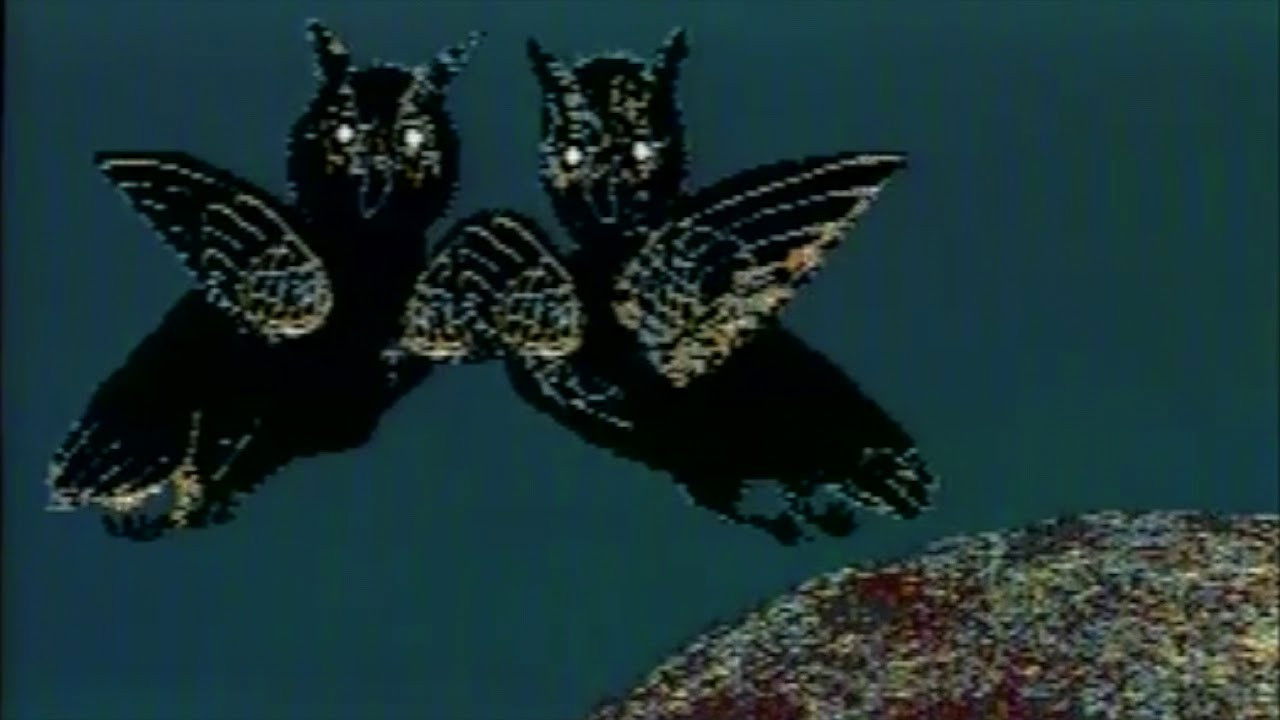
Theory of Sets (1991)
Made entirely on Roger Wagner's HyperStudio software, Chris Marker explores set theory, using Noah's Ark as an example.
Made entirely on Roger Wagner's HyperStudio software, Chris Marker explores set theory, using Noah's Ark as an example.

Children and parents alike will love this captivating and charming version of the story of Noah's ark and the great flood, uniquely told from the animals' point of view. Vincent, a friendly young koala, tells others about his portentous dream that a dangerous flood is coming. When they only laugh at him in response, we see that in the animal kingdom there is much of the same cruelty and thoughtlessness that plagues humankind. But when Vincent finds Noah building his ark, he discovers new proof that his dream may come true!
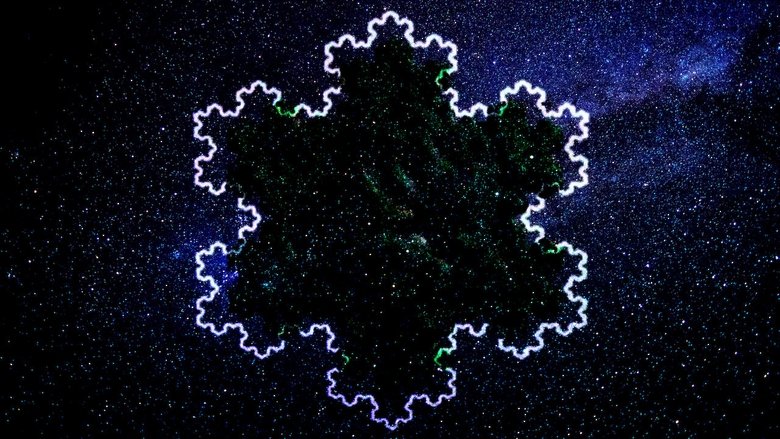
Until recently geometry was 'cold', incapable of describing the irregular shape of a cloud, the slope of a mountain or the beauty of the human body. With fractal geometry, Benoit Mandelbrot gave us a language for our natural world. In this captivating documentary, the man himself explains this groundbreaking discovery.
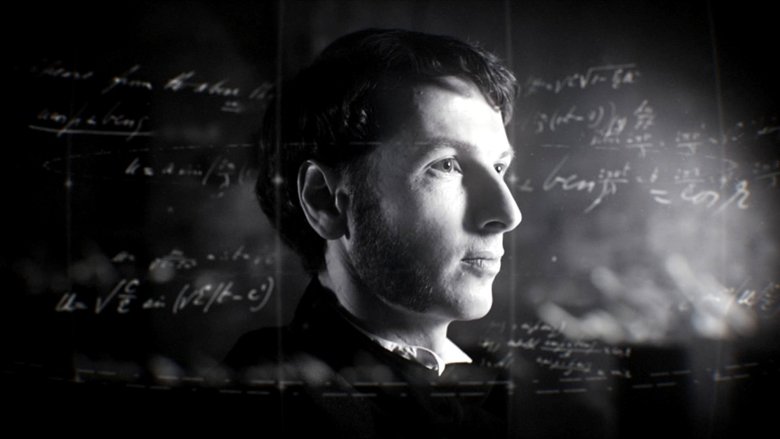
Narrated by Oscar-winning actor Jeremy Irons, The Genius of George Boole assembles academics and industry leaders from across the globe to explore the life and importance of one of the world’s greatest unsung heroes.
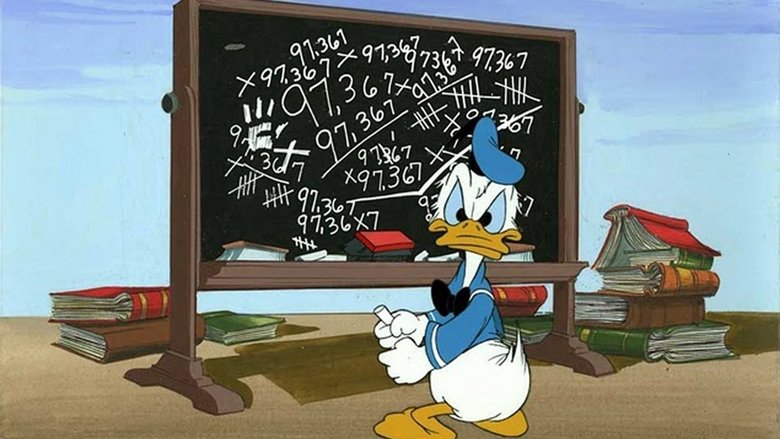
Disney used animation here to explain through this wonderful adventure of Donald how mathematics can be useful in our real life. Through this journey Donald shows us how mathematics are not just numbers and charts, but magical living things.
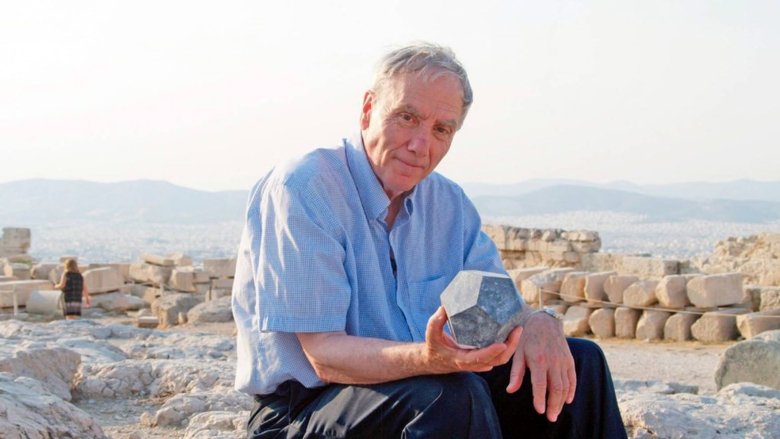
NOVA leads viewers on a mathematical mystery tour -- a provocative exploration of math's astonishing power across the centuries. We discover math's signature in the swirl of a nautilus shell, the whirlpool of a galaxy and the spiral in the center of a sunflower. Math was essential to everything from the first wireless radio transmissions to the prediction and discovery of the Higgs boson and the successful landing of rovers on Mars. But where does math get its power? Astrophysicist and writer Mario Livio, along with a colorful cast of mathematicians, physicists and engineers, follows math from Pythagoras to Einstein and beyond, all leading to the ultimate riddle: Is math an invention or a discovery? Humankind's clever trick or the language of the universe?

Exploring the murky and fast-paced world of the hackers out to steal money and identities and wreak havoc with people's online lives, and the scientists who are joining forces to help defeat them.

Animated work detailing the unrequited love that a line has for a dot, and the heartbreak that results due to the dot's feelings for a lively squiggle.
An attempt to visualize a secret knowledge about the nature of man —a philo-clip—, through the use of structures of dissociated geometry and laser beams, with direct references to the Renaissance, Leonardo da Vinci and the work of Agrippa von Nettesheim.

Have you ever wanted to make a million dollars? Marvelosissimo the Mathematical Magician is ready, willing, and able to explain the nuts and bolts -- as well as the mystery and wonder -- of earning money, investing it, accruing dividends and interest, and watching savings grow. Hey, you never know! An ALA Notable Book A Horn Book Fanfare Selection A School Library Journal Best Book of the Year A Teachers' Choices Selection
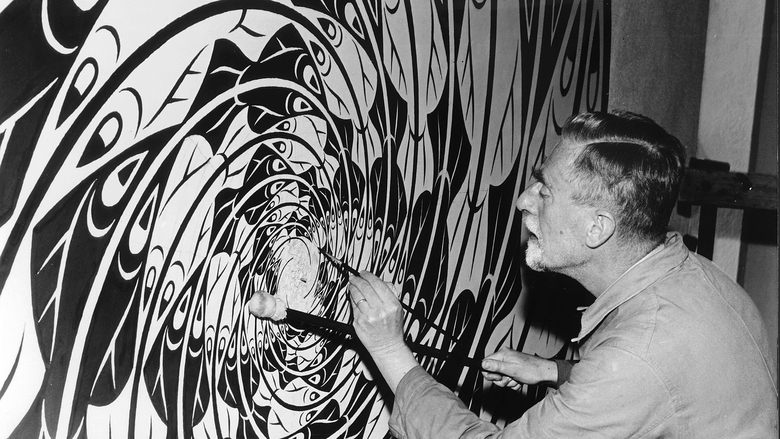
A portrait of the visionary Dutch artist M. C. Escher (1898-1972), according to his own words, taken from his diary, his correspondence and the texts of his lectures.

The computer animation Outside In explains the amazing discovery, made by Steve Smale in 1957, that a sphere can be turned inside out by means of smooth motions and self-intersections. Through a combination of dialogue and exposition accessible to anyone who has some interest in mathematics, Outside In builds up to the grand finale: Bill Thurston's "corrugations" method of turning the sphere inside out.
One of a humorous series of films devised to explain in graphic terms the concepts of basic mathematical functions.
With the help of Marvelosissimo the Mathematical Magician, the concepts of a million, a billion and a trillion are not so quite so intimidating.
A short, animated film based on Edwin Abbott's 1884 satirical novella, Flatland: A Romance of Many Dimensions.
The story of how, in 1914, the self-taught Indian mathematical genius SRINIVASA RAMANUJAN came to England and Trinity College, Cambridge, to work with the great British pure mathematician GH Hardy.
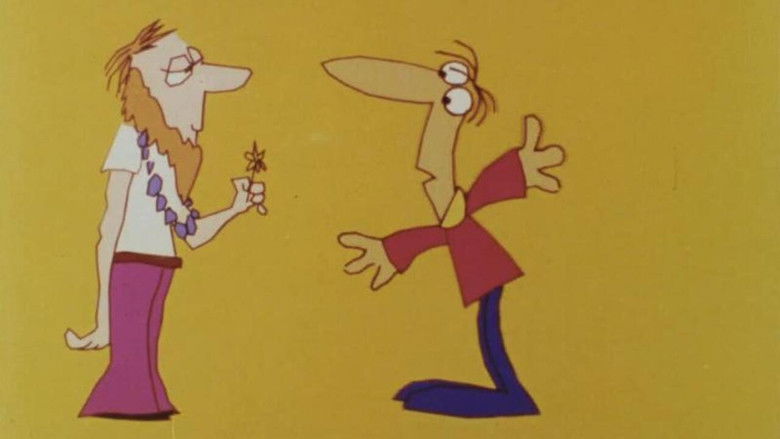
The salutary tale of a genius mathematician who discovers that mankind is heading for environmental disaster. Ignored by all, he sets out to prove it — however the proof, represented by “a little black box”, is taken up by those previous doubters and exploited.

In an age when genius is a mere commodity, it is useful to look at a person who led a rich life without the traditional trappings of success. A man with no home and no job, Paul Erdös was the most prolific mathematician who ever lived. Born in Hungary in 1913, Erdös wrote and co-authored over 1,500 papers and pioneered several fields in theoretical mathematics. At the age of 83 he still spent most of his time on the road, going from math meeting to math meeting, continually working on problems. He died on September 20, 1996 while attending such a meeting in Warsaw, Poland.

Filmed in Canada, Iran, and the United States, Secrets of the Surface: The Mathematical Vision of Maryam Mirzakhani examines the life and mathematical work of Maryam Mirzakhani, an Iranian immigrant to the United States who became a superstar in her field. In 2014, she was both the first woman and the first Iranian to be honored by mathematics' highest prize, the Fields Medal. Mirzakhani's contributions are explained by leading mathematicians and illustrated by animated sequences. Her mathematical colleagues from around the world, as well as former teachers, classmates, and students in Iran today, convey the deep impact of her achievements. The path of her education, success on Iran's Math Olympiad team, and her brilliant work, make Mirzakhani an ideal role model for girls looking toward careers in science and mathematics. Written by George Csicsery
A humor-inflected history of the of the number one, covering military applications in ancient Rome, the measurement of distances in India, and the decimal system created by Leibnitz.