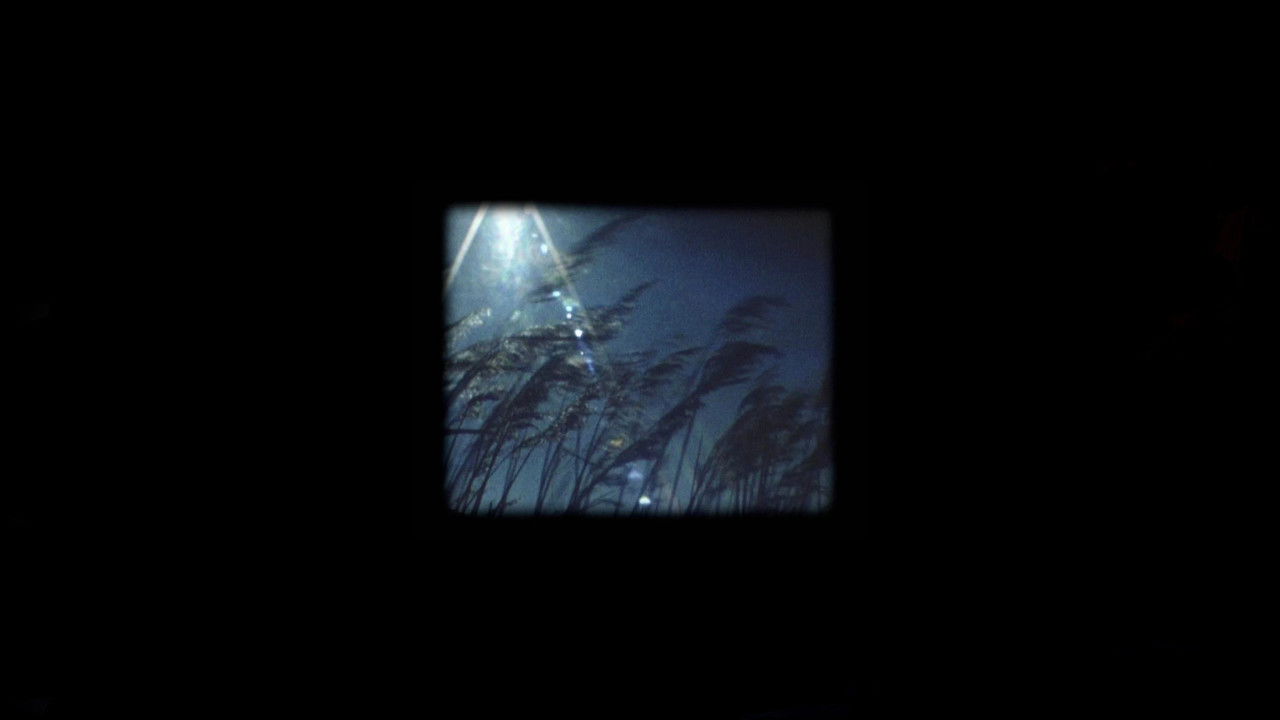
The Dreamed Films (2010)
Belgian filmmaker Eric Pauwels' meditation on dream, travel and film.
Belgian filmmaker Eric Pauwels' meditation on dream, travel and film.
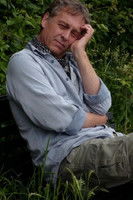 Eric PauwelsSelf/Narrator
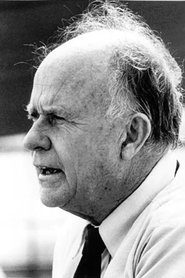 Jean RouchSelf
 Gaspard PauwelsSelf
 Oscar van SlijpeSelf
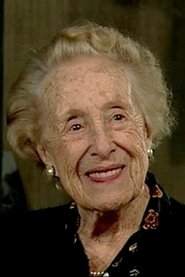 Germaine DieterlenSelfBoris LehmanStany DefizeIlse GhekiereReinhart CosaertOliver Dekegel
Riding Giants is story about big wave surfers who have become heroes and legends in their sport. Directed by the skateboard guru Stacy Peralta.
Warsaw's Central Railway Station. 'Someone has fallen asleep, someone's waiting for somebody else. Maybe they'll come, maybe they won't. The film is about people looking for something.
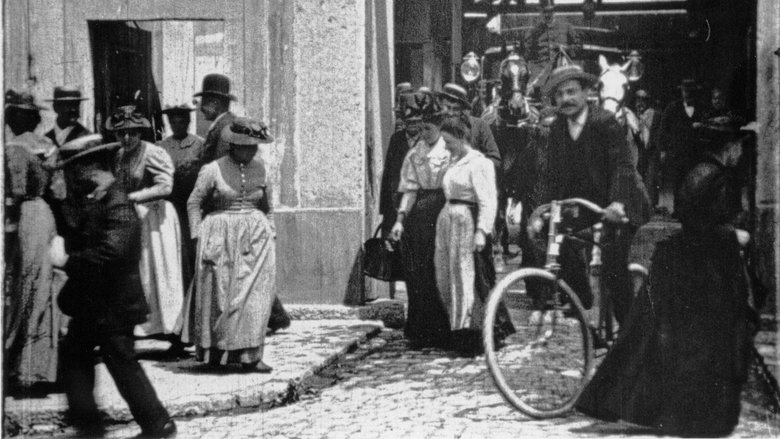
Working men and women leave through the main gate of the Lumière factory in Lyon, France. Filmed on 22 March 1895, it is often referred to as the first real motion picture ever made, although Louis Le Prince's 1888 Roundhay Garden Scene pre-dated it by seven years. Three separate versions of this film exist, which differ from one another in numerous ways. The first version features a carriage drawn by one horse, while in the second version the carriage is drawn by two horses, and there is no carriage at all in the third version. The clothing style is also different between the three versions, demonstrating the different seasons in which each was filmed. This film was made in the 35 mm format with an aspect ratio of 1.33:1, and at a speed of 16 frames per second. At that rate, the 17 meters of film length provided a duration of 46 seconds, holding a total of 800 frames.
When Francois Truffaut approached Alfred Hitchcock in 1962 with the idea of having a long conversation with him about his work and publishing this in book form, he didn't imagine that more than four years would pass before Le Cinéma selon Hitchcock finally appeared in 1966. Not only in France but all over the world, Truffaut's Hitchcock interview developed over the years into a standard bible of film literature. In 1983, three years after Hitchcock's death, Truffaut decided to expand his by now legendary book to include a concluding chapter and have it published as the "Edition définitive". This film describes the genesis of the "Hitchbook" and throws light on the strange friendship between two completely different men. The centrepieces are the extracts from the original sound recordings of the interview with the voices of Alfred Hitchcock, Francois Truffaut, and Helen Scott – recordings which have never been heard in public before.
A tribute to the late, great French director Francois Truffaut, this documentary was undoubtedly named after his last movie, Vivement Dimanche!, released in 1983. Included in this overview of Truffaut's contribution to filmmaking are clips from 14 of his movies arranged according to the themes he favored. These include childhood, literature, the cinema itself, romance, marriage, and death.

A look at the life and work of Christina Lindberg, the most famous Swedish model of the 1970s and star of exploitation cinema.
Journey with the musicians of the Berlin Philharmonic and their conductor Sir Simon Rattle on a breakneck concert tour of six metropolises across Asia: Beijing, Seoul, Shanghai, Hong Kong, Taipei and Tokyo. Their artistic triumph onstage belies a dynamic and dramatic life backstage. The orchestra is a closed society that observes its own laws and traditions, and in the words of one of its musicians is, “an island, a democratic microcosm – almost without precedent in the music world - whose social structure and cohesion is not only founded on a common love for music but also informed by competition, compulsion and the pressure to perform to a high pitch of excellence... .” Never before has the Berlin Philharmonic allowed such intimate and exclusive access into its private world.
This Traveltalk series short celebrates the beauty of Yosemite National Park. Besides the majestic mountains, we see Bridal Veil Falls and a giant sequoia with a road cut through its trunk. Tourist activities, including horseback riding and fishing, are also highlighted.
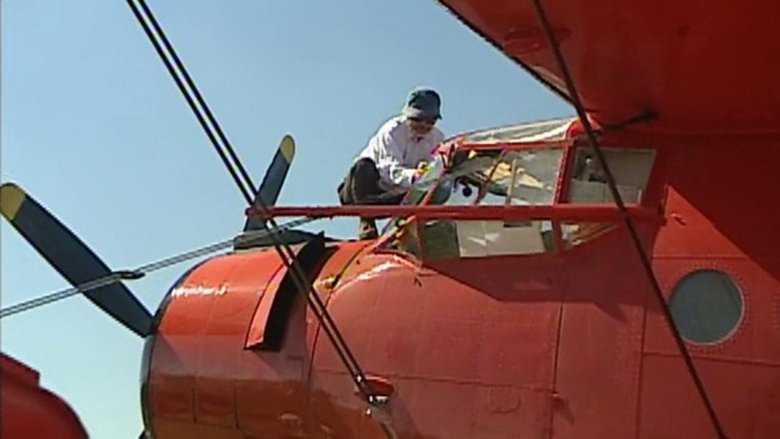
A documentary film starring Hayao Miyazaki as he follows in the footsteps of Antoine de Saint-Exupéry.
Join Megan McCormick on a journey of discovery across Japan's spectacular heartland starting in Japan's beautiful former capital Kyoto. She explores Buddhist temples, World Heritage Sites, and bargains at the city's best flea market. She then travels to Osaka, and Iga-Ueno, a former ninja stronghold, where she learns the secrets of these famously skilled assailants. She also visits the remote Sado Island and Himeji.

A film-within-the-film scenario involving a cameraman who's given a week to photograph the aerial highlights of Holland for a travelogue.
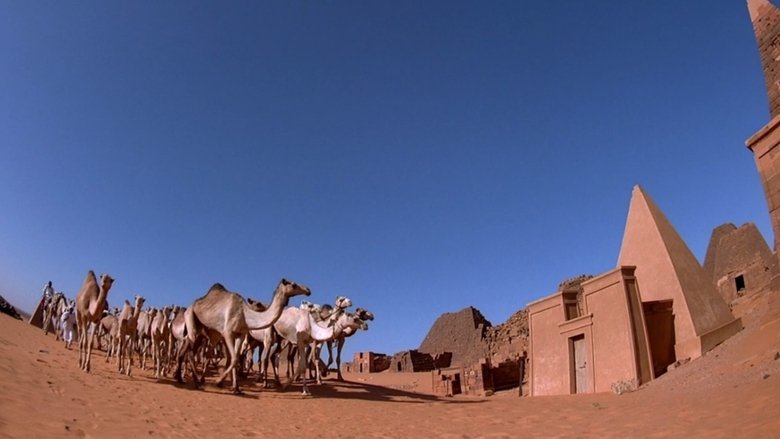
Filmed in IMAX, a team of explorers led by Pasquale Scaturro and Gordon Brown face seemingly insurmountable challenges as they make their way along all 3,260 miles of the world's longest and deadliest river to become the first in history to complete a full descent of the Blue Nile from source to sea.
In this ultimate guide to Scandinavia travelers Megan McCormick, Ian Wright and Neil Gibson explore Denmark, Sweden, Norway, Lapland, Finland and the Baltic States. From enjoying a traditional Viking festival to crossing the Arctic Circle into Lapland for dinner with reindeer herders to a visit to the capital of Lithuania, Vilinus, and the Midsummer Night Festival in Kernave, these hosts will introduce the viewer to a variety of sites and attractions during their Scandinavian tour.
Hello London is a 1958 documentary film starring Sonja Henie and Michael Wilding.
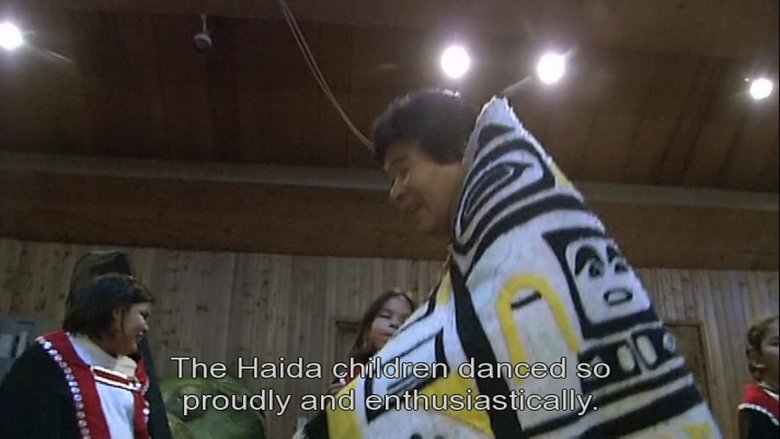
A documentary film following Isao Takahata to Canada to meet Frédéric Back.
Kintaro Walks Japan is a documentary film produced and directed by Tyler MacNiven. It is an account of MacNiven's journey walking and backpacking the entire length of Japan from Kyūshū to Hokkaidō, more than 2000 miles in 145 days.
British Comedian Dave Gorman travels across America without supporting the 'Man'. In other words, no Holiday Inns, no Best Westerns and no Comfort Suites. No Shells, no Arcos and no BP gas stations. No MacDonalds, no Starbucks and no chains of any kind. Just Mom & Pop business all the way.
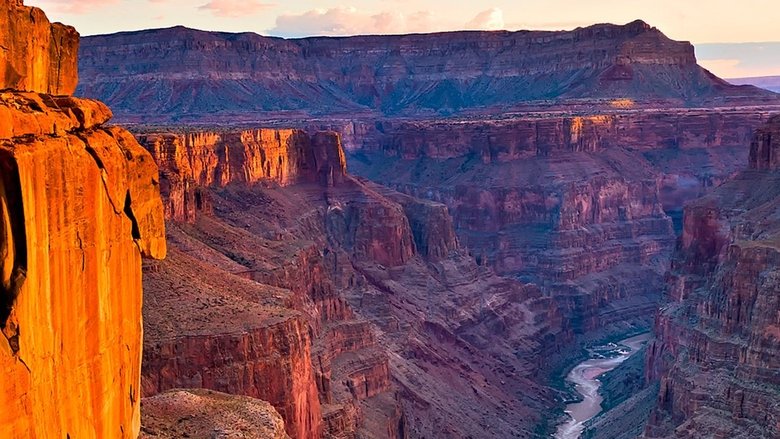
In this spectacular exploration you'll take a journey through the 4,000-year history of mankind's relationship with the Grand Canyon. Discover the earliest inhabitants of the Canyon whose lives are still shrouded in mystery. Travel with Spanish explorers as they become the first Europeans to uncover the Canyon's awesome beauty. Ride along in the re-enactment of US explorer John Wesley Powell's expedition down the raging Colorado River, when nine crew members risk their lives to become the first to travel the length of the Canyon by boat. Grand Canyon: The Hidden Secrets will take you into the rarely visited side canyons filled with hidden waterfalls and unusual wildlife. Experience the Canyon as never before: soaring over the rim and flying through some of the most inspiring scenery on Earth.