
Jesus Was a Commie (2011)
Jesus Was a Commie presents modern society with questions and leads the audience on a dialectical journey. The film challenges the viewer to seek their own answers and personal truths.
Jesus Was a Commie presents modern society with questions and leads the audience on a dialectical journey. The film challenges the viewer to seek their own answers and personal truths.
 Matthew ModineHimself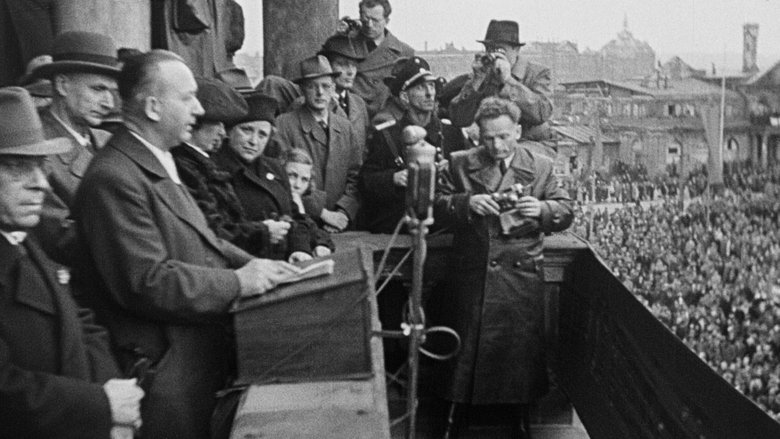
Documentary about the merging of the Communist Party of Germany and the Socialist Unity Party of Germany in the Soviet occupation zone, a merger that would lead to the creation of the Socialist Unity Party that would rule the soon-to-be-created East Germany until 1989.
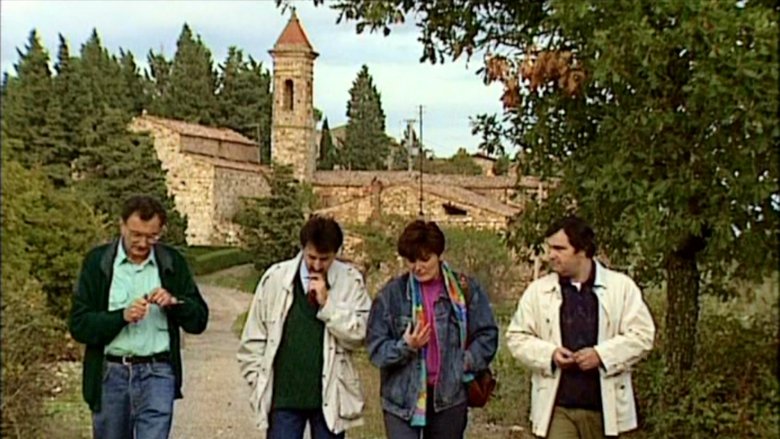
Fabiana, Carlo, Claudio and Vincenzo… I met them in 1982 in Mercatale, their village in Tuscany, near Florence. They were aged between 25 and 45 and were cheerful militants in the Italian Communist Party, that strange party which has made its mark on history and which was both a school and a family for them. I have filmed in Mercatale every two or three years for over 20 years (1982/2004). The fi lm takes the “long view” of their political and personal development against the backdrop of village life. Stories with both human and political interest spanning over a quarter of a century with relevance for present day issues: what has become of the plans to change the world in Berlusconi’s Italy? From a more global perspective: what else can politics do? When the time comes to take stock the paths of their rich and varied personal lives cross once more with all their doubts and allegiances.
Xu Xin’s film “Dao Lu” (China 2012) offers an exclusive “in camera” encounter with Zheng Yan, an 83 year-old veteran of the Chinese Red Army, who calmly relates how he has navigated his country’s turbulent history over three-quarters of a century.Born to a wealthy family in a foreign concession, Yan joined the Chinese Communist Party (CCP) in 1941 because he sincerely believed in the socialist project, and in its immediate capacity to free China from the Japanese yoke and eradicate deep-rooted corruption.
Going to the very heart of the Bible's most challenging Book, this one hour documentary decodes the visions of Revelation 12 and 17 for everyone to understand. Journeying from the birth of Christ through the Christian era, this amazing video pulls aside the veil of hidden history to reveal the rise of Babylon, the persecution of the bride of Christ, and the real-world identity of the beast. Educational and inspiring, Revelation delivers the keys to understanding the epic conflict between Christ and Satan and what it means for your life today.
Procreation is the social duty of all fertile women, was the political thinking during the 1960s and 1970s in Romania. In 1966, Ceaucescu issued Decree 770, in which he forbade abortion for all women unless they were over forty or were already taking care of four children. All forms of contraception were totally banned. The New Romanian Man was born. By 1969, the country had a million babies more than the previous average. Romanian society was rapidly changing. By using very interesting archival footage and excerpts from old fiction films and by interviewing famous personalities from that time – gynecologists or mothers who were part of the new society - the director revives this period of tremendous oppression of personal freedom. Many deaths were caused by the mere fact that women, including wives of secret Romanian agents, famous TV presenters, and actresses, had to undergo illegal abortions. Many women were jailed for having them.
The life of a female weaver is thrown onto the socio-political canvas of pre-war and post-war communist Poland through the use of expressive allegorical and symbolic imagery in this imaginative take on the documentary form.
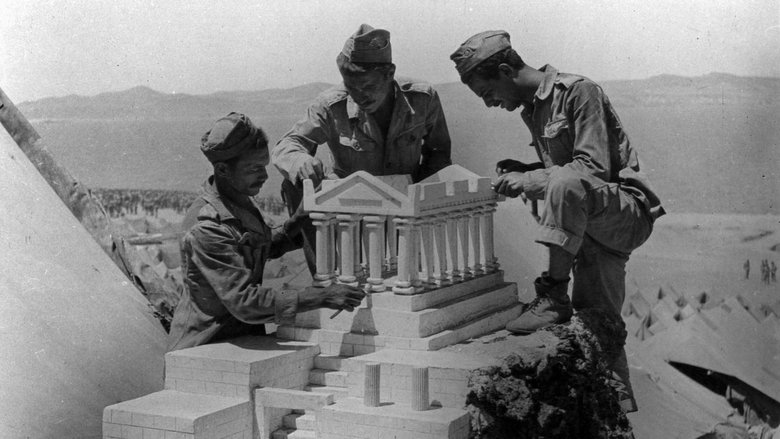
Between 1947 and 1951, more than 80 000 Greek men, women and children were deported to the isle of Makronissos (Greece) in reeducation camps created to ‘fight the spread of Communism’. Among those exiles were a number of writers and poets, including Yannis Ritsos and Tassos Livaditis. Despite the deprivation and torture, they managed to write poems which describe the struggle for survival in this world of internment. These texts, some of them buried in the camps, were later found. «Like Lions of stone at the gateway of night» blends these poetic writings with the reeducation propaganda speeches constantly piped through the camps’ loudspeakers. Long tracking shots take us on a trance-like journey through the camp ruins, interrupted along the way by segments from photographic archives. A cinematic essay, which revives the memory of forgotten ruins and a battle lost.
Based upon the Gold-Medallion award-winning best-seller, The Case for Christ documents Lee Strobel's journey from atheism to faith through his two-year investigation of the Bible and the life of Jesus Christ.
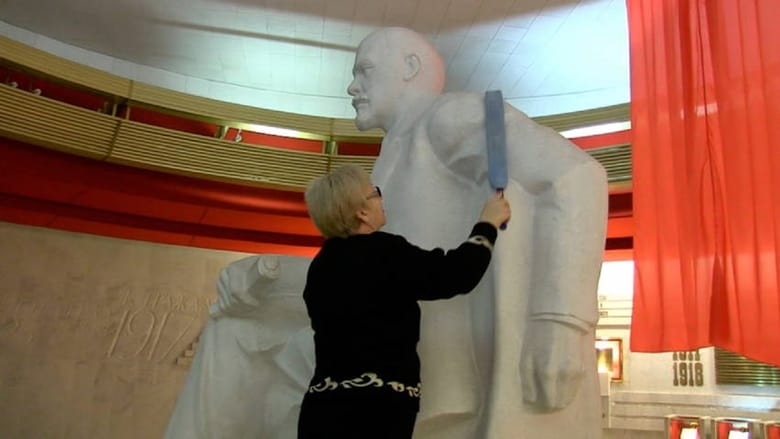
At the peak of Perestroika, in 1987, in the village of Gorki, where Lenin spent his last years, after a long construction, the last and most grandiose museum of the Leader was opened. Soon after the opening, the ideology changed, and the flow of pilgrims gradually dried up. Despite this, the museum still works and the management is looking for ways to attract visitors. Faithful to the Lenin keepers of the museum as they can resist the onset of commercialization. The film tells about the modern life of this amazing museum-reserve and its employees.
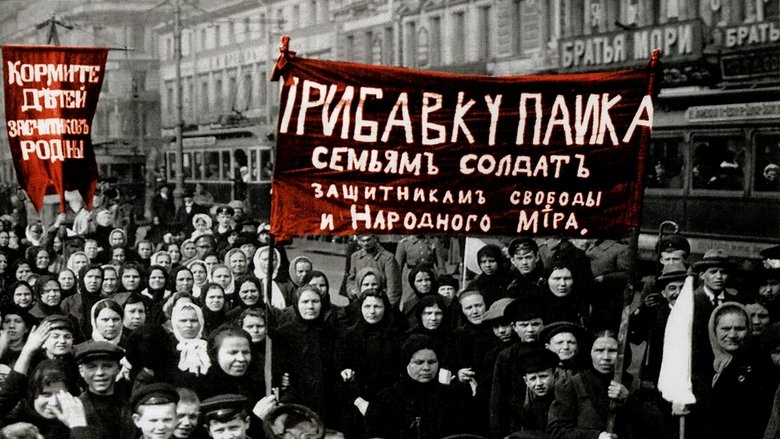
Vladimir Ilyich Ulyanov, better known as Lenin, is remembered as the instigator of the October Revolution of 1917 and, therefore, as one of the men who changed the shape of the world at that time and forever, but perhaps the actual events happened in a way different from that narrated in the history books…
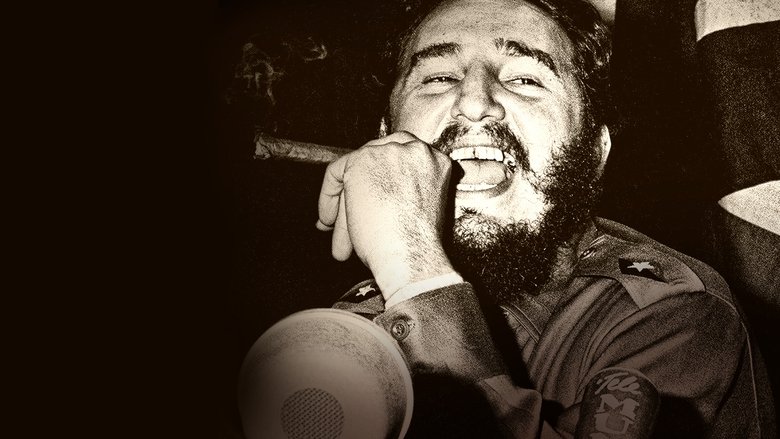
Fidel Castro employed a vast spy network that helped him remain in power.
Alex Jones interviews Walter Burien, commodity trading adviser (CTA) of 15 years about the biggest game in town. There are over 85,000 federal and regional governmental institutions: school districts, water and power authorities, county and city governments – and they own over 70 percent of the stock market.
Bosnian Croat writer Miljenko Jergović and Serbian writer Marko Vidojković replace one another by the steering wheel of Yugo, a symbol of their common past while driving on the Brotherhood and Unity Highway that stretched across five of six republics of Yugoslavia.
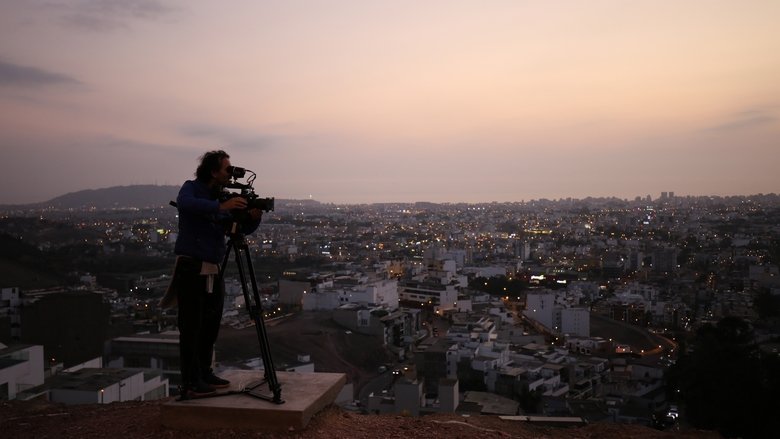
An account of the childhood and youth of the Peruvian writer Mario Vargas Llosa, Nobel Prize for Literature in 2010, and how the hard experiences he lived during these formative years led him to write and publish his first major work when he was only 26 years old.
Paul Robeson was a celebrated African-American Actor, Athlete, Singer, Writer, and Civil Rights Activist. Robeson's many achievements are chronicled in this program, ranging from playing with the NFL to graduating from Columbia Law School, performing on Broadway and in Hollywood films to founding the American Crusade against Lynching as well as Council on African Affairs. Robeson was one of the most talented performers of his time and a dedicated humanitarian who ultimately sacrificed fame and fortune for what he believed in. His association with Leftist Politics during the era of the Cold War, and frequent denouncing of American political parties led to his eventual blacklisting with other prominent writers and artists during the McCarthy Era. His talents in all areas are remarkable, and his dedication to attaining a peaceful coexistence between all the people of the world is truly admirable.
The free, almost naive view from the perspective of a child puts the "68ers" in a new, illuminating light in the anniversary year 2008. The film is a provocative reckoning with the ideological upbringing that seemed so progressive and yet was suffocated by the children's desire to finally grow up. With an ironic eye and a feuilletonistic style, author Richard David Precht and Cologne documentary film director André Schäfer trace a childhood in the West German provinces - and place the major events of those years in completely different, smaller and very private contexts.
Short biographical documentary about the life of Alfred Florstedt and his life as a progressive communist from the Weimar Republic to his death in 1985.
An account of the life and work of the Polish writer Stanisław Lem (1921-2006), a key figure in science fiction literature involved in mysteries and paradoxes that need to be enlightened.

Terrence McNally’s Corpus Christi is a play retelling the Jesus story, with Jesus as a gay man living in the 1950s in Corpus Christi, Texas. This documentary follows the troupe, playwright, and audience around the world on a five-year journey of Terrence McNally’s passion play, where voices of protest and support collide on one of the central issues facing the LGBT community: religion.