
Top billed cast
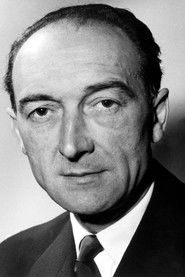 Jean VilarSelf
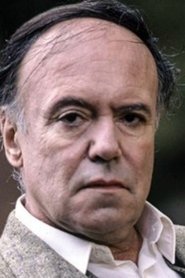 Jean TopartSelf
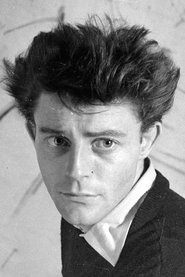 Gérard PhilipeSelf
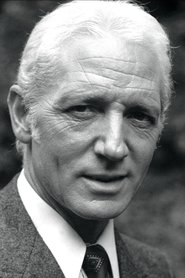 Marc CassotNarrator (voice)
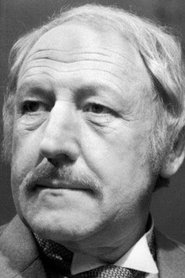 Georges WilsonSelf
 María CasaresSelf
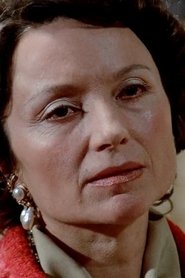 Monique ChaumetteSelf
 Silvia MonfortSelf
 Daniel SoranoSelf
Similar to Le Théâtre National Populaire
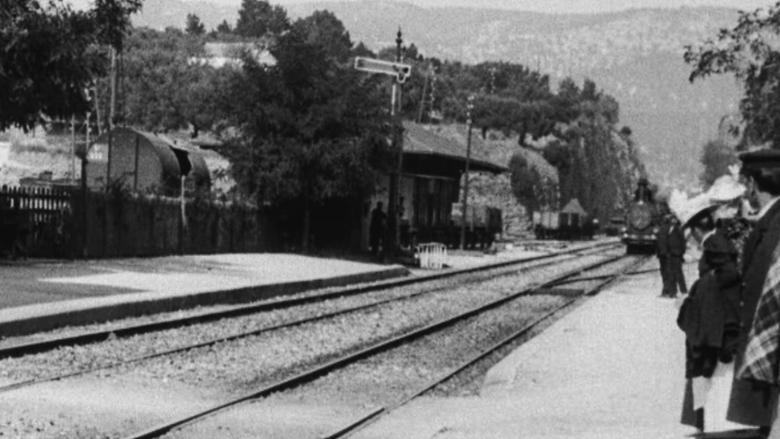
The Arrival of a Train at La Ciotat (1896)
A group of people are standing along the platform of a railway station in La Ciotat, waiting for a train. One is seen coming, at some distance, and eventually stops at the platform. Doors of the railway-cars open and attendants help passengers off and on. Popular legend has it that, when this film was shown, the first-night audience fled the café in terror, fearing being run over by the "approaching" train. This legend has since been identified as promotional embellishment, though there is evidence to suggest that people were astounded at the capabilities of the Lumières' cinématographe.
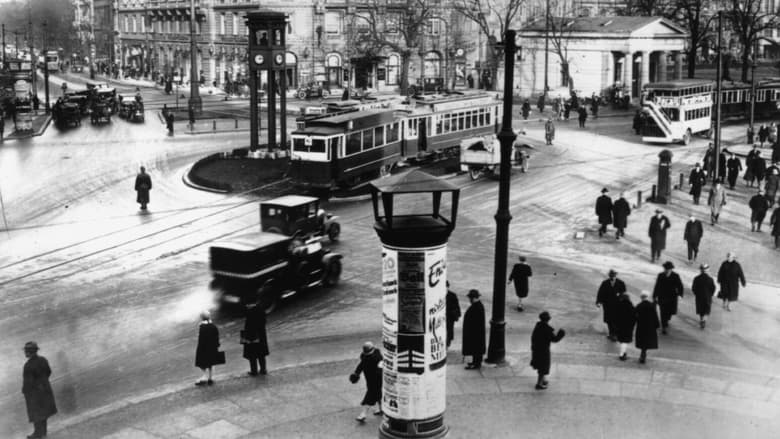
Berlin: Symphony of a Great City (1927)
A day in the city of Berlin, which experienced an industrial boom in the 1920s, and still provides an insight into the living and working conditions at that time. Germany had just recovered a little from the worst consequences of the First World War, the great economic crisis was still a few years away and Hitler was not yet an issue at the time.
Un instante en la vida ajena (2003)
Compilation of images of the amateur recordings of Madronita Andreu, Catalan intellectual of the nineteenth century, daughter of Dr. Andreu, famous for its pills and cough syrup.
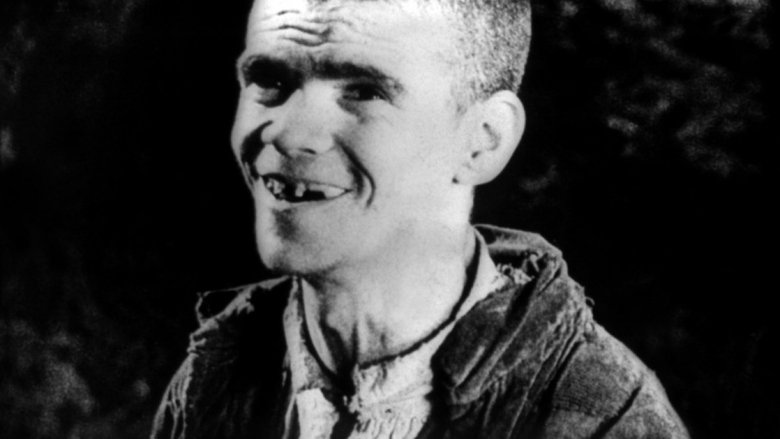
Land Without Bread (1933)
An exploration —manipulated and staged— of life in Las Hurdes, in the province of Cáceres, in Extremadura, Spain, as it was in 1932. Insalubrity, misery and lack of opportunities provoke the emigration of young people and the solitude of those who remain in the desolation of one of the poorest and least developed Spanish regions at that time.
Captain Blood: A Swashbuckler Is Born (2005)
This documentary is featured on the DVD for Captain Blood (1935), released in 2005.
Chaplin Today: 'City Lights' (2003)
In 1928, as the talkies threw the film industry and film language into turmoil, Chaplin decided that his Tramp character would not be heard. City Lights would not be a talking picture, but it would have a soundtrack. Chaplin personally composed a musical score and sound effects for the picture. With Peter Lord, the famous co-creator of Chicken Run and Wallace & Gromit, we see how Chaplin became the king of slapstick comedy and the superstar of the movies.

Isabella (2015)
This film aims to capture the stories of the aging Isabella, but also captures her condition and loss of cohesiveness as she loses herself into dementia and Parkinson's. It is also a very personal film since the subject is the grandmother of one of the co- directors. The idea is interesting as it links one strong clear memory, told several times, to other fragments and truths of her condition. Animation is sparingly but cleverly used to complement the delivery and avoid it just being a talking head.
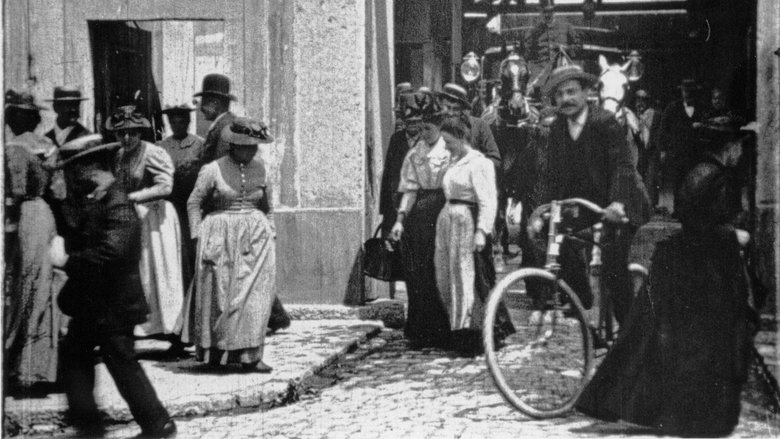
Workers Leaving the Lumière Factory (1895)
Working men and women leave through the main gate of the Lumière factory in Lyon, France. Filmed on 22 March 1895, it is often referred to as the first real motion picture ever made, although Louis Le Prince's 1888 Roundhay Garden Scene pre-dated it by seven years. Three separate versions of this film exist, which differ from one another in numerous ways. The first version features a carriage drawn by one horse, while in the second version the carriage is drawn by two horses, and there is no carriage at all in the third version. The clothing style is also different between the three versions, demonstrating the different seasons in which each was filmed. This film was made in the 35 mm format with an aspect ratio of 1.33:1, and at a speed of 16 frames per second. At that rate, the 17 meters of film length provided a duration of 46 seconds, holding a total of 800 frames.
Goya (1950)
Presents life in 18th century Spain as the painter Francisco de Goya showed it to us.
Antonio Gades, la ética de la danza (2007)
Documentary that reconstructs the professional life of the dancer through the thread of his own voice. A work that travels to the fundamental landscapes of the personal history of Gades with unpublished documents and the testimony of those who shared with him many pages of the book of his life and the history of Spanish dance in recent decades.
I Was, I Am, I Will Be (1974)
In the spring of 1974, a camera team from Studio H&S succeeded against the explicit orders of the Junta’s Chancellery, entered into two large concentration camps in the north of the country - Chacabuco and Pisagua - leaving with filmed sequences and sound recordings.
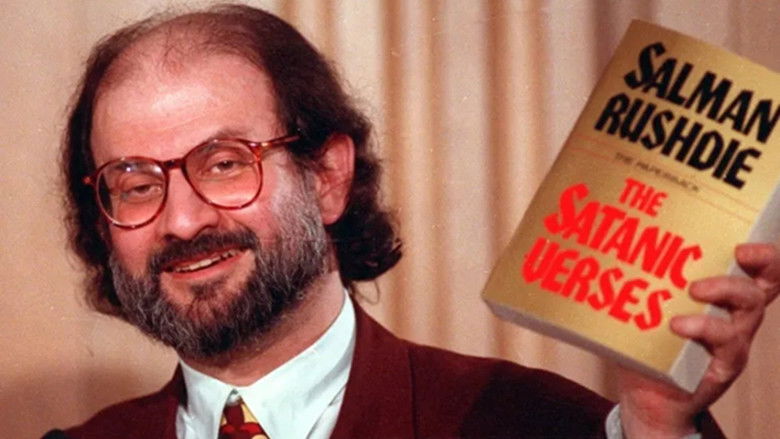
The Satanic Verses Affair (2009)
Twenty years ago, novelist Salman Rushdie was a wanted man with a million pound bounty on his head. His novel, The Satanic Verses, had sparked riots across the Muslim world. The ailing religious leader of Iran, the Ayatollah Khomeini, had invoked a little-known religious opinion - a fatwa - and effectively sentenced Rushdie to death. This film looks back on the extraordinary events which followed the publication of the book and the ten year campaign to get the fatwa lifted. Interviews with Rushdie's friends and family and testimony from leaders of Britain's Muslim community and the Government reveal the inside story of the affair.
The Overture (1965)
Young men are faced with a medical commission for army recruits and asked to choose where they want to get to, at least theoretically.
Kirk Douglas (1966)
The 1966 visit of Hollywood movie star Kirk Douglas at the legendary Polish State Film School in Lódz.
Fire! Fire! At Last Something's Going On (1967)
Piwowski's documentary debut is a satirical reportage, referring to the poetics of the Czech school at the time. The starting point was an order from a film studio to join a project proposed by the Germans: what do teenagers in your country do on Saturday at 5 pm? Images from the lives of teenagers from Kętrzyn make up a contrasting slice of free time in a small town. Firemen maneuvering to start a fire outside working hours, bodybuilders training, choir rehearsal, dancing in Hitler's former headquarters...
Hair (1972)
A satirical look at the Soviet-block hairdressing contest which was held in Warsaw in 1971.
The Pony Express (1994)
The Pony Express delivered mail from coast to coast for only 18 months. Yet during its brief glory days, it became a legend of the American frontier. This fascinating and well-researched video recounts the history of the Pony Express, retraces the famous trail, and uncovers the reasons behind its demise and lasting legacy.
Björk: Minuscule (2002)
This documentary offers a behind-the-scenes look at Björk and her touring entourage for the 2001 Vespertine tour. It includes interviews with harpist Zeena Parkins, the Inuit choir from Greenland, electronic duo Matmos, and an ongoing conversation with Björk herself about her recordings and her tours. The documentary is interspersed with live footage of songs from the tour shot by Ragnheidur Gestsdóttir, which themselves correspond to the performances chosen for the Vespertine Live album.