
The Thanksgiving Day Parade on CBS (2017)
It's one of America's most cherished traditions—the 91st Annual Macy's Thanksgiving Day Parade .
It's one of America's most cherished traditions—the 91st Annual Macy's Thanksgiving Day Parade .
 Kelsea BalleriniArtist
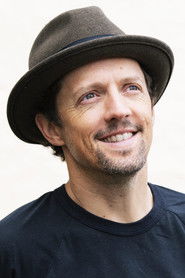 Jason MrazArtist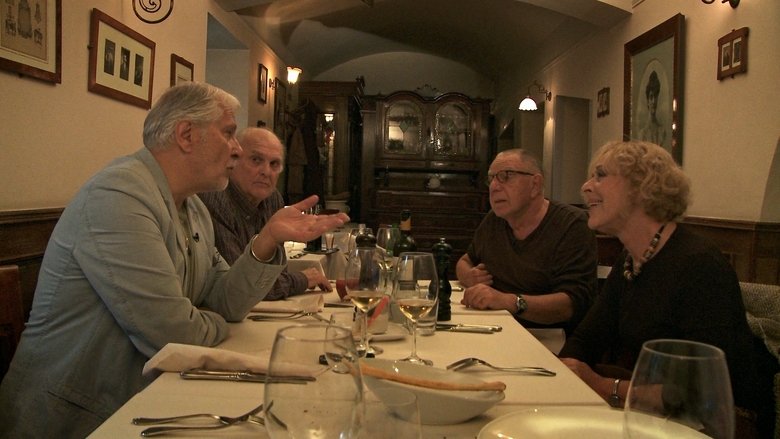
A film about a theatre performance and four very notable people behind it: writer and director D. Jovanović, actress M. Zupančič and actors R. Polič and B. Cavazza. This is a story of a love triangle and of a multi-layered, entirely overt intertwining of protagonists’ public artistic personas and their personal lives. The film documents a 4-month process of the making of a theatre piece from the first rehearsal to the opening night, at the same time uncovering the intimate lives of the artists and telling a universal story of the relationship between the real and the imagined, a story of personal and public perceptions of art.
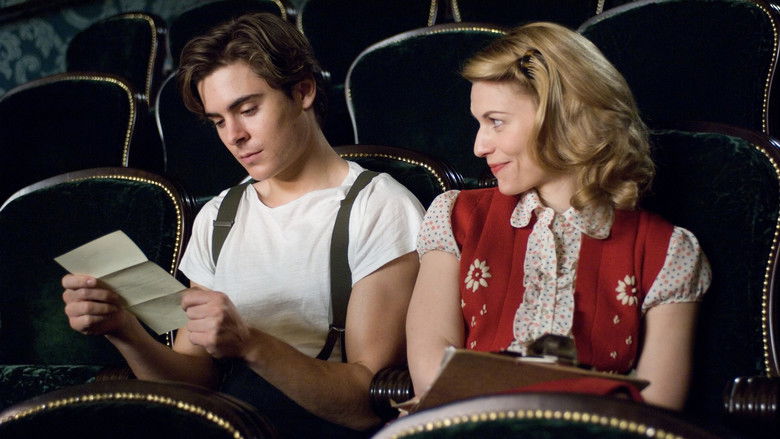
New York, 1937. A teenager hired to star in Orson Welles' production of Julius Caesar becomes attracted to a career-driven production assistant.

Multi award-winning psychological illusionist Derren Brown returns in the recording of his acclaimed live show ‘Infamous’. Featuring Derren at his baffling best with the excitement of a live theatre audience, Infamous includes amazing, provocative, jaw dropping demonstrations of his incredible skills of magic, suggestion, showmanship and misdirection in a must-watch roller coaster of emotions.
This cinematic portrait shows the Austrian filmmaker Ulrich Seidl at work. The much-discussed ‘Seidl method’ is conveyed here vividly and directly: The camera watches over Seidl’s shoulder during the filming of his new production IM KELLER, and observes him at the rehearsals for his latest theatre production ‘Böse Buben / Fiese Männer’. The film paints the picture of a fascinating and exceptional artist using a combination of extensive interviews and excerpts from earlier works.
Documentary about the play Miss Julie and dramatist August Strindberg
The golden age of the annual Tony Awards ceremony lasted from 1967 to 1986 — the period during which Alexander H. Cohen and his wife, Hildy Parks, were the producers of the show. This film offers a compilation of performances from Tony Award broadcasts during those years. They are presented with color-corrected footage and digitally re-mastered sound.
BBC television program exploring Visconti’s mastery of cinema, theater, and opera direction.

This documentary focuses on immigrant teens between the ages of 12 and 17 who share the story of their migration and their adaption to life in Canada through theatre. Young but wise, these children describe their experiences with emotion and authenticity.

Documentary looking at the culture of three motels and their owners who remain untouched by homogenization and corporatism, located in Santa Fe, New Mexico; Florence, Arizona; and the semi-ghost town of Death Valley Junction, California. Everyone has an unusual story to tell.
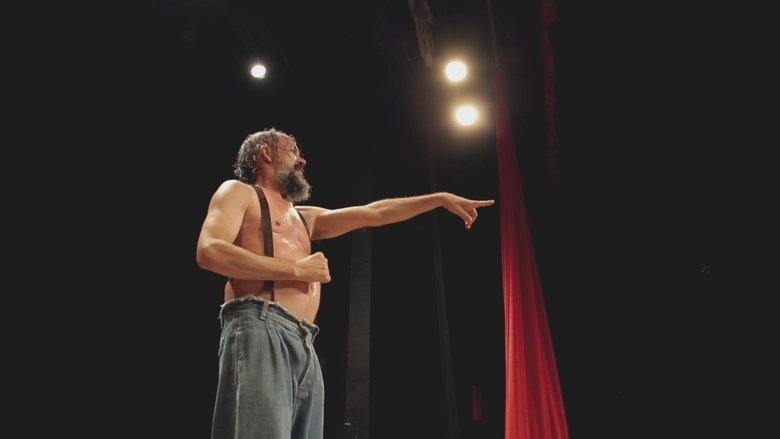
How Do You See Me? is a Brazilian documentary feature that entwines both experienced actors and beginners to explore the hardships and the happiness that are inherent to the job when detached from the glam and glitz of the gossip industry, creating a diverse and comprehensive mosaic of what it means to be an actor in Brazil, a country so full of contradictions. The film brings forward a reality that the masses usually don't get to know: the men and women moved by a deep passion for acting and touching people. With Julio Adrião, Matheus Nachtergaele, José Celso Martinez, Cássia Kis, Nanda Costa, Babu Santana, Luciano Vidigal and Letícia Sabatella, among others.
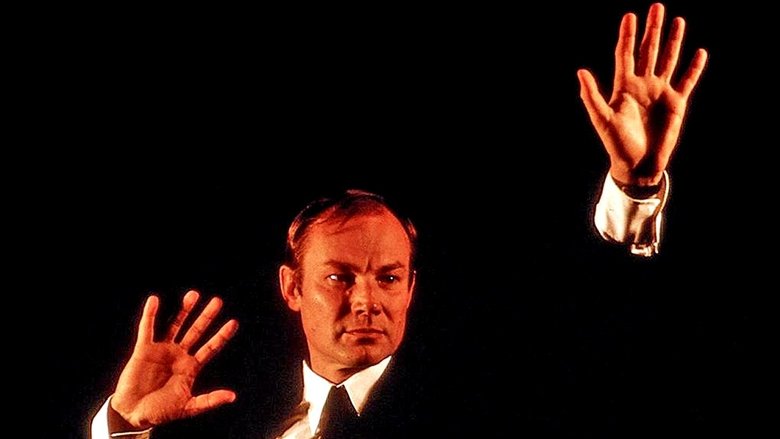
A man's story parallels Hitler's rise. Austrian Klaus Schneider, wounded in World War I, recovers in the care of Dr. Emil Bettleheim. Bettleheim discovers that Schneider possesses powers of empathy and of clairvoyance, such that could aid suicidal patients. After the war, with one friend as his manager and another as his lover, Schneider changes his name to Eric Jan Hanussen and goes to Berlin, as a hypnotist and clairvoyant performing in halls and theaters. He always speaks the truth, which brings him to the attention of powerful Nazis. He predicts their rise (good propaganda for them) and their violence (not so good). He's in pain and at risk. What is Hanussen's future?
As PlayhouseSquare celebrates its first 90 years, “Staging Success: The PlayhouseSquare Story” pays tribute to the people who were instrumental in saving the theaters and shows how the community worked together to create a cultural showplace in the heart of downtown Cleveland. This new documentary, a production of WVIZ/PBS, in collaboration with Think Media Studios, reveals a Cleveland rags-to-riches tale as dramatic as any on Broadway.

The theatre 7:3 project was conducted at the Tidaholm prison 1998-1999. What started as an artistic experiment, ended up in police killings at Malexander. The process in the prison were filmed during 6 months.
Fifty years ago, aspiring thespians Terry and Carole Ann Gill arrived in Australia from England seeking fame and fortune. But they never quite made the big time. Instead they stumbled into the curious world of children's pantomimes. Over the decades, they have built a successful business and touched the lives of generations of children; but their own dreams have slowly faded. Now aged in their 70s, with their beloved theatre under threat from a greedy property developer, Terry and Carole Ann's careers appear to be coming to an untimely close. As they battle to remain open, they are forced to reflect on the choices they have made in their lives.
A look at the entire process of creating and developing Patrice Chéreau’s third staging of "In the Solitude of Cotton Fields" by Bernard Marie Koltès with Pascal Greggory and Chéreau himself. From the first reading around the table through the first contact with the performance space, rehearsals and lighting to opening night, the entire creative process unfurls in front of our eyes. The film shows us the evolving and ongoing dialogue between Greggory and Chéreau, a dialogue full of crises and magical moments of harmony and insight via which the truth, intensity, complexity, mystery and depth of Koltès’ text gradually emerge to form an implicit bond between these two men. The film also shows Chéreau directing rehearsals for Mozart’s "Don Giovanni" in Salzburg, revealing both the unity of and profound differences between his opera and theater work.

Hollywood is a town of tinsel and glamour; but there is another Hollywood, a place where maverick independent exploitation filmmakers went toe to toe with the big guys and came out on top.
The work of actors on a stage makes a dreamlike parallelism between artistic immagination and the concreteness of everyday life. Tribute to Prague's Divadlo na zàbradlì, theater that has been a point of reference for Theater of the Absurd in Czechoslovakia in Sixties

In this filmed version of cult film director John Waters' popular one-man show, the Pink Flamingos and A Dirty Shame director takes the stage to discuss everything from his early influences, fondest career memories, and notorious struggles against the MPAA rating system. Part endearing memoir and part hilarious lecture, This Filthy World touches on everything from the insanity of contemporary pop culture to the director's unforgettable early collaborations with inimitable Pink Flamingos star Divine.
Volksbühne am Rosa-Luxemburg-Platz 1992-2017. The end of the GDR gave rise to new artistic freedoms in reunited Berlin. Shortly after the fall of the Wall, rebel director Frank Castorf was appointed artistic director of the Volksbühne. His way of working altered the public’s perception of this theater. The chronological history of the Castorf era between 1992 and 2017 is told here in excerpts from the productions and in a series of conversations conducted on the long sofa in the theater's foyer.
Estado de Excepção is a documentary about CITAC (Coimbra Theater Initiation Circle), a university theater group, revealing history since it was constituted in 1956 until the aftermath of the 1974 revolution. It is the history of the theater group university and, through it, the history of theater in Portugal, revealing two remarkable decades of the History of Portugal. Through the Academy of Coimbra, the documentary reproduces student life, the position of women in society, and the change in mentalities of being and being in the world. It reproduces the existing censorship and the fight against the dictatorship, the resistance to an exhausted regime, as well as the emerging contradictions of the democratic revolution. CITAC has a heritage of 50 years of experience in Coimbra. It carries with it the possibility of the theatrical and civic formation of thinking bodies, constituting a proper ball of a possible model, generation by generation, between studies, theater, and social drama.