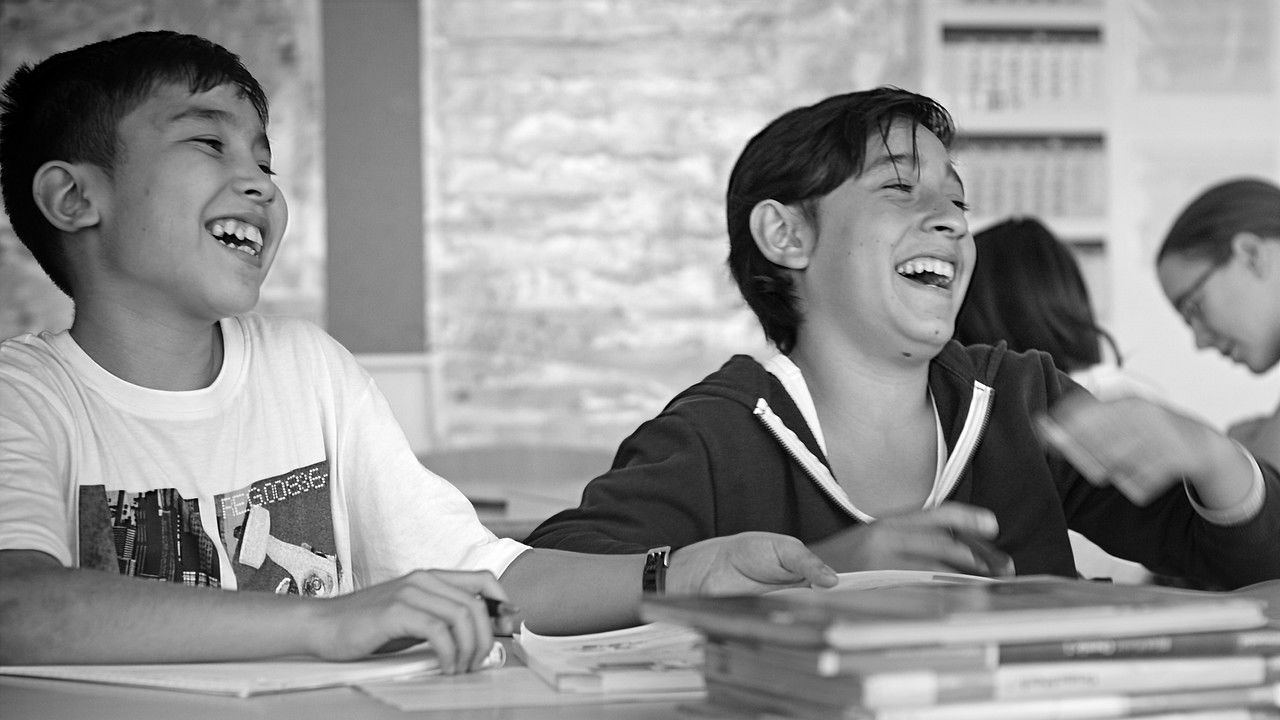
German Class (2019)
Ute Vecchio has two years to prepare children who have just arrived from other countries for the German school system. The challenges she faces are just as diverse as the cultures the children originate from.
Ute Vecchio has two years to prepare children who have just arrived from other countries for the German school system. The challenges she faces are just as diverse as the cultures the children originate from.

Follows the lives of students and their teachers based on the director's childhood memories. The events of the film take places in the actual boarding school called "Gymnasium Canisianum", founded in 1946 by a German catholic priest.
On a blustery January day bishops arrive for the opening of the new Knutsford Test School.
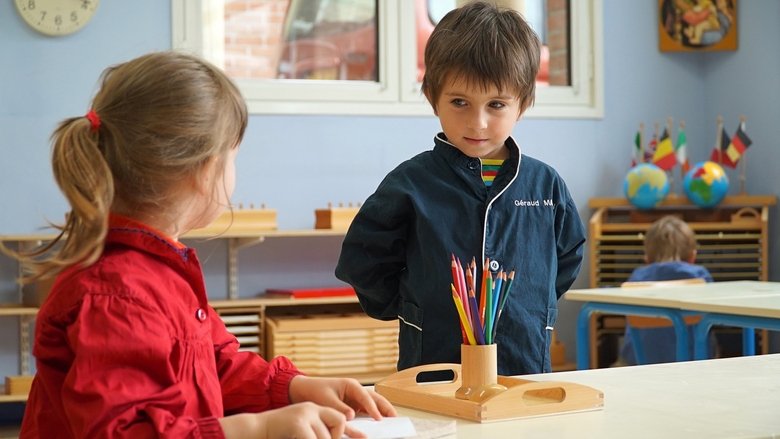
As a young father, watching his daughter go through her life experiences, film director Alexandre Mourot discovered the Montessori approach and decided to set his camera up in a children's house (3 to 6 years of age) in the oldest Montessori school in France. Alexandre was warmly welcomed in a surprisingly calm and peaceful environment, filled with flowers, fruits and Montessori materials. He met happy children, who were free to move about, working alone or in small groups. The teacher remained very discreet. Some children were reading, others were making bread, doing division, laughing or sleeping. The children guided the film director throughout the whole school year, helping him to understand the magic of their autonomy and self-esteem - the seeds of a new society of peace and freedom, which Maria Montessori dedicated her life work to.
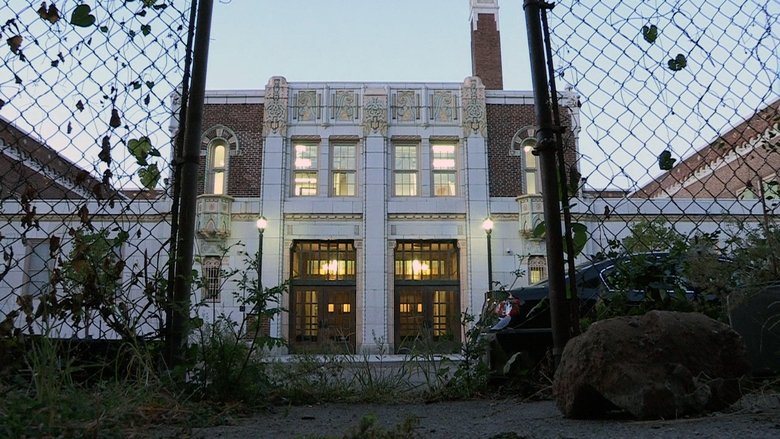
A Cincinnati public school fights to break the cycle of poverty in its Urban Appalachian neighborhood, where senior Raven Gribbins aims to become the first in her troubled family to graduate and go to college. When Principal Craig Hockenberry's job is threatened, it becomes clear it's a make-or-break year for both of them.
The purpose of Rise Above the Mark, narrated by Peter Coyote, is to educate the general public about the “corporate takeover” of Indiana public schools and what parents, community members and educators can do to protect their local public schools. Legislators are calling the shots and putting public schools in an ever-shrinking box. WLCSC Board of School Trustees and Superintendent of Schools, Rocky Killion, want to secure resources and legislative relief necessary to achieve the school district’s mission of creating a world-class educational system for all children. The school district’s strategic plan will introduce a model of education that puts decision making back into the hands of local communities and public school teachers, rather than leaving it in the hands of legislators and ultimately lining the pockets of corporations.

One day in a kindergarten classroom at Van Horne Public School in Montreal. The teacher encourages children to turn their curiosity into questions and organizes group activities and play periods.
A semi-dramatized documentary about the first Slovak grammar school in Revúca.
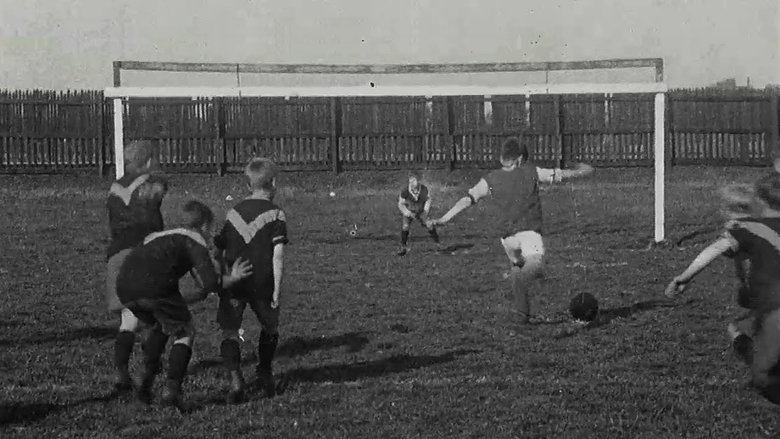
Young scholars get busy for Newcastle-on-Tyne's 'Education Week' in the tour of Tyneside classrooms.
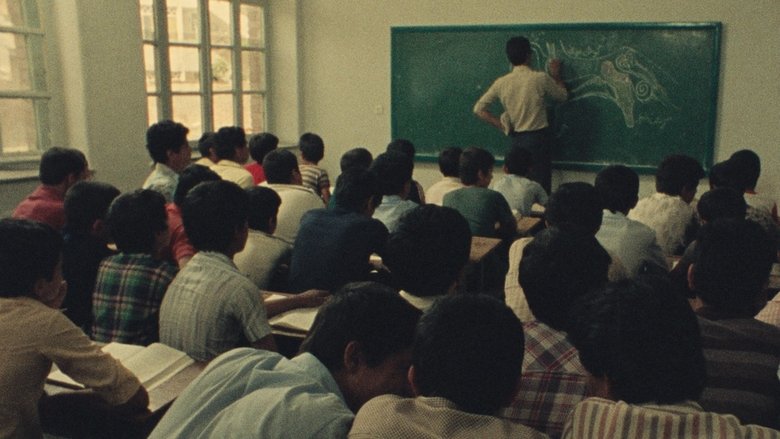
A documentary about a teacher who sends a group of pupils out of the classroom when one of them does not own up to talking behind the master's back.
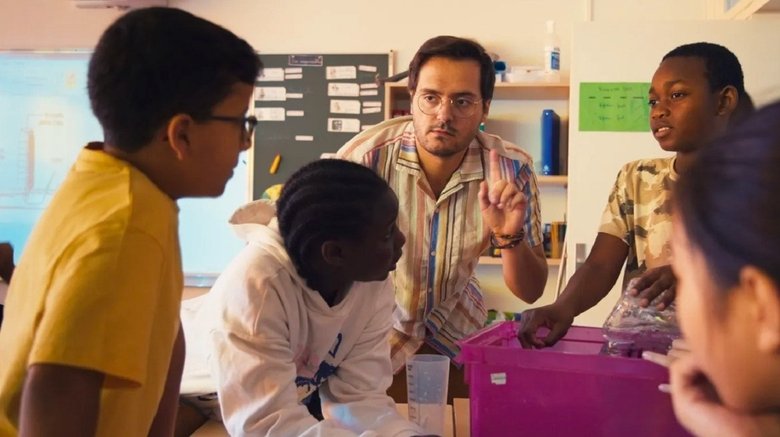
In the Makarenko public elementary school in the Paris outskirts, children want to learn and to be cheered while teachers know they do not only teach, they also educate. With care, tenacity and efforts, children are trained to become not only responsible citizens but also human beings.
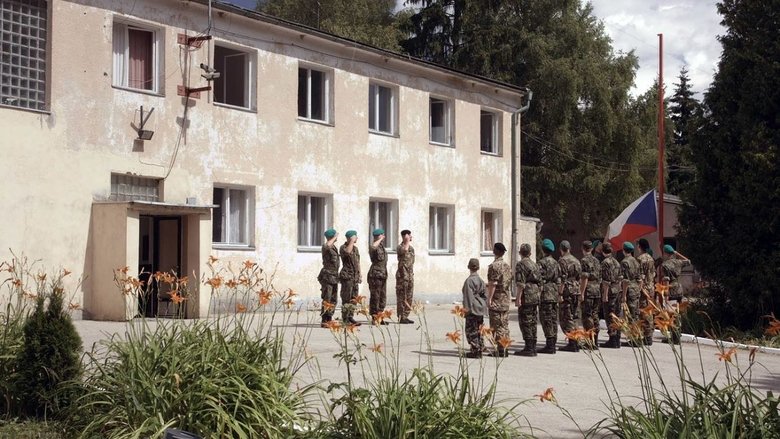
This episode from the Czech Journal series examines how a military spirit is slowly returning to our society. Attempts to renew military training or compulsory military service and in general to prepare the nation for the next big war go hand in hand with society’s fear of the Russians, the Muslims, or whatever other “enemies”. This observational flight over the machine gun nest of Czech militarism becomes a grotesque, unsettling military parade. It can be considered not only to be a message about how easily people allow themselves to be manipulated into a state of paranoia by the media, but also a warning against the possibility that extremism will become a part of the regular school curriculum.
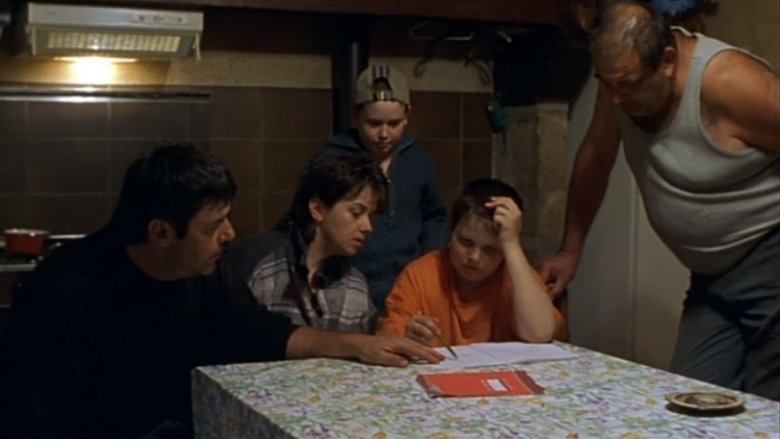
The documentary's title translates as "to be and to have", the two auxiliary verbs in the French language. It is about a primary school in the commune of Saint-Étienne-sur-Usson, Puy-de-Dôme, France, the population of which is just over 200. The school has one small class of mixed ages (from four to twelve years), with a dedicated teacher, Georges Lopez, who shows patience and respect for the children as we follow their story through a single school year.
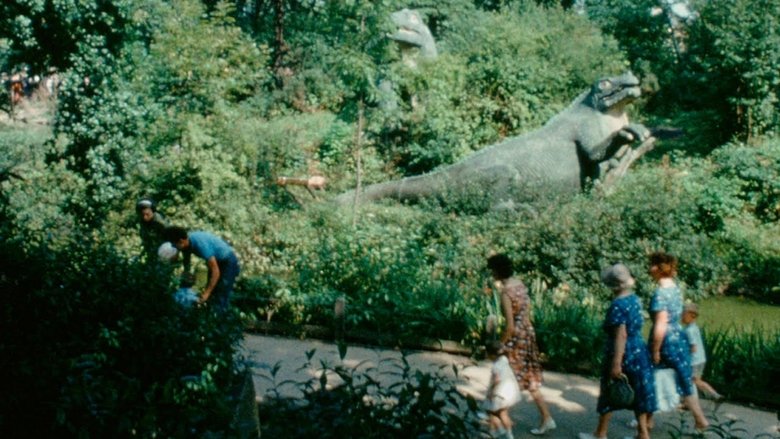
Film about the town of Penge featuring local personalities, housing, shopping, traffic and the Penge formation dancers.
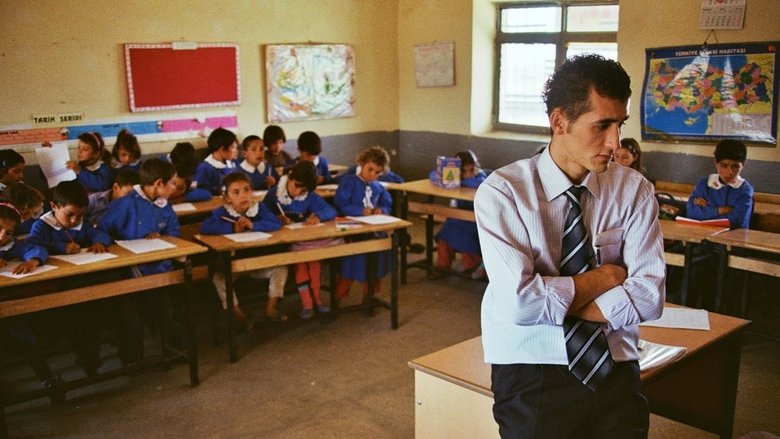
One year in the life of a Turkish teacher, teaching the Turkish language to Kurdish children in a remote village in Turkey. The children can't speak Turkish, the teacher can't speak Kurdish and is forced to become an exile in his own country. On the Way to School is a film about a Turkish teacher who is alone in a village as an authority of the state, and about his interaction with the Kurdish children who have to learn Turkish. The film witnesses the communication problem emphasizing the loneliness of a teacher in a different community and culture; and the changes brought up by his presence into this different community during one year. The film chronicles one school year, starting from September 2007 until the departure of the teacher for summer holiday in June 2008. During this period, they begin to know and understand each other mutually and slowly.
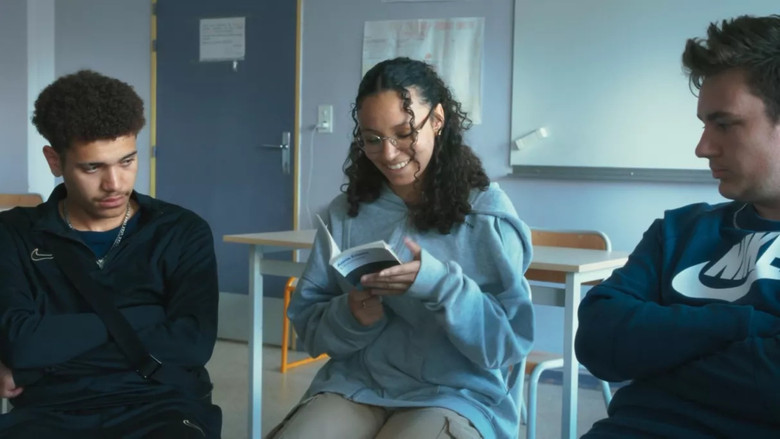
A major figure in contemporary feminism and the first Frenchwoman to win the Nobel Prize for Literature, Annie Ernaux is seen by many as a source of individual and collective emancipation, blending the intimate with the universal. Filmmaker Claire Simon has devoted an original portrait to her, giving students and teachers a voice.
The Columbine shootings were a tragic event in American history and have proved a lasting influence in continued acts of violence ever since. In this harrowing account, student and faculty survivors of Columbine, Amy, Gus, Jaimi, Zach, Mr. Leyba and Principal DeAngelis, reflect on the event that has both shaped them and created an unbreakable spirit shared between them. This is not the story of death, but of the process of healing in the face of the unspeakable.
Gripping, heartbreaking, and ultimately hopeful, Waiting for Superman is an impassioned indictment of the American school system from An Inconvenient Truth director Davis Guggenheim.
Elementary Genocide is a documentary executive produced by award winning journalist/filmmaker Rahiem Shabazz. The documentary appeals to a wide general viewership by addressing the social, cultural, political and personal ramifications of how the federal government allots money to each state, to build prions based on the failure rate of 4th and 5th graders. In America, where half of the 4th grade is reading below grade level and more African-American males are in jail than are in college, Elementary Genocide serves as a striking reminder of a flawed system in need of repair.
World renowned journalist, and award-winning filmmaker Rahiem Shabazz presents the third installment of his docu-series Elementary Genocide: Academic Holocaust. The first two documentaries in the series; The School To Prison Pipeline and Elementary Genocide 2: The Board Of Education vs. The Board of Incarceration received critical acclaim and launched Shabazz as a political pundit and academic ambassador for the African American community. Elementary Genocide: Academic Holocaust adds more statistical proof of the scholastic inequalities faced by Original people around the country. The documentary revisits the importance of education and its impact on self-image, family structure, financial freedom, and the collective future of African/indigenous people in America and abroad.