
Cages (2017)
The final months of pregnancy and the first ones after the birth of a baby are unique experiences in a woman's life. And when this daily life is lived inside a prison?
The final months of pregnancy and the first ones after the birth of a baby are unique experiences in a woman's life. And when this daily life is lived inside a prison?
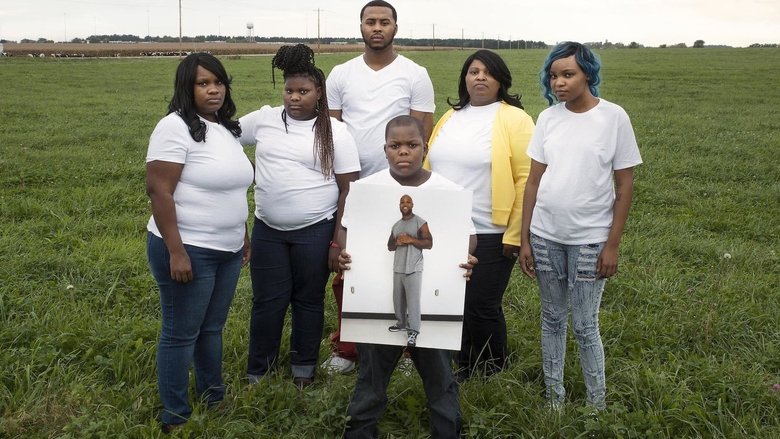
MILWAUKEE 53206 chronicles the lives of those living in the ZIP code that incarcerates the highest percentage of black men in America, up to 62%. Through the intimate stories of three 53206 residents, we witness the high toll that mass incarceration takes on individuals and families that make up the community. The film examines Milwaukee’s ZIP code 53206 to illuminate the story of people from across the United States who live with the daily affects of mass incarceration.
Calling Mother is about the moments when you just have to call your mum. It is a compilation of phone calls made by different people to their mothers. Film follows the lifespan of a human being from youth to adulthood, a child changing from a dependent to a caretaker. Phone calls are connected by images of an old telephone center and a story of a young mother who doesn’t have a mother to call.
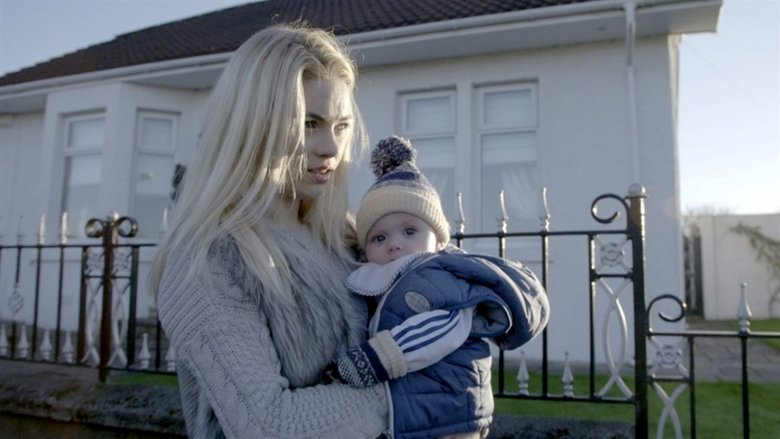
As her adolescence gives way to the obligations of motherhood, troubled Gemma matures in Motherwell, her Scottish hometown, heavily dependent on the steel industry. Unfortunately for her, her hedonistic way of understanding the world does not fit in with the philosophy of the rest of the villagers, so trouble soon follows.
With unprecedented access, this documentary looks into the hidden world of one of Russia's most impenetrable and remote institutions - a maximum security prison exclusively for murderers. Deep inside the land of the gulags, this is the end of the line for some of Russia's most dangerous criminals - 260 men who have collectively killed nearly 800 people. The film delves deep into the mind and soul of some of these prisoners. In brutally frank and uncensored interviews the inmates speak of their crimes, life and death, redemption and remorselessness, insanity and hope. The film tracks them though their unrelenting days over several months, lifting the veil on one of Russia's most secretive subcultures to reveal what happens when a man is locked up in a tiny cell for 23 hours every day, for life. A startling insight into inscrutable minds and the forbidding world they have been condemned to. (Storyville)
Incarcerated participants in a mental health experiment watch videos of sunset-soaked beaches, wildflowers and forests on loop, prompting them to reflect on isolation and wilderness. Equal parts meditation and provocation, Blue Room identifies the damage done by withholding access to the outdoors and how we are all prisoners when the essential human need for communion with nature is denied.
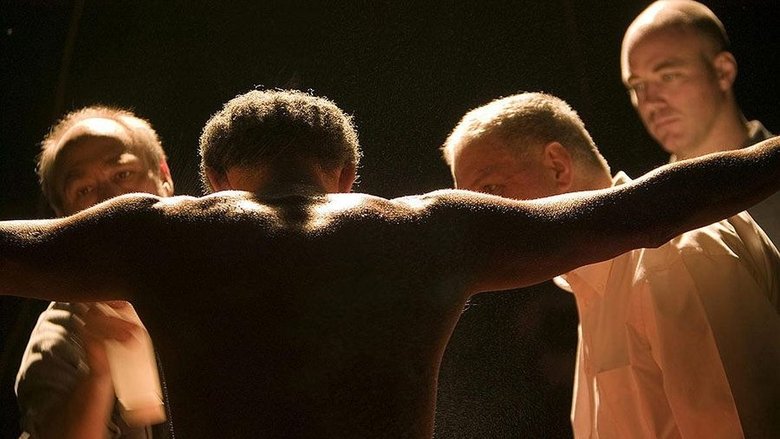
Errol Morris examines the incidents of abuse and torture of suspected terrorists at the hands of U.S. forces at the Abu Ghraib prison.

The Big One is an investigative documentary from director Michael Moore who goes around the country asking why big American corporations produce their product abroad where labor is cheaper while so many Americans are unemployed, losing their jobs, and would happily be hired by such companies as Nike.
A documentary that follows Michelle "The Karate Hottie" Waterson as she balances life as a mother and professional MMA fighter.
Sensationalized in the media as a high profile catfishing case involving an NBA superstar and an aspiring model, Shelly Chartier was portrayed as a master manipulator who used social media as her weapon. Through the sensitive and intelligent lens of Indigenous directors Lisa Jackson and Shane Belcourt, the sensationalism is swept aside to reveal something much more compelling and complex - the story of a young woman caught in historical circumstances beyond her control and how she struggles to rebuild her life after incarceration.
Pete and Toshi Seeger, their son Daniel, and folklorist Bruce Jackson visited a Texas prison in Huntsville in March of 1966 and produced this rare document of of work songs by inmates of the Ellis Unit. Worksongs helped African American prisoners survive the grueling work demanded of them. With mechanization and integration, worksongs like these died out shortly after this film was made.
Through one woman's experience as an adopted person and also as a mother who relinquished her child in 1971, this documentary highlights the many complex issues associated with adoption.
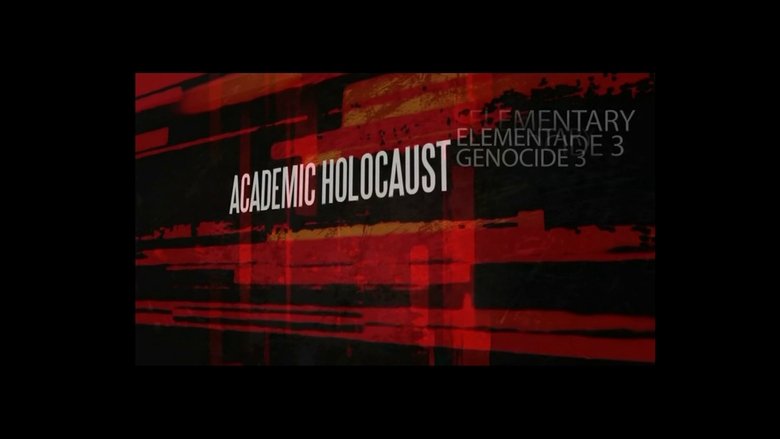
World renowned journalist, and award-winning filmmaker Rahiem Shabazz presents the third installment of his docu-series Elementary Genocide: Academic Holocaust. The first two documentaries in the series; The School To Prison Pipeline and Elementary Genocide 2: The Board Of Education vs. The Board of Incarceration received critical acclaim and launched Shabazz as a political pundit and academic ambassador for the African American community. Elementary Genocide: Academic Holocaust adds more statistical proof of the scholastic inequalities faced by Original people around the country. The documentary revisits the importance of education and its impact on self-image, family structure, financial freedom, and the collective future of African/indigenous people in America and abroad.
Elementary Genocide is a documentary executive produced by award winning journalist/filmmaker Rahiem Shabazz. The documentary appeals to a wide general viewership by addressing the social, cultural, political and personal ramifications of how the federal government allots money to each state, to build prions based on the failure rate of 4th and 5th graders. In America, where half of the 4th grade is reading below grade level and more African-American males are in jail than are in college, Elementary Genocide serves as a striking reminder of a flawed system in need of repair.
Explores the realities of death-row inmates inside Huntsville (Texas) Unit, a prison with the highest number of executions in 1997. Features interviews with prisoners, guards, officials, lawyers and victims' family members.
Retrospective documentary on the making of the low-budget horror film Prison (1987)
Eva’s being allowed to leave the psychiatric institution she’s lived in for six years. After a long year of waiting, the news arrive: an assisted living residence is found for her. Eva takes the first steps towards the "normal" life she longs for: to find a job, earn an income of her own, visit her mother... even find love. While she’s taking stock of her past and works on her self-confidence as well as her trust in the outside world, she also fixes firmly on her main goal: to reconnect with the son she lost custody of 20 years ago and ask him to forgive her. The First Woman is a film about second chances, the search for "normality" and the borderline between lucidity and darkness.
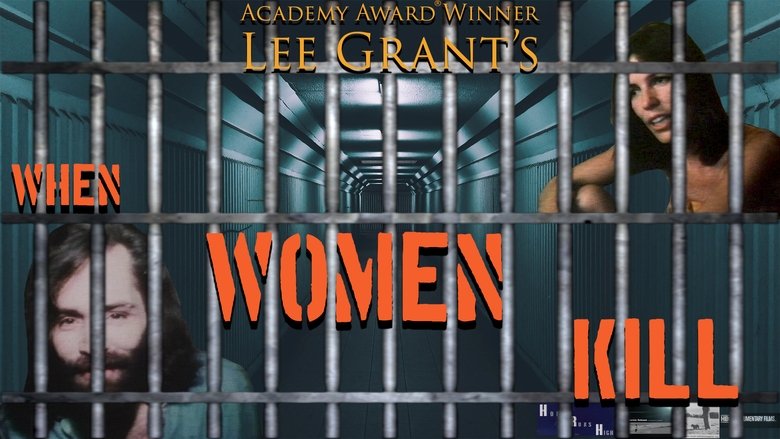
When Women Kill is a poignant documentary exploring the shocking violence that seven women fell victim to at the hands of men. The program profiles the battered women who speak frankly about the cruel abuse, threats, and fears, and the overassertive men who led them down a one-way path to death and destruction. The film features in-prison footage, including a segment depicting a confession by a follower of the notorious Charles Manson, Leslie Van Houten, who was convicted of two killing sprees and committed to life in prison.
As beautiful and sleek as it is deadly, 52 Blocks merits special conservation efforts as the United States' only existing native martial culture, as it is indeed, the jazz of the martial arts world. Across the African diaspora, there are manifestations of African-derived warrior-dances, capoeira in brazil, mani in Cuba, ladja in Martinique, pinge in Haiti- yet the US offshoot has remained esoteric, because it was suppressed throughout slavery, Reconstruction and Jim Crow and then obscured in the criminal justice system. The history, interviews and training of the martial arts style that created Breakdance and boxing greats like Mike Tyson.
A documentary about juveniles who are serving life in prison without parole and their victims' families.
The Stanford prison experiment was a landmark psychological study of the human response to captivity, in particular, to the real world circumstances of prison life, and the effects of imposed social roles on behaviour. It was conducted in 1971 by a team of researchers led by Philip Zimbardo of Stanford University.