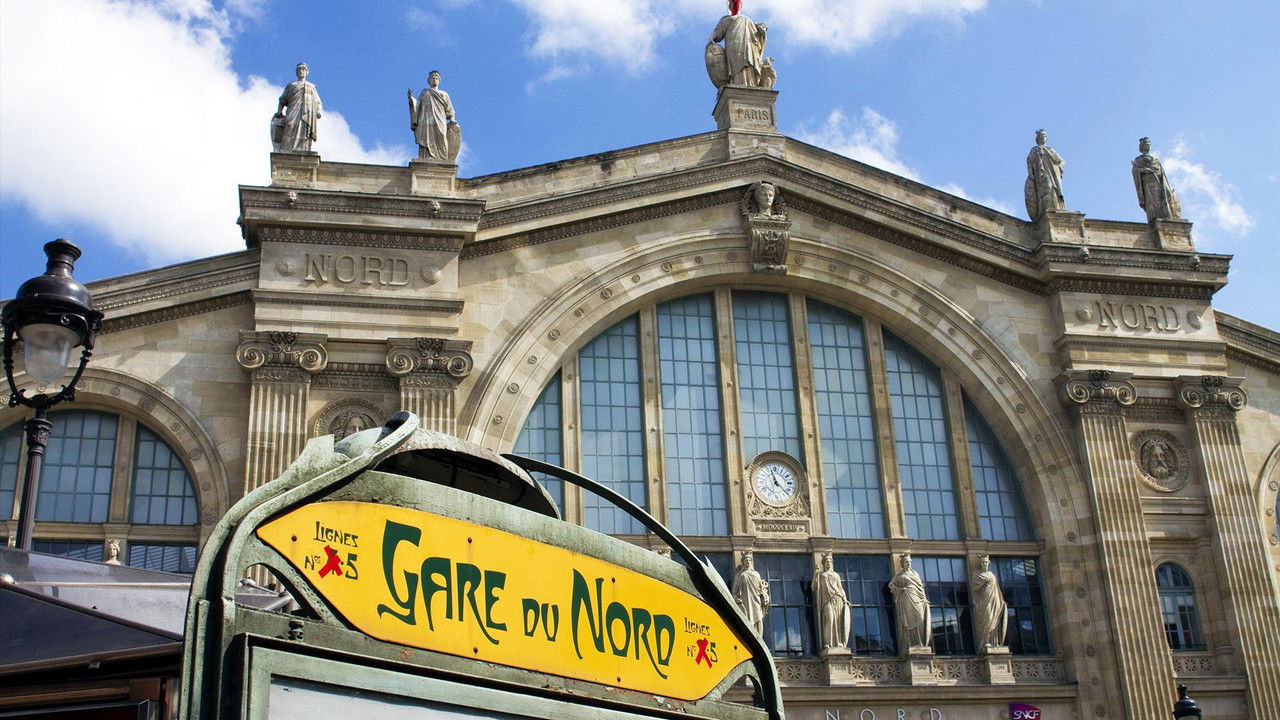
Top billed cast
 Julien BocherNarrator (voice)
 Jérémie ZeguermanSelf - Director , gare du Nord
- Patrick CognassonSelf - Historian, railway specialist
 Clive LammingSelf - Railway historian
- Étienne TricaudSelf - Architect and engineer, co-founder and president of AREP
- Jean-Marie DuthilleulSelf - Architect and engineer, co-founder and president of AREP
- Sylvain GuillonSelf - Substation regulator, gare du Nord
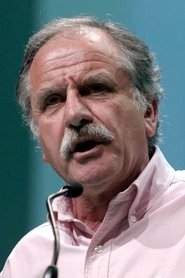 Noël MamèreSelf (archive footage)
- Florian ArtusSelf - Switchman-greaser, gare du Nord
 François MitterrandSelf (archive footage)
Similar to Gare du Nord : La Plus Grande Gare d'Europe
The Oyler House: Richard Neutra's Desert Retreat (2012)
In 1959, a government employee named Richard Oyler, living in the tiny desert town of Lone Pine, California, asked world-famous modern architect Richard Neutra to design his modest family home. To Oyler's surprise, Neutra agreed. Thus began an unlikely friendship that led to the design and construction of an iconic mid-century modern masterpiece.
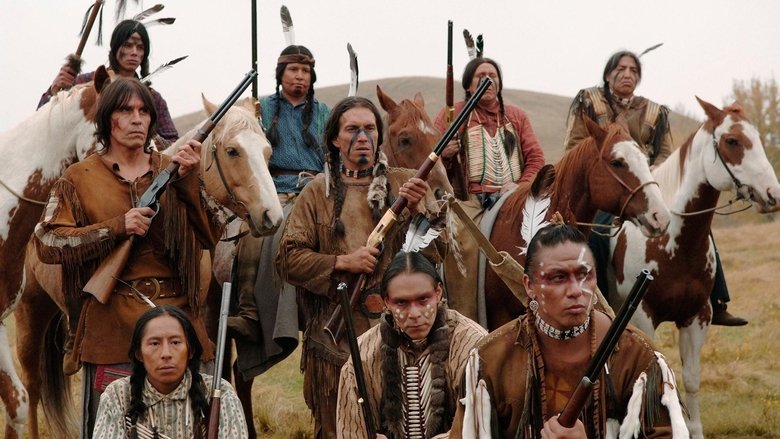
Bury My Heart at Wounded Knee (2007)
Beginning just after the bloody Sioux victory over General Custer at Little Big Horn, the story is told through two unique perspectives: Charles Eastman, a young, white-educated Sioux doctor held up as living proof of the alleged success of assimilation, and Sitting Bull the proud Lakota chief whose tribe won the American Indians’ last major victory at Little Big Horn.
Anna Karenina (1961)
In Imperial Russia, Anna, wife of the officer Karenin, goes to Moscow to visit her brother. On the way, she meets charming cavalry officer Vronsky, to whom she's immediately attracted. But in St. Petersburg’s high society, a relationship like this could destroy a woman’s reputation.
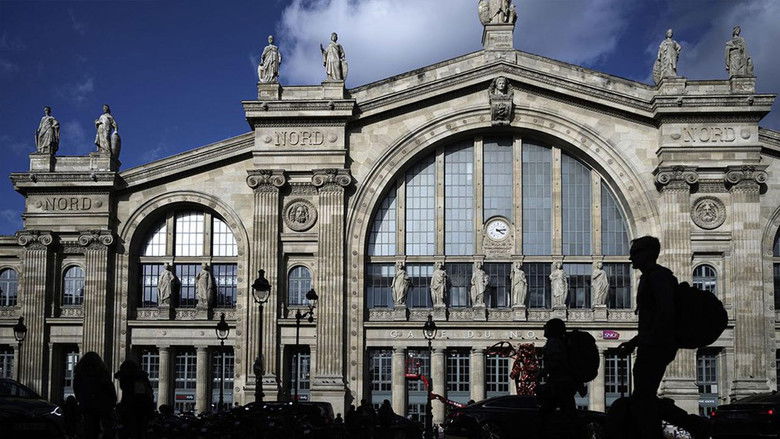
Paris Train Stations: Shaping the City (2020)
Every day, Paris’ six railway stations welcome over 3,000 trains and more than a million travelers coming from France and all over Europe. The stations’ sizes are impressive: Gare du Nord is bigger than the Louvre or Notre-Dame de Paris. These railway stations are architectural landmarks and a model of urban planning despite the radical changes they’ve undergone since their construction in the middle of the 19th century. How did the railway stations manage to absorb the boom of travelers in just a few decades? What colossal works were necessary to erect and then modify these now essential buildings? From the monumental glass walls of Gare du Nord to the iconic tower of Gare de Lyon, to the first-ever all-electric train station, each has its own story, technical characteristics, and well-defined urban image.
Le Paris de Zazie (2005)
Documentary about the Parisian locations for the film by Louis Malle.
Paul Nizon: Der Nagel im Kopf (2020)
The film tells of the radical life-search by the Swiss writer Paul Nizon, born 1929 in Bern, Switzerland, who became what “he was meant to be” in Paris. Now 90-year-old, Paul Nizon grants insights into his life and work in a self-ironic, direct manner. The intimate portrait of a great literary outsider emerges, for whom the risk of life and the risk of writing merge into one and the same work of art.
The Railway Station Man (1992)
Northern Irishwoman Helen Cuffe (Julie Christie) is overwhelmed with sadness when her husband is killed by the Irish Republican Army. She and her teen son, Jack (Frank MacCusker), then move to a tiny town and start life anew. There, Helen meets a mysterious American man named Roger Hawthorne (Donald Sutherland), who is in the area to refurbish an old train station. A romance slowly blossoms between Roger and Helen, but Jack then gets involved with a violent political group, and tragedy looms.
Zaha Hadid... Who Dares Wins (2013)
Alan Yentob profiles the most successful female architect there has ever been, the late Zaha Hadid, who designed buildings around the globe from Austria to Azerbaijan.
Desert Empire (1948)
A travelogue, this film provides a guided tour of pre-World War II Utah and of course does not pretend to cinematic greatness. Recommended viewing for those in search of introductory Utah history. Also valuable for persons seeking insight into the state as it would have looked during this time period. Especially informative for those desiring a window into the past for a view of how Utah was in the days of their pre-World War II progenitors living in the state. Those whose Utah ancestors were involved in mining, railroading, sugar beets, and other featured industries; featured towns, sights, recreational attractions, and industries may find this otherwise banal travelogue a quite valuable addition to their family history.
New Horizons (1948)
Production for the Seaboard Railroad company outlining their railroad activities in the 1940s and heading into the 1950s
Big Trains Rolling (1955)
A production of the association of American Railroads outlining the wonders of America's rail system.
Mainline U.S.A. (1957)
A documentary on the railroads of America produced by the Association of American Railroads
Beef Rings the Bell (1963)
The sory of the railroad's roll in getting beef to your local market
Mies (1986)
No understanding of the modern movement in architecture is possible without knowledge of its master builder, Mies van der Rohe. Together with documentation of his life, this film shows all his major buildings, as well as rare film footage of Mies explaining his philosophy. Phyllis Lambert relates her choice of Mies as the architect for the Seagram building. Mies's achievements and continuing influence are debated by architects Robert A.M. Stern, Robert Venturi, and Philip Johnson, by former students and by architectural historians. Mies is seen in rare documentary footage.

Meet Me in Paris (2023)
Three single friends travel to Paris for ten days for the journey of a lifetime and in search of true love. From 'meet cutes' at the Luxembourg Gardens, to strolls down the tree-lined Champs-Élysées, will first dates lead to happily ever after or heartbreak?
End of an Era (1962)
A documentary on the passing of the steam locomotive as the primary means of transportation in the United States
James Baldwin Abroad (2023)
Showcasing three short films by American writer James Baldwin, wherein he muses about race, sexuality and civil rights, among other topics, in Istanbul, Paris and Great Britain.
Comrades (1982)
Axel and Bertha are a married couple who are both artists in 1880s Paris, the film addresses the topic of gender equality in marriage and society, for example the property rights of married women.

Tea War: The Adventures of Robert Fortune (2016)
In the 19th century, China held the monopoly on tea, which was dear and fashionable in the West, and the British Empire exchanged poppies, produced in its Indian colonies and transformed into opium, for Chinese tea. Inundated by the drugs, China was forced to open up its market, and the British consolidated their commercial dominance. In 1839, the Middle Empire introduced prohibition. The Opium War was declared… Great Britain emerged as the winner, but the warning was heeded: it could no longer depend on Chinese tea. The only alternative possible was to produce its own tea. The East India Company therefore entrusted one man with finding the secrets of the precious beverage. His mission was to develop the first plantations in Britain’s Indian colonies. This latter-day James Bond was called Robert Fortune – a botanist. After overcoming innumerable ordeals in the heart of imperial China, he brought back the plants and techniques that gave rise to Darjeeling tea.