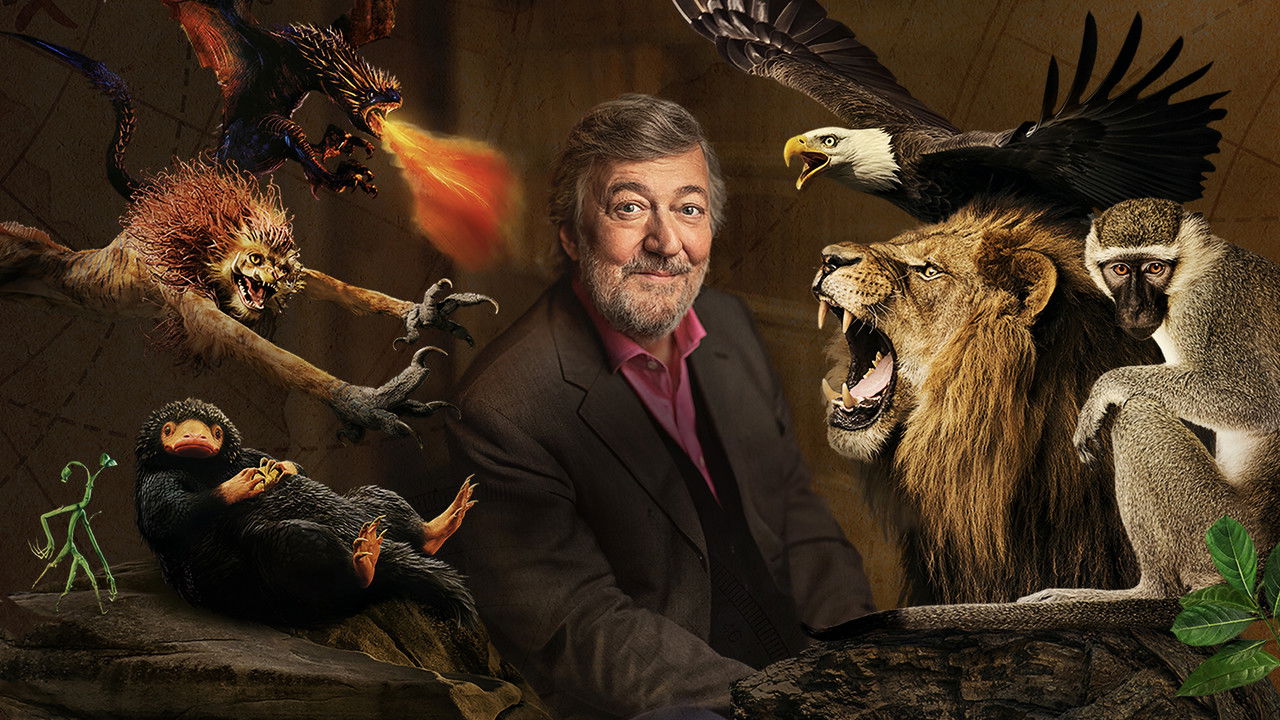
Fantastic Beasts: A Natural History (2022)
Stephen Fry embarks on a journey to discover the stories behind some of the world's most fantastic beasts that have inspired myths and legends in history, story-telling and film.
Stephen Fry embarks on a journey to discover the stories behind some of the world's most fantastic beasts that have inspired myths and legends in history, story-telling and film.
 Stephen FrySelf - Narrator
 J.K. RowlingSelf
 Christian ManzSelf
Since ancient times, the Green Man has been one of the most mysterious and menacing of mythical characters. He also has a familiar face as Robin Hood , Jack in the Green and on numerous pub signs. Across the arts from comic strips to classical opera, the Green Man is now making a comeback. Where is he taking us? Writer Sir Kingsley Amis , film director John Boorman , composer Sir Harrison Birtwistle and other leading artists offer their interpretations of the mystery in this Omnibus documentary film from 16th November, 1990.
In Africa there is a fable that explains the creation of the tides. When a hyaena challenged a mudskipper to a drinking contest to decide who should own the shore, the god Mungu tilted the earth so the sea flowed inland, and neither could win.
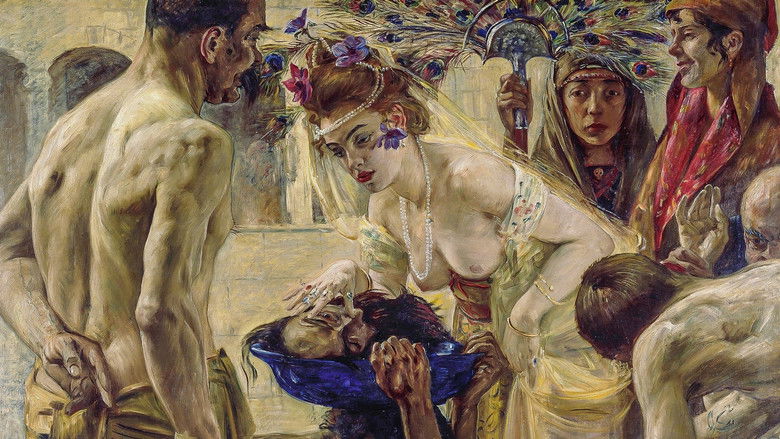
The passionate story of the femme fatale, seductive and dangerous, a myth and a fantasy, through her representation in art.
Karel Plicka was also cinematographer of this short movie. Editor in charge was Alexander Hackenschmied. There is an extraordinary emotional charge, every shot is working on its own, such as photographs, paintings and poetic complement intertitles in this short. From the perspective of nature and the perspective is shifting to the people and their habits, work and clothes. Peculiar documentary shots underscore Ruthenians (men, women and children) who are interested in looking into the camera and the curious "eye" showing off their habits.
The Matica slovenská (a mostly government-sponsored cultural, academic, and archival institution) employed Karol Plicka (1894-1987) as its ethnographer, who was able to make documentary shorts from about 1926. He obtained funding from the President’s Office in 1928 to produce an hour-long documentary about village life, Through Mountains and Valleys (Po horách, po dolách). It was awarded a Gold Medal at the International Exposition of Photographic Art in Florence and received an Honorable Mention at the International Venice Film Festival in 1932.
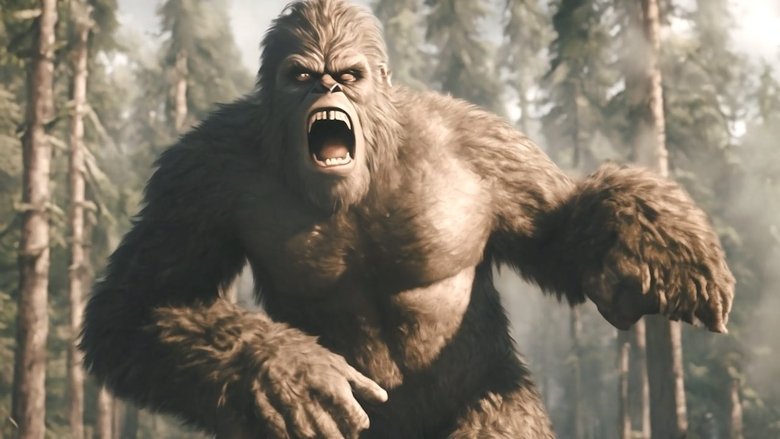
This fun and informative documentary examines and attempts to validate some of the most outrageous theories surrounding the infamous cryptid.
Debunking the mythology surrounding the 16th century French prophet, Nostradamus.
This compelling film represents a rare record of an original genius. In Jung on Film, the pioneering psychologist tells us about his collaboration with Sigmund Freud, about the insights he gained from listening to his patients' dreams, and about the fascinating turns his own life has taken. Dr. Richard I. Evans, a Presidential Medal of Freedom nominee, interviews Jung, giving us a unique understanding of Jung's many complex theories, while depicting Jung as a sensitive and highly personable human being.
Based on more than two decades of systematic research and cross-cultural comparison by comparative mythologist David Talbott, Remembering the End of the World reconstructs a cosmic drama when planets hung in the sky close to the earth–an epoch of celestial wonder giving way to overwhelming terror. This highly visual presentation offers new answers to enigmas that have baffled experts for centuries. Why did every ancient civilization celebrate a former “Age of the Gods”, an age claimed to have ended in earth threatening disaster? What was meant by the lost “Golden Age?” Why did ancient sky worshipers refer to Saturn as “the sun?” Why was Venus worshiped as the “Mother Goddess?” And why did both Old and New World astronomers celebrate the planet Mars as a great warrior whose battles shook the heavens?
A group of teenagers go out to a den in the woods for a night of drinking, unaware that their behaviour touches on issues of ritual, folklore, mysticism and UFOs.
In the same vein as Meri's other documentations, this one takes advantage of the glasnost policy to discuss the social and ecologic impact of the Russian oil industry on the natives and the lands they inhabit.

"The Last Dragon" is a nature mockumentary about a British scientific team that attempts to understand the unique incredible beasts that have fascinated people for ages. CGI is used to create the dragons.

In this short documentary, a Musqueam elder rediscovers his Native language and traditions in the city of Vancouver, in the vicinity of which the Musqueam people have lived for thousands of years. Writing the Land captures the ever-changing nature of a modern city - the glass and steel towers cut against the sky, grass, trees and a sudden flash of birds in flight and the enduring power of language to shape perception and create memory.
For the 'Are'are people of the Solomon Islands, the most valued music is that of the four types of panpipe ensembles. With the exception of slit drums, all musical instruments are made of bamboo; therefore the general word for instruments and the music performed with them is "bamboo" ('au). This film shows the making of panpipes, from the cutting the bamboo in the forest to the making of the final bindings. The most important part of the work consists in shaping each tube to its necessary length. Most 'Are'are panpipe makers measure the length of old instruments before they shape new tubes. Master musician 'Irisipau, surprisingly, takes the measure using his body, and adjusts the final tuning by ear. For the first time we can see here how the instruments and their artificial equiheptatonic scale-seven equidistant degrees in an octave-are practically tuned.
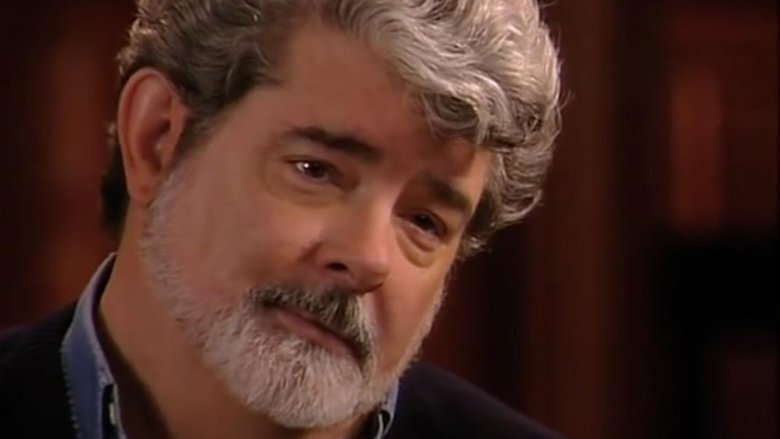
George Lucas discusses how Joseph Campbell and his concept of the Monomyth (aka the Hero's Journey) and other concepts from mythology and religion shaped the Star Wars saga.