
Dance of Death (1917)
A conductor is haunted by hallucinations during a performance of Camille Saint-Saëns's Danse macabre.
A conductor is haunted by hallucinations during a performance of Camille Saint-Saëns's Danse macabre.
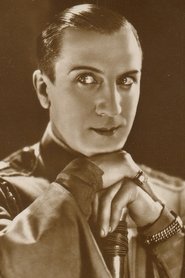 Ivan MosjoukineMark Galich, music composerTatiana DuvanJoanne / Vera OblonskayaGeorg AsagaroffViktor, Vera's fiancé
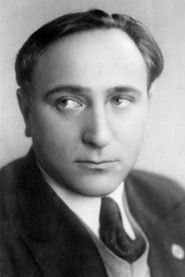 Efim DziganPasserby
A family's newfound wealth causes problem after problem.
In honor of his return from abroad, Mrs. Worthington invites her cousin, Brian Hartley, to dinner that evening, but forgets to tell him she has moved from her old address. He goes to the old home where he is met at the door by Celia Thayer, a guest of the Holbrooks, who now occupy the residence. None of the family being at home, Ceclia admits him, thinking he has been invited to dinner. When her hostess does not arrive the two have dinner together and become quite infatuated. Later it develops that the house was robbed while Mr. Hartley was there and, of course, he is suspected.
William Carter, a young Virginian in Paris, becomes enchanted with music hall dancer Fanchon La Fare. After William reluctantly returns to America, Fanchon follows him, and when she is threatened with deportation because of an irregularity in her passport, William marries her. The marriage causes consternation in the upright Carter family, which is compounded when Fanchon performs one of her dances at a church benefit. At the conclusion of her dance, Fanchon sees a stranger in the audience and faints. Later, the same man appears at the Carter residence and demands to see her. Leigh Carter, William's younger brother, becomes angered and shoots the man. At the trial, Fanchon confesses that the stranger was her estranged husband whom she had been forced to marry when she was but a child. The crime thus clarified, Leigh is freed, and Fanchon, who had been expelled earlier from the Carter house, is welcomed back by her husband and his family. (Courtesy TCM)
A small-town businessman bumbles into blackmail and a real-estate swindle.
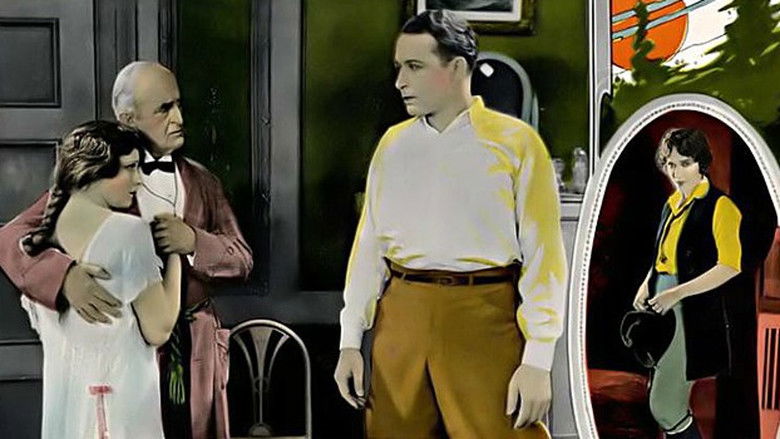
Wealthy young Charles Carpenter is pressured by his family to marry Suzanne, even though he is really in love with young "flapper" Valerie. He gives in to his family's pressure, however, and marries Suzanne, after which Valerie leaves town. Years later, after Charles and Suzanne have had a child, Valerie comes back to town and Charles realizes he is still in love with her, and she with him. Complications ensue.
A murderer is driven slowly insane by a sequence of coincidences and suggestive events which will not allow him to escape his own sense of guilt for his crime.
Rosalie Lane's sister dies from overwork at the Treadwell mills. Asking the company for enough money to bury her sister she is denied leading to desperate measures on her part. After many struggles she can save herself from a life of squalor and find happiness.
Ida Price has been cheated out of her share in her father's estate by her cousin Charles. She puts the appeal of the case in the hands of Judge Clark and his assistant Robert Graham. Charles tries to compromise with Ida, but she stands firm. He resorts to attempting to get the judge tipsy and delay the verdict. He fails, the former decision is reversed with Ida receiving her fair share and incidentally a husband in Robert Graham.
Tom Allen, a hardworking young miner. He cautions his wife, Beatrice, about the presence of a "worthless chap" named Joe Hills, who frequently loiters around their cabin. Hills subsequently steals Allen's gold, and Beatrice discovers him in the act.
The Purple Dawn is a 1923 American silent romantic drama film that was produced, written, and directed by Charles R. Seeling. Starring Bessie Love, Bert Sprotte, and William E. Aldrich. The film is presumed lost.
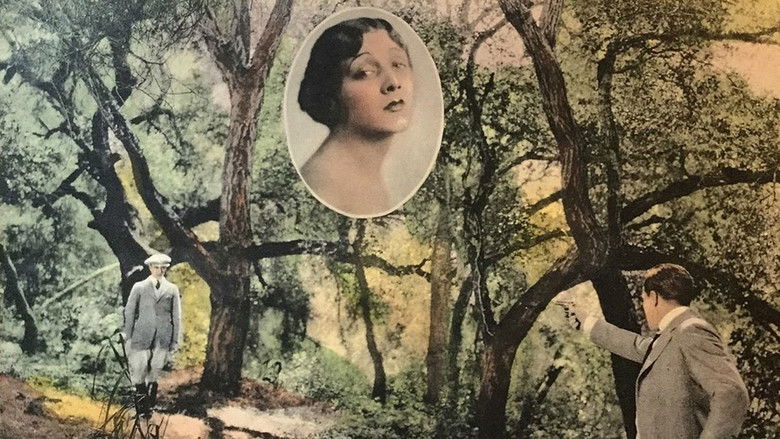
St. Elmo is a man who killed his romantic rival in a brawl. Traveling the world as a confirmed misogynist, St. Elmo returns to home and hearth only to fall in love with the daughter of the local blacksmith. The film is based on the 1867 novel of the same name written by Augusta Jane Evans. Today, St. Elmo is a lost film.
A Yankee Princess is a 1919 American silent comedy-drama film produced and distributed by the Vitagraph Company of America. It was directed by David Smith and stars Bessie Love, who also wrote the screenplay. It is a lost film.
Young and spunky Alannah, an Irish immigrant living in a tenement, sells newspapers to support her family. She is soon helping a district attorney secure proof that the unjust town mayor is collecting bribes. For her reward, Alannah and her boyfriend Jimmy are appointed managers of a municipal restaurant.
The Spirit of the Lake is a 1921 American silent short Western drama film produced by Cyrus J. Williams and distributed by Pathé Exchange. It was directed by Robert North Bradbury and stars Tom Santschi, Bessie Love, and Ruth Stonehouse.
The Vermilion Pencil is a 1922 American silent drama film directed by Norman Dawn, and produced and distributed by Robertson–Cole. It is based on the eponymous 1908 novel by Homer Lea. The film stars Japanese actor Sessue Hayakawa in multiple roles, and white actors Ann May, Bessie Love, and Sidney Franklin, all in Asian roles. It is now a lost film.
Young mother Mary Gordoon is too poor to take care of her infant daughter, Ann, and leaves the child at an orphanage. Ann grows up with a crippled leg in the orphanage, and has fallen in love with a fellow orphan, Jimmy.
The story of Jewish financier Stephen Field and his daughter Esther. Having survived a European massacre years before that claimed his wife and son, Stephen takes immense pleasure in philanthropic work at a community service center in the U.S. while Esther entertains returning soldiers in a canteen. At the canteen, Esther meets Robert Graham, who because of a war wound suffers from fainting spells, and he falls in love with her. William Morris, a brilliant Jewish surgeon also courts Esther; and the men vie for her affection. When Graham loses control of his car due to a fainting spell suffering grave injury, Morris is the only person who can save his life.
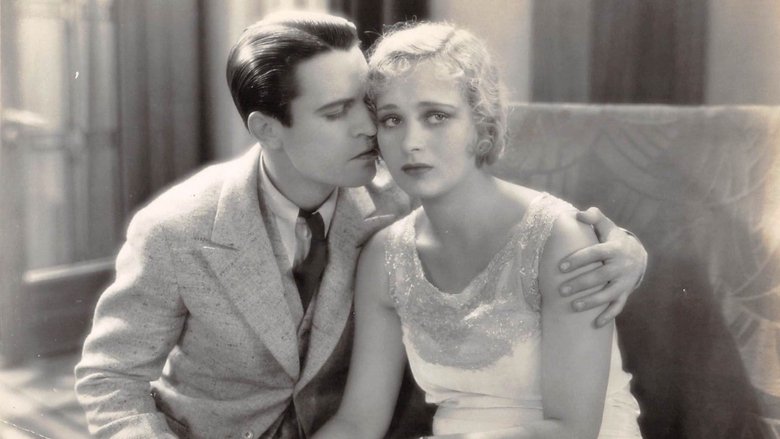
Vallery Grove is in love with Don Warren but her mother opposes the match because he is poor and has no social standing. Don decides to terminate his engagement to Vallery after attending a party where he meets a spoiled rich girl who is interested in him.
The Hollisters, a bright, spirited, wholesome family, are compelled to move into the country. After many efforts to secure a home, Shirley, eldest of the Hollisters, contrives a way out by renting a magnificent old stone barn at a ridiculously low price, transforming it into a house. The owner of the barn is not an ordinary landlord, as you will see, for he is a young man with fine ideals, and he is not content with establishing Shirley and her family in the quaintly beautiful old place, but makes the world a much happier place to live in for all of them.
Gentle Julia is a 1923 American silent romantic drama film based on the popular novel Gentle Julia by Booth Tarkington. Directed by Rowland V. Lee, the film starred Bessie Love.