
Similar to Ústřední loutkové divadlo
heroes (2020)
Displaying the faces and voices of transgender youth, the documentary short shows the authenticity of queer and trans people living in Toronto, while simultaneously discussing the struggles for self-acceptance that people who do not conform to cisgender and heteronormative ideals of gender face. Andy Nguyen, trans director and film student, captures his trans friends in their natural state on 16mm film shot on a Bolex h16 camera. Accompanied by narration written and recited by Salem Rao, this film represents that trans people exist and this is what we look like. Regardless of the obvious everyday transphobia, trans people find community and uniqueness within each other and themselves.
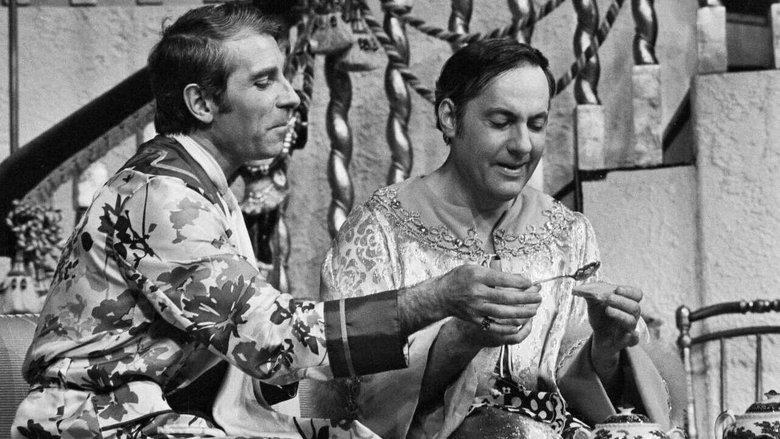
Merci Zaza - La Folle Histoire de la Cage aux Folles (2023)
A look back at "La Cage aux Folles", which ran non-stop for five years, from February 1973, on the stage of the Théâtre du Palais Royal in Paris. At a time when homosexuality was considered a crime by the law, Poiret and Serrault achieved great success in boulevard theater. Their success continued on the silver screen, with three Oscar nominations and a Broadway musical. Combining never-before-seen archives from the play, extracts from the film, confessions by Poiret and Serrault, and interviews with witnesses, this is the story of a wild epic.
Hawaii: Living on the Edge in Paradise? (2019)
During the summer of 2018, hundreds of earthquakes shook the summit of Kiilauea, sparking the volcano's largest eruption in 200 years. To some, it was a disaster. To others, it was the goddess Pele's way of creating new aina (land). The Hawaiian peoples' resilience and cultural unity is a lesson in the true spirit of Aloha.
Discovering Hamlet (2011)
Journey into "Hamlet"-the play and the man-through the experiences of some of the major actors and directors who have brought Shakespeare's great tragedy to life. Christopher Plummer, David Tennant, John Nettles, John Simm, Sir Trevor Nunn, Franco Zeffirelli, Philip Saville, and others explore the enduring appeal of the Prince of Denmark more than 400 years after his stage debut.
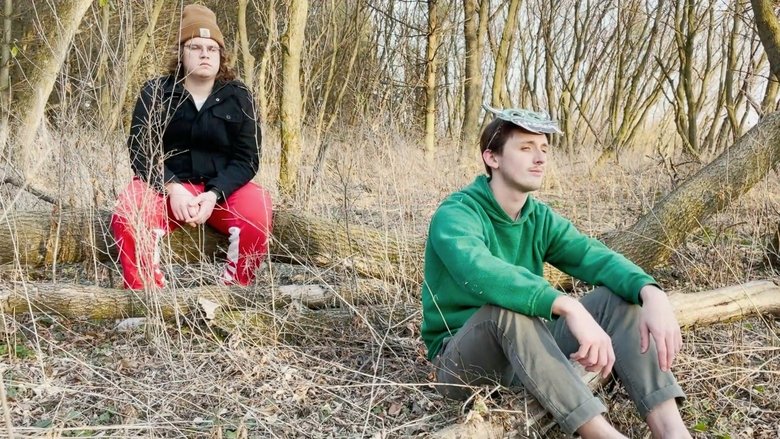
Isaiah vs. The Hodag (2020)
A young man living with his parents in Wisconsin comes face to face with a terrifying monster while searching for the elusive cryptic known as the Hodag.
Aeon (2004)
Dealing heavily with perceptions of time, Aeon documents the urban cityscape as Wellington transforms through a zen-influenced eternal cycle of birth, life, death and rebirth within a 24-hour period.
The Street Performers (2015)
This documentary-style short follows two impoverished teens performing on the streets of London in the days leading up to the London Blitz of 1940.
El circo (1950)
Madrid, Spain, 1949. The Circo Americano arrives in the city. While the big top is pitched in a vacant lot, the troupe parades through the grand avenues: the band, a witty impersonator, the Balodys, acrobats, jugglers, acrobatic skaters, clowns and… Buffallo Bill.
Everything (1972)
Here's a strange one. First, a song on a blackboard: a Polish translation of “I love my little rooster” by American folk writer Almeda Riddle. Then, two men roll around trash bins and lift them to the garbage truck. They do it several times. A woman shouts in the distance. At the end, the picture stops, and the woman sings the song. An early short by Piotr Szulkin.
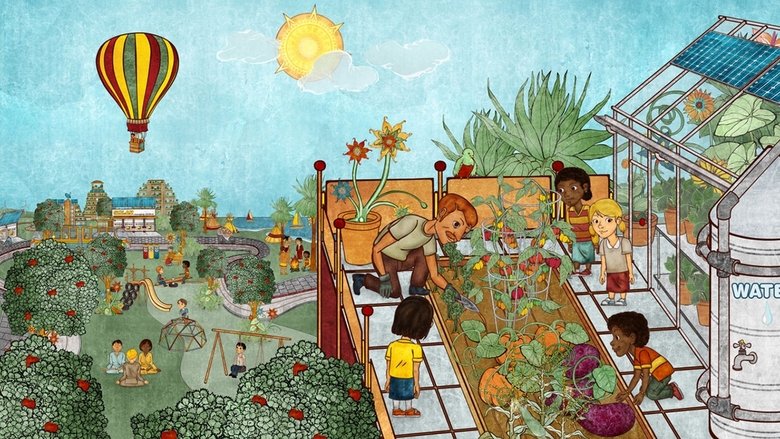
2012: Time for Change (2010)
2012: Time For Change is a documentary feature that presents ways to transform our unsustainable society into a regenerative planetary culture. This can be achieved through a personal and global change of consciousness and the systemic implementation of ecological design.
Signals Through the Flames (1983)
Signals Through the Flames is at once a history and a celebration of the Living Theatre. Founded in the late 1940s by husband-and-wife performers Julian Beck and Judith Malina, the Living Theatre was for many years the predominent American outlet for the avant-garde movement. There were occasional self-imposed exiles to Europe in the 1950s and 1960s, but the group returned full-force during the Aquarius Age to entertain a new generation of theatregoers.
Vltava po válce (1949)
A 4-year-old girl cries, lost in the city. A Soviet soldier on a ferry takes her in and takes her to her home village.
The Living Theatre - a video retrospective (2013)
The Living Theatre is an experimental company founded in New York in 1947 by Julian Beck (New York 1925-1985), painter and poet, and the actress and stage director Judith Malina (Kiel 1926), a student of Erwin Piscator. From the very beginning the group’s activities bore the stamp of social and political commitment, imbued with a strong libertarian matrix. A video montage of films and videos from The Living Theatre Archives.
Who Killed the Federal Theatre? (2003)
Part journalistic investigation and part performance documentary, "Who Killed The Federal Theater?" tells the story of the Federal Theatre Project within the context of a volatile period in the political, social and cultural history of the United States. The film features interview segments with playwrights, including Arthur Miller, and with actors, directors, designers, and historians. It also incorporates rare archival materials and dramatic sequences, including professionally re-created scenes from Federal Theatre productions that transport viewers back in time to a bygone era in American history and entertainment.
The Hall of Lost Steps (1964)
In a series of juxtaposed images and sounds, Jaromil Jireš comments on the tragic premature death of thousands as well as their posterity due to the atomic bomb.
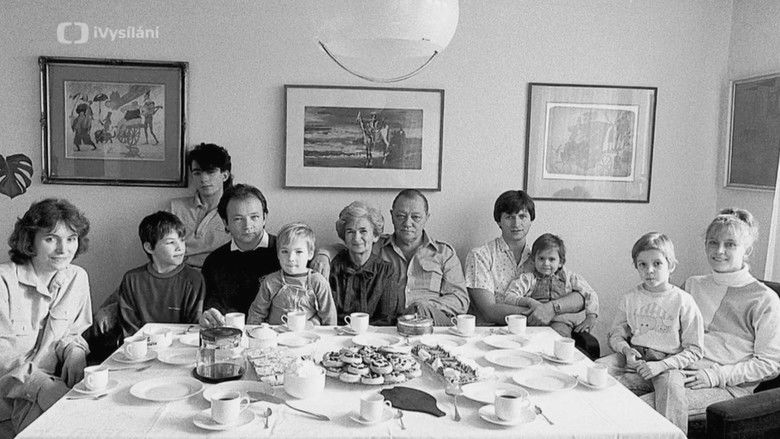
Me, brother and the name Hrušínský (2025)
According to family legend, the name Hrušínský was born after Rudolf and Jan Hrušínský's grandfather Rudolf Böhm was caught stealing pears on a theater stage. The German name Böhm suddenly became Hruškovský and shortly after that Hrušínský. Grandfather Rudolf, later known as Rudolf Hrušínský the eldest, adopted the surname as his own and began using it in 1935. However, the history of the Hrušínský acting family goes back much further. It is therefore not surprising that the brothers Rudolf and Jan also took the same path. The documentary charts their acting beginnings alongside their father Rudolf Hrušínský Sr., from their first roles, through theater engagements at the Drama Studio in Ústí nad Labem and the Drama Club in Prague, to unforgettable film and television roles, when three generations of Hrušínskýs often met in front of the camera.