
Top billed cast
 Karel PechCommentary (voice)
Similar to Polarograf
The Pleasure of Finding Things Out (1981)
Richard Feynman was a scientific genius with - in his words - a "limited intelligence". This dichotomy is just one of the characteristics that made him a fascinating subject. The Pleasure of Finding Things Out exposes us to many more of these intriguing attributes by featuring an extensive conversation with the acclaimed Nobel Prize winner. During the course of the interview, which was conducted in 1981, Feynman uses the undeniable power of the personal to convey otherwise challenging scientific theories. His colorful and lucid stories make abstract concepts tangible, and his warm presence is sure to inspire interest and awe from even the most reluctant student of science. His insights are profound, but his delivery is anything but dry and ostentatious.

A Brief History of Time (1991)
This shows physicist Stephen Hawking's life as he deals with the ALS that renders him immobile and unable to speak without the use of a computer. Hawking's friends, family, classmates, and peers are interviewed not only about his theories but the man himself.
Physics at Half Past Nine (1971)
A physicist, a director of popular-science films, and a sports fan talk about the structure of the atom between periods of a hockey game they watch on TV.
Take the World From Another Point of View (1973)
In 1973 Yorkshire public television made a short film of the Nobel laureate while he was there. The resulting film, Take the World from Another Point of View, was broadcast in America as part of the PBS Nova series. The documentary features a fascinating interview, but what sets it apart from other films on Feynman is the inclusion of a lively conversation he had with the eminent British astrophysicist Fred Hoyle.
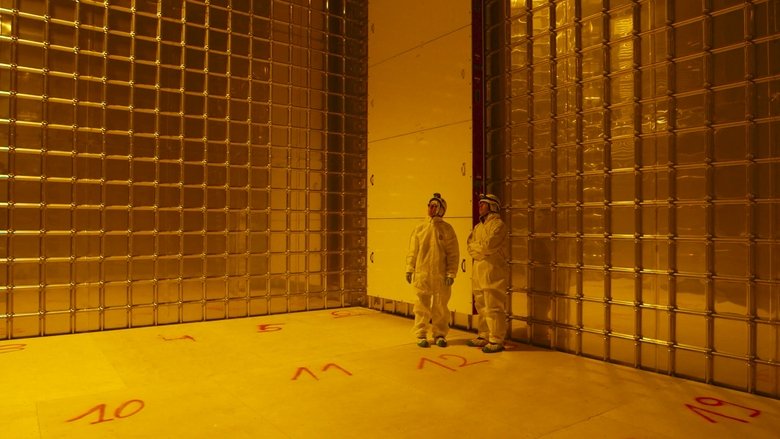
Way Beyond (2022)
The Future Circular Collider is the machine of the future. Thanks to it, we will finally be able to go back in time to the origin of our universe. But which way do we go to set up the largest scientific instrument of all time? Between metaphysics and underground tunnels, a story of the preparations or how men are ready to move mountains for more knowledge.
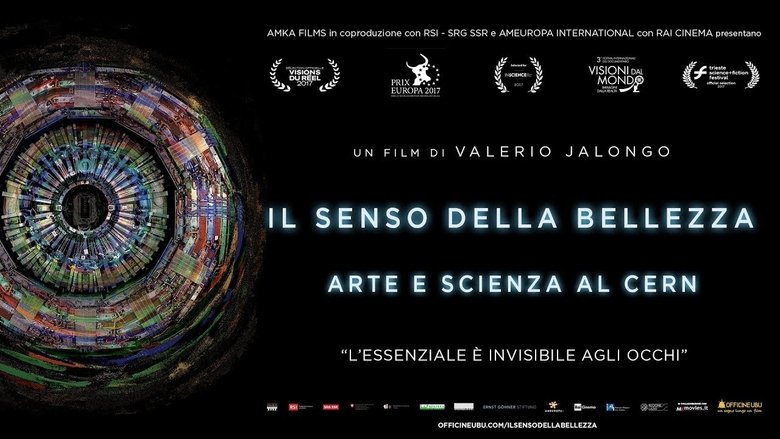
Cern and the Sense of Beauty (2017)
An exploration of the link between science and beauty through the work of scientists at CERN, in Geneva.
CERN, or The Factory for the Absolute (2010)
Human action is often influenced by the desire for knowledge. This desire is in itself a positive impulse and could be said to be the basis of all progress. Let's move this statement to the ground of scientific research at CERN, and see if it applies here - and then test the common experience that human stupidity permeates every social stratum and, in the case of the elites, is a potential threat.

A Trip to Infinity (2022)
Does infinity exist? Can we experience the Infinite? In an animated film (created by artists from 10 countries) the world's most cutting-edge scientists and mathematicians go in search of the infinite and its mind-bending implications for the universe. Eminent mathematicians, particle physicists and cosmologists dive into infinity and its mind-bending implications for the universe.
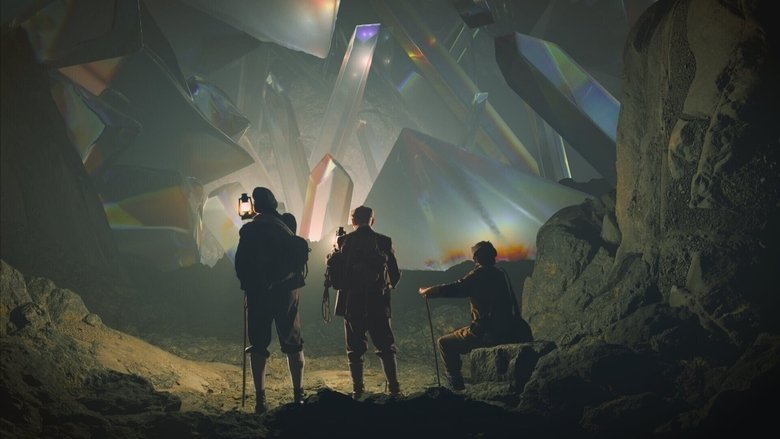
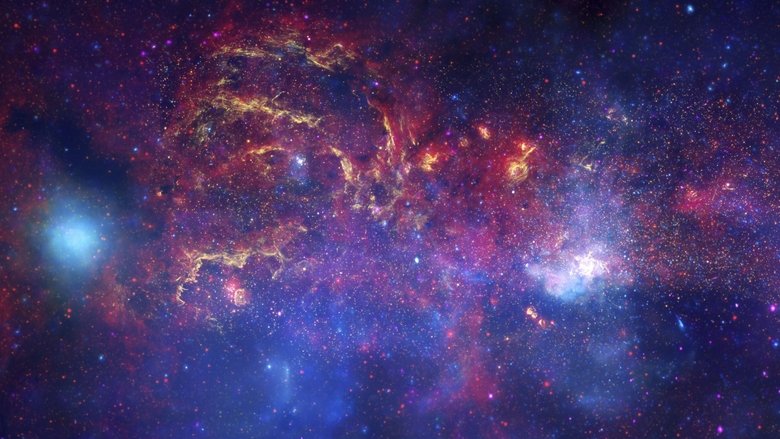
Cosmic Voyage (1996)
The Academy Award® nominee Cosmic Voyage combines live action with state-of-the-art computer-generated imagery to pinpoint where humans fit in our ever-expanding universe. Highlighting this journey is a "cosmic zoom" based on the powers of 10, extending from the Earth to the largest observable structures in the universe, and then back to the subnuclear realm.
The Standard Deviants: The Really Big World of Astronomy, Part 2 (2000)
In Astronomy Part 2, you will learn all about the planets, asteroids, comets, meteoroids, the layers of the sun, fusion, and more. The Standard Deviants make learning astronomy easier with their unique teaching style, which incorporates humor, mnemonics, and sophisticated computer graphics.
The Standard Deviants: The Gravity-Packed World of Physics, Parts 1&2 (2000)
Physics is a system of models of nature according to which all phenomena are explained in terms of matter and force. Sound confusing? It doesn't have to be! Whether you need help with high school physics, need to review for a college physics class, or you're studying for the AP Physics Exam, this physics tutorial will help you understand the basics, such as Newton's Laws, the Law of Universal Gravitation, Kepler's Law and more.
Stephen Hawking and The Theory of Everything (2009)
Twenty years after A Brief History of Time flummoxed the world with its big numbers and black holes, its author, Stephen Hawking, concedes that the "ultimate theory" he'd believed to be imminent - which would conclusively explain the origins of life, the universe and everything - remains frustratingly elusive. Yet despite his failing health and the seeming impossibility of the task, Hawking is still devoted to his work; an extraordinary drive that's captured here in fleeting interview snippets and footage of the scientist sharing a microwave dinner with some fawning PhD students. Though the pop-science tutorials that dapple the first of this two-part biography are winningly perky, Hawking, alas, remains as tricky to fathom as his boggling quantum whatnots
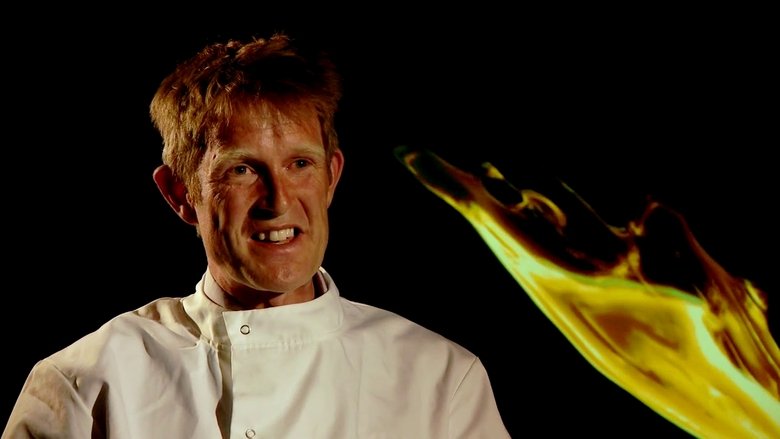
Urine's Superpowers (2014)
That smelly, pale yellow liquid that people flush down the toilet every day is an industrial fertilizer, a diagnostic tool, a medicine, a renewable energy resource; it is an inexhaustible substance that is produced daily in huge quantities. This is the golden story of urine.
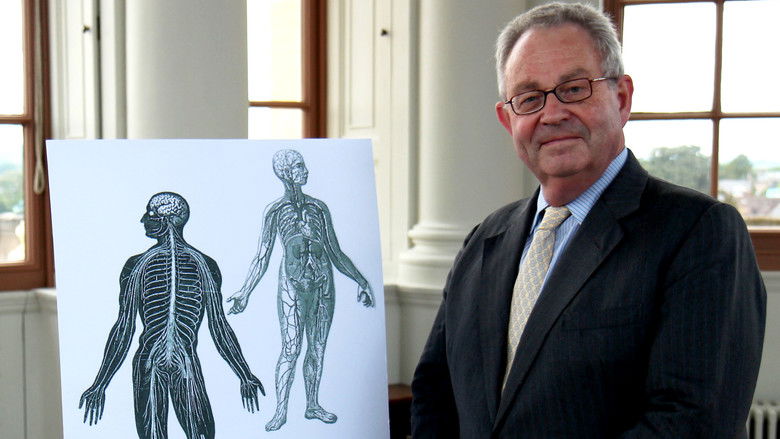
The Fantastical World of Hormones with Professor John Wass (2014)
Expert John Wass presents a documentary telling the story of how hormones were discovered and remain at medicine's cutting edge as we try to deal with modern scourges like obesity.
LSD: Problem Child and Wonder Drug (2009)
LSD: Problem Child and Wonder Drug captures the fascinating story of LSD as it is eloquently told by Dr. Albert Hofmann, the 100-year-old sage-scientist who brought LSD into the world. With interviews and presentations by Rick Doblin, Alex Grey, Ralph Metzner, Carl Ruck, Goa Gil, and others, this historic message from the father of LSD is a timeless relic and an immediate source of inspiration. The story is told through an account of the 2006 International LSD Symposium in Basel, Switzerland. At the now-legendary conference, eighty speakers and two thousand participants gathered for three days in honor of Dr. Hofmann's 100th birthday and to hear Dr. Hofmann speak about his life, his discovery, and his thoughts on the psychedelic experience. It was also an occasion for leading doctors, researchers, artists and thinkers in the psychedelic field to present their work.
A Universe from Nothing (2009)
Lawrence Krauss gives a talk on our current picture of the universe, how it will end, and how it could have come from nothing. Krauss is the author of many bestselling books on Physics and Cosmology, including "The Physics of Star Trek."
