
Game Over? (2020)
This documentary shows how one of the biggest youth theatres in Europe dealt with the COVID-19 pandemic.
This documentary shows how one of the biggest youth theatres in Europe dealt with the COVID-19 pandemic.
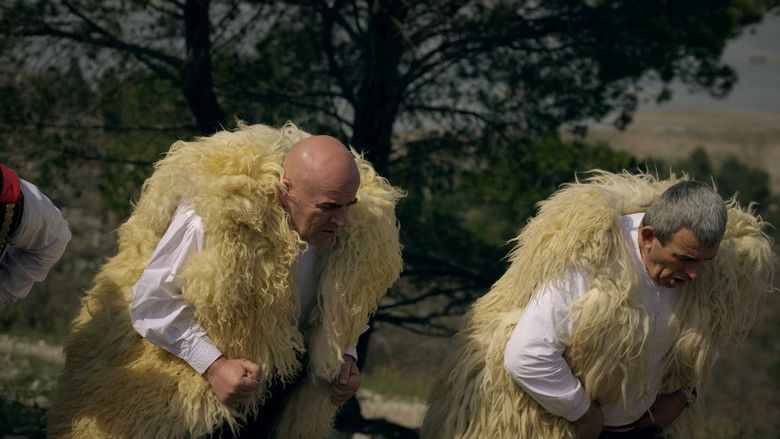
“Gjama” is a rarely practiced mourning ritual that was performed by Albanian men throughout the centuries. By shouting specific phrases and acting out a strict choreography, it is a way of paying respect to the deceased but also overcoming grief and pain over the loss of a loved one. Through the documentation of the re-enactment of the ritual, Zgjim Elshani seeks to recover fragments of the practice in the communities where this form of collective grieving is still a way of overcoming loss. By doing so, the project intends to rethink collective grieving and what it means to publicly display emotions in a male-headed society.
Four children want to invite their friends to a picnic, but they don't know how to use the telephone. Suddenly, the room goes dark and the phone becomes large enough for them to climb into. They walk through a tunnel and meet a man named Telly, who takes them into the world of Telezonia, where they are shown various kinds of telephones. They meet several costumed characters, such as Question Mark, who teaches them how to answer the phone; Q and Z, who show them how to use the phone book; and Exclamation Point, who teaches them how to place a call. By the time they leave Telezonia, they are full-fledged telephone users.

This RKO Pathé Screenliner show members of the 'snow patrol' at work in the Cascade Mountains of Washington state. At designated places, they measure snowfall and take core samples of the snow and measure its weight and density. They also measure river currents in relation to the snowfall. The data is used by the U.S. Geological Survey to help determine how the water runoff in the spring will translate into supplies of fresh water.
A short documentary on the making of the Cartoon Network's Clone Wars micro series, specifically the final 5 episodes.

Images, voices, and interrupted silences that evoke the intangible losses caused by COVID-19.
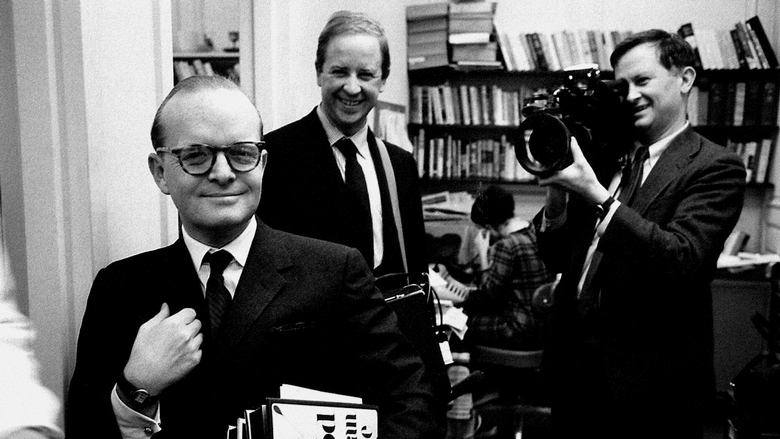
At his Long Island beach house, and on the occasion of the publication of his masterful nonfiction novel In Cold Blood, reporter Karen Dennison interviews celebrated writer Truman Capote, who displays his exuberant personality, makes witty jokes, shares his thoughts on writing, reflects on various aspects of the book and, in a sweet and endearing voice, reads and explains some of its highlights.
Shot at high noon in New York’s financial district, Wallstreet is much like a vertical tickertape, charting the existence of typical office workers. The film’s elongated shadows suggest these workers’ depersonalized, neuter, nearly uniform lives, which flow by without any solid or stable element that might provide definition.
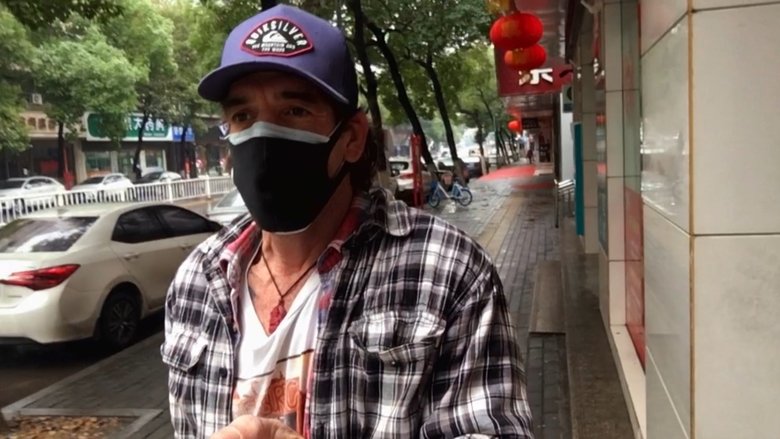
As the WHO warns the coronavirus is reaching a dangerous tipping point, watch the most up to date and comprehensive account of the extraordinary chain of events that have left the world on the edge of a pandemic.
This short film brings light to the reality of transsexuality during childhood and aims to emphasize the importance of the role of grandparents.
Angela Davis visiting the German Democratic Republic. A film about the people she met and her impressions.

After a near-death experience, a person floats in a mysterious space, gradually being reborn by reconnecting with the sensations of their body.
This documentary recounts the history of modern aviation (primarily in Britain) from roughly 1900 until the inter-war period, using old monochrome footage of original aircraft, contemporary color footage of replica planes in flight as well as a number of photographs of famous aviators.
Mónica Calle is fighting with her theatre company to remain an actress, a woman, in a society where the place of art is constantly challenged. She draws this strength from Zona J, a district in the periphery of Lisbon, where she has set up her new place of creation, surrounded by former prisoners.
Showcasing three short films by American writer James Baldwin, wherein he muses about race, sexuality and civil rights, among other topics, in Istanbul, Paris and Great Britain.
Is it okay to ride the subway without paying for the ticket?
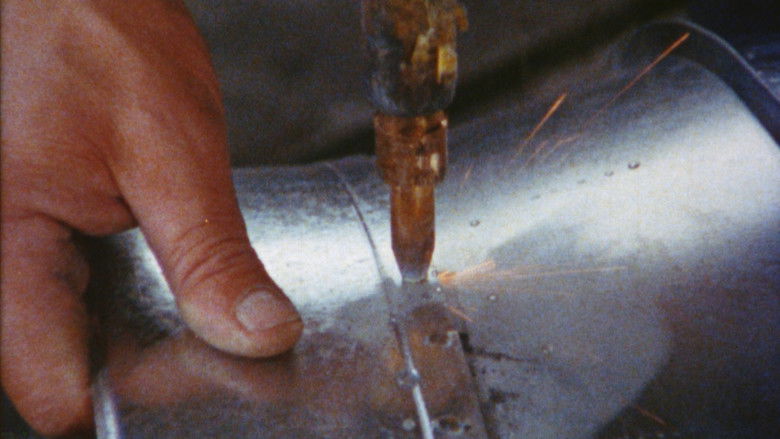
The found-footage short film OVERWORK offers a personal reinterpretation of a collection of instructional 16mm films from the German Employment Agency.
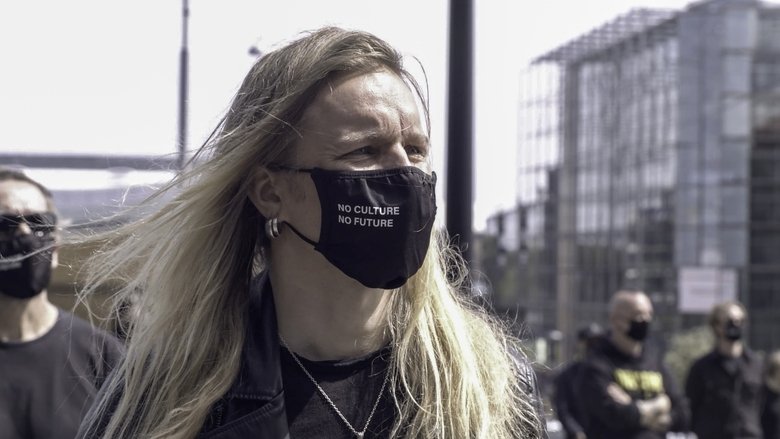
10 Letters to the Future is a documentary film that is a mid-term review in a world of intertwined crises. It is a puzzle, a kaleidoscope that enables a multi-voiced debate in society. The collectively made film was conceived in the era of the Coronavirus, when the reality of global anomalies pierced everything we took for granted. It was a time that caused many to reassess their lives in a new light. What happened to us and what kind of future do we want to be heading towards? Virus researcher, climate activist, political scientist and anti-vaccine protesters see the future challenges facing our society in a very different light. As the virus takes over the world, schoolchildren start collecting letters to be encapsulated in a wooden coffin built by students to be opened more than 50 years from now. The main characters in the documentary write their letters, addressing their loved ones or something unknown in the future.
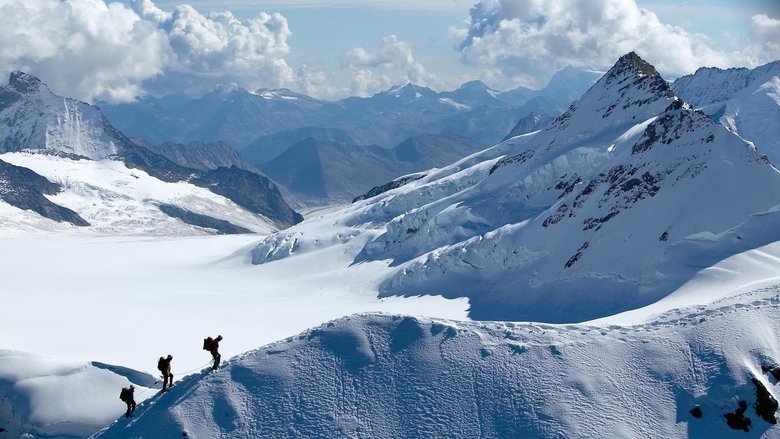
In 1966, John Harlin II died while attempting Europe's most difficult climb, the North Face of the Eiger in Switzerland. 40 years later, his son John Harlin III, an expert mountaineer and the editor of the American Alpine Journal, returns to attempt the same climb.
People-watching across lower Manhattan.
Susana Barriga’s documentary, the illusion, begins with violence. A long shot reveals a man standing on a street corner, his features indiscernible in the night. He moves out of the camera’s line of vision, but the filmmaker, persistent, moves with him as the jostling of the camera marks her steps. As we learn moments later, the man in the distance is Susana’s father – and this is the clearest image of him we will have. Suddenly, an angry British man demands that Susana cease filming. Susana protests in heavily accented English, “He is my father!” Glimpses of a man’s torso are followed by blurred images as the camera spins rapidly over surfaces. The image cuts to black. A new male voice asks in carefully spaced out words if Susana would like him to call the police. When she doesn’t respond immediately, he speaks louder, as though volume would compensate for the language difference. She gives her name; she refuses the offer of an ambulance.