
REST (2025)
When immersed in the contours swelling and waning in the forest of needles, the mundane world drifts away, and we only live to breathe.
When immersed in the contours swelling and waning in the forest of needles, the mundane world drifts away, and we only live to breathe.
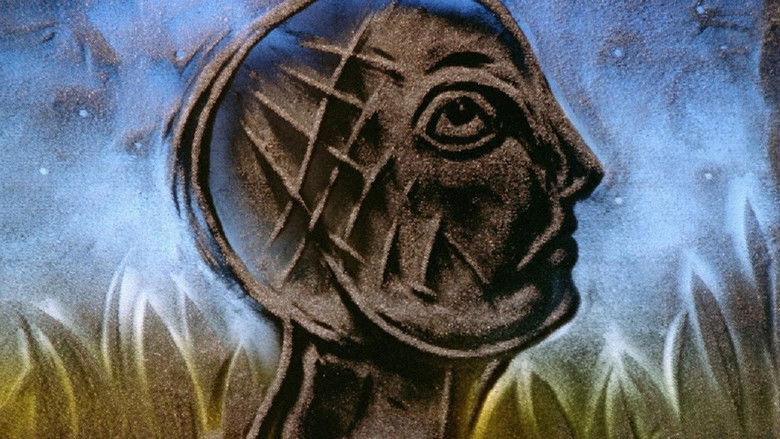
In this non-narrative animated film inspired by composer François Couperin's harpsichord composition "Barricades mystérieuses," Jacques Drouin explores a whole new way of using the pinscreen to create animated images. He pivots the screen and uses low-angled light to capture images in high relief. The result is like a sculpture whose expertly modelled forms are revealed through film. A film without words.
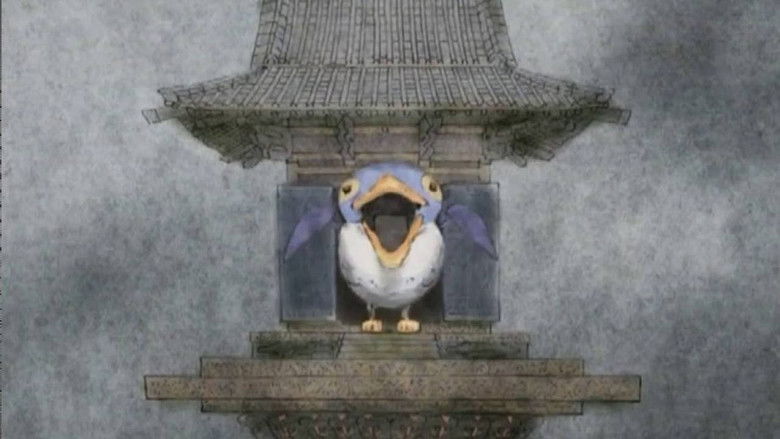
An animated film based on one of the renku (collaborative linked poems) in the 1684 collection of the same name by the 17th-century Japanese poet Bashō. The creation of the film followed the traditional collaborative nature of the source material – the visuals for each of the 36 stanzas were independently created by 35 different animators. As well as many Japanese animators, Kawamoto assembled leading names in animation from across the world. Each animator was asked to contribute at least 30 seconds to illustrate their stanza, and most of the sequences are under a minute (Yuriy Norshteyn's, though, is nearly two minutes long).
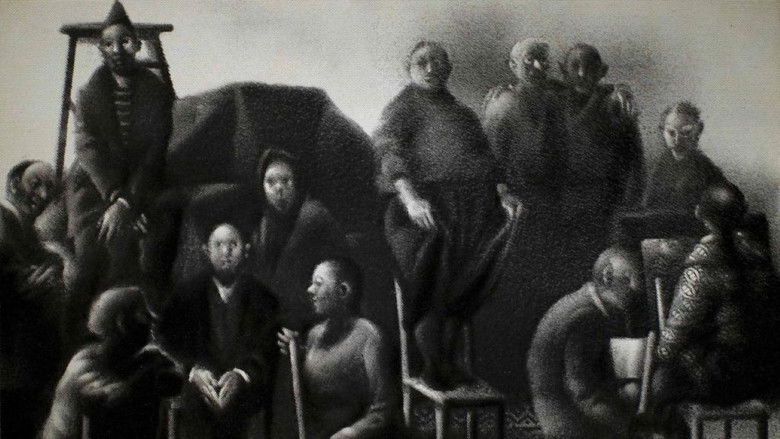
This abstract yet compelling philosophical tale uses the Alexeïeff-Parker pinscreen as a metaphor for the particles that make up the universe. Through 4 tableaux that explore her character’s thoughts, filmmaker Michèle Lemieux takes a look at the profound reflections of this everyman, whose questions are part of humanity’s eternal quest for meaning.
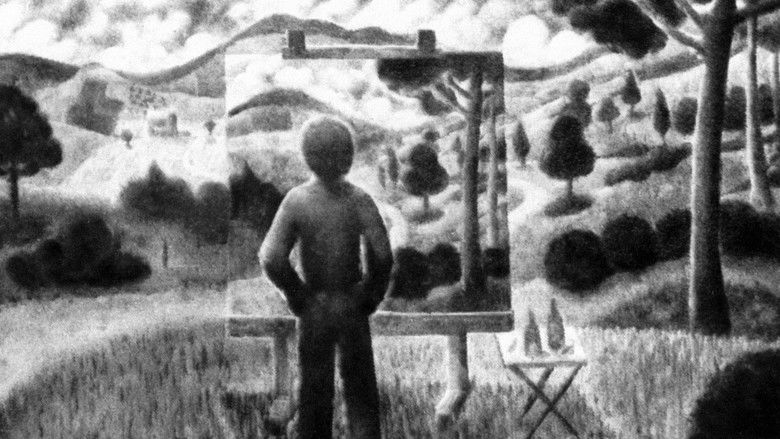
In this short, an artist creates a painting of the landscape he sees, then finds he can literally climb into the picture to see the fantastic world inside.
This short animated film follows Antoine, a young boy fascinated by his mysterious neighbour, a man rumoured to have once been a big game hunter. Antoine is eager to learn about hunting, but the lesson he learns from the wise older man is not at all what he had expected: Antoine is left with a profound reverence for life.
When a man becomes blind, his life is all turned around. He can only use his touch to get around in his house. The objects become enemies. But an angel is looking over him.
Utilising the Alexeïeff-Parker pinscreen technique, this visually poetic non-narrative film revisits Diego Vélasquez’s 1652 portrait of Queen Mariana of Austria with genuine feeling.
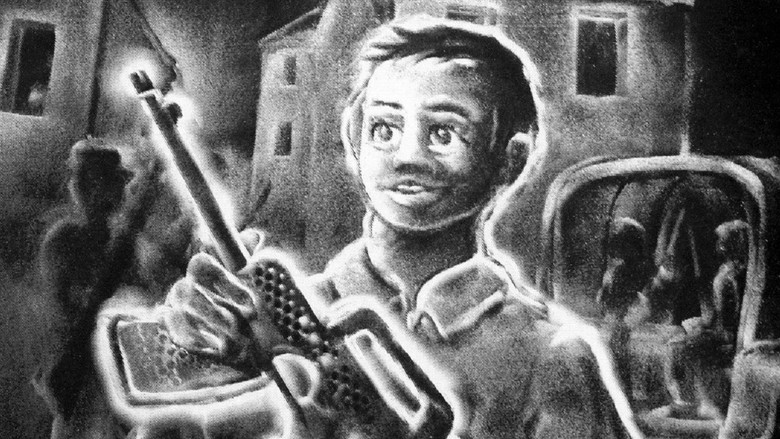
The story of a young boy and his father, both of whom are enlisted to fight in the war. The boy's pride soon turns to fear as the bullets whistle overhead. His father takes his place and is immediately shot and killed. Horrified, the boy understands that war is not a game.
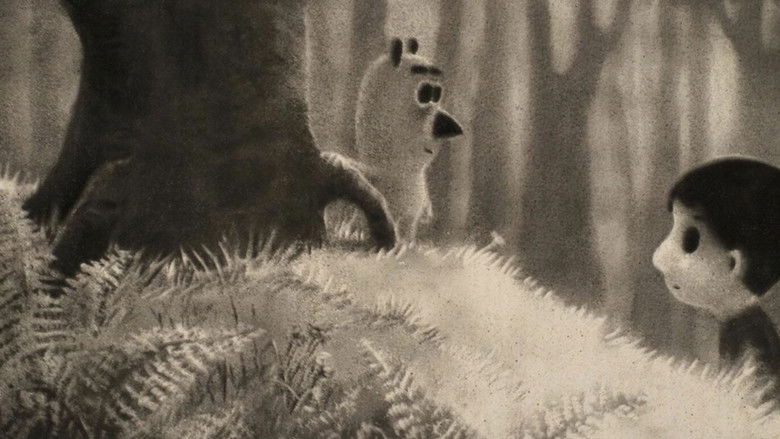
The forest can be full of scary creatures, Eliot’s parents caution, but the mystery might be too tempting for a kid who doesn’t want to go to bed.
Animated short film made in three parts on the pin screen by Alexeieff-Parker. With these three exercises, director Jacques Drouin experiments with the play of light and shadow alone. Original, this experience presents us with a reality that is not truncated although it may appear as follows: the faculty of wonder will be able to create the necessary link between everyday life and the way it was rendered.
This documentary is a portrait of the animator of Le Paysagiste, from his childhood in Eastern Quebec to his career at the NFB. Trained at the École des beaux-arts de Montréal and the University of California at Los Angeles (UCLA), Drouin became in some ways the heir to Alexandre Alexeïeff when he began working with the Alexeïeff-Parker pinhole screen in 1974. Recounting his relationship with the filmmaker and inventor, coming back with lucidity and precision on the whole of his own filmography, Jacques Drouin delivers here a precious testimony on creation. Enriched with numerous excerpts and unpublished images from the filmmaker's personal archives, Jacques Drouin en relief is both the adventure of a lifetime and a valuable lesson in cinema.
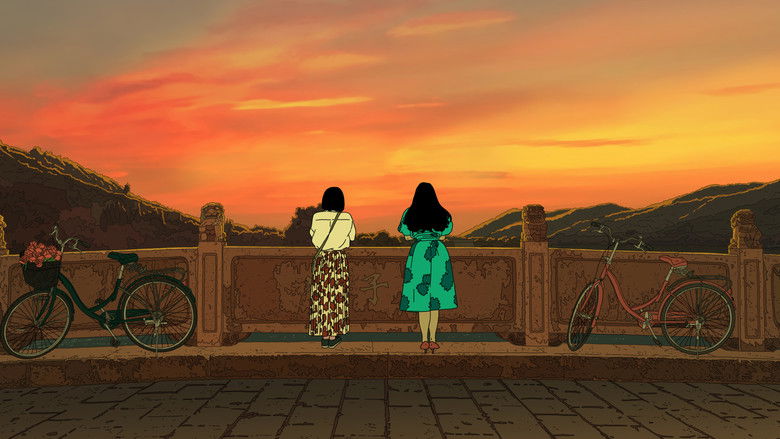
In the 1990s, a group of students on the campus of the Chinese Southern Academy of Arts are pursuing their studies and preparing to face the world. China is opening up to the West and the students’ lives are a tangle of love stories and friendships, artistic research, ideals and ambitions brought about by new influences. Caught between tradition and modernity, they have to decide who they want to become.
The kids are going about their lives like other children, at times finding it difficult to control their powers. It is only during a school trip when they run into the mysterious circus performer, Erma , that things start to heat up.
We see a lion at a piano, apparently trying to compose a melody. He gets frustrated, starts speaking vehemently in what sounds like German and begins pacing the floor-and his piano does likewise! After they settle back to work, a monkey comes in, words are exchanged and the monkey goes to the back of the piano with a brush and a dustpan. Musical notes flow out of the piano onto the floor and the monkey brushes most of them into the dustpan and drops them back into the piano.
One sunny day in the Antarctic, a little fisher-penguin catches fish for his friends. They are impatient for more as always. Into this happy scene arrives a charming salesman. Dazzled by his confidence and his fish-shaped tie, the penguins follow him away, leaving the fisher-penguin alone. It’s not long before the group has returned, this time with a huge, heavy fishing machine. As it cranks into gear, the fisher-penguin looks at the ice worriedly…. this surely won’t end well…
Life as they knew it was all soon to end, when the darkness arrived and began to descend.
When her cold, lonely existence is changed forever by the arrival of a huge comet and a smouldering stranger, our heroine thinks her luck has changed. But when things sour she quickly finds out that knowing what's good for you doesn't always mean doing what's good for you.