Top billed cast
 Casey Campbell
Similar to Hidden Worlds
A Crack in the Mountain (2023)
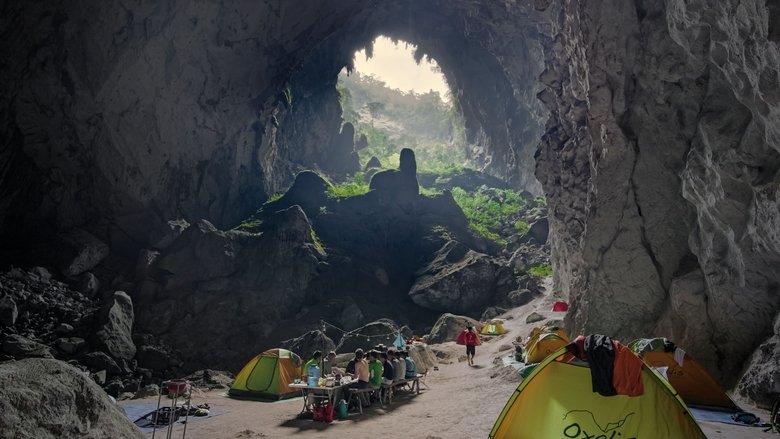
Deep in the jungle of Central Vietnam, lies a magnificent underground kingdom. Hang Son Doong which translates as “mountain river cave”, is the largest cave passage in the world and a place of spectacular beauty. With more people having climbed Everest than visited Son Doong, its pristine charm has remained undisturbed for millions of years. In 2014, Son Doong’s future was thrown into doubt when plans were announced to build a cable car into the cave. With many arguing that this would destroy its delicate eco-system and the local community divided over the benefits this development would bring, the film follows those caught up in the unfolding events. Beautifully shot and scored, “A Crack In The Mountain” is a powerful exposé about how both good and bad intentions can ultimately lead to one of the world’s greatest natural wonders being trampled for money. As well as inspire those who care about our natural heritage to fight to protect it.
Becoming Cousteau (2021)
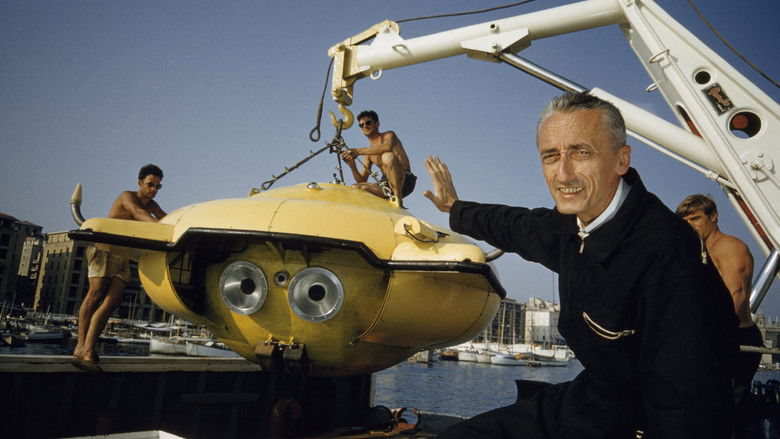
Adventurer, filmmaker, inventor, author, unlikely celebrity and conservationist: For over four decades, Jacques-Yves Cousteau and his explorations under the ocean became synonymous with a love of science and the natural world. As he learned to protect the environment, he brought the whole world with him, sounding alarms more than 50 years ago about the warming seas and our planet’s vulnerability. In BECOMING COUSTEAU, from National Geographic Documentary Films, two-time Academy Award®-nominated filmmaker Liz Garbus takes an inside look at Cousteau and his life, his iconic films and inventions, and the experiences that made him the 20th century’s most unique and renowned environmental voice — and the man who inspired generations to protect the Earth.
Chasing Coral (2017)
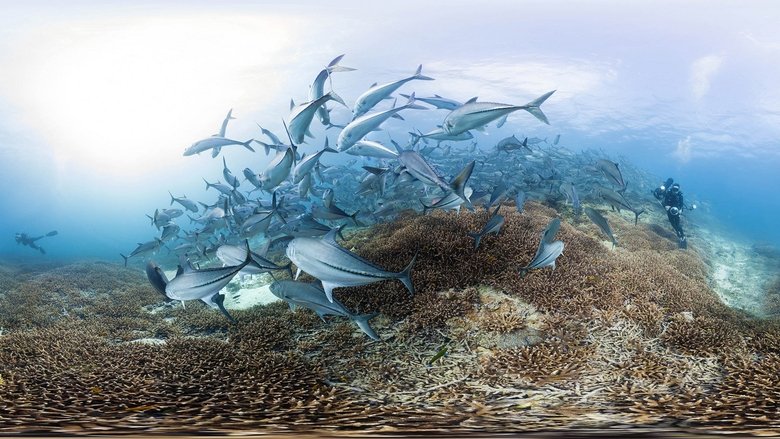
Coral reefs are the nursery for all life in the oceans, a remarkable ecosystem that sustains us. Yet with carbon emissions warming the seas, a phenomenon called “coral bleaching”—a sign of mass coral death—has been accelerating around the world, and the public has no idea of the scale or implication of the catastrophe silently raging underwater.
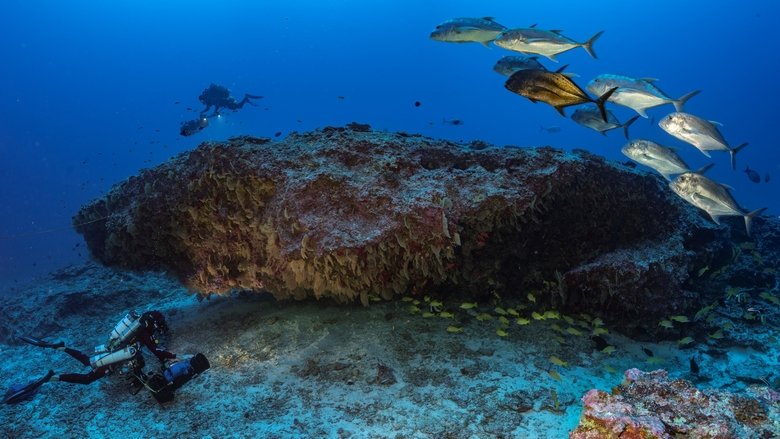
The mysteries of Mont La Pérouse (2021)
160 km southwest of Reunion Island, just a few dozen metres beneath the surface of the Indian Ocean, lies the peak of an underwater volcanic structure known as Mont La Pérouse. The base of this enigmatic geological formation lies 5000 meters below sea level, with a size comparable to that of Mont Blanc. Permanent currents and strong winds characterise this site in the open seas, culminating in complex diving conditions under which Laurent Ballesta, together with his Gombessa diving team and local researchers had to navigate in order to conduct the study in depth. Further techniques such as observation and photographic inventory, biological and geological sampling, and the use of cameras and sonars were employed in this challenging expedition.
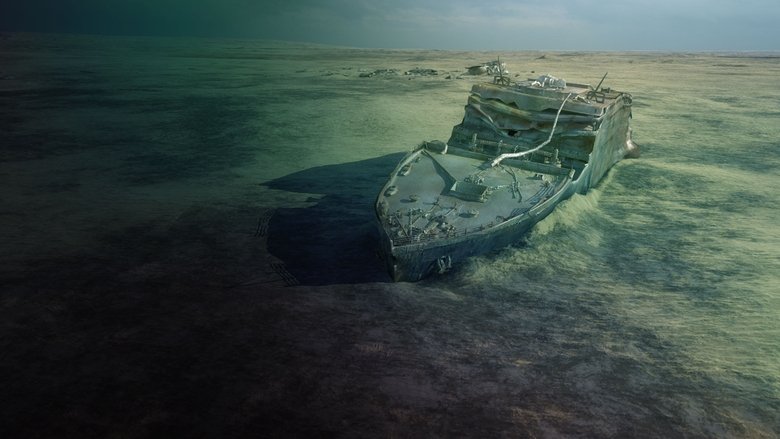
Drain the Titanic (2015)
Computer-generated imagery and other visualization techniques reveal how it would look if all the water was removed from RMS Titanic's final resting place.
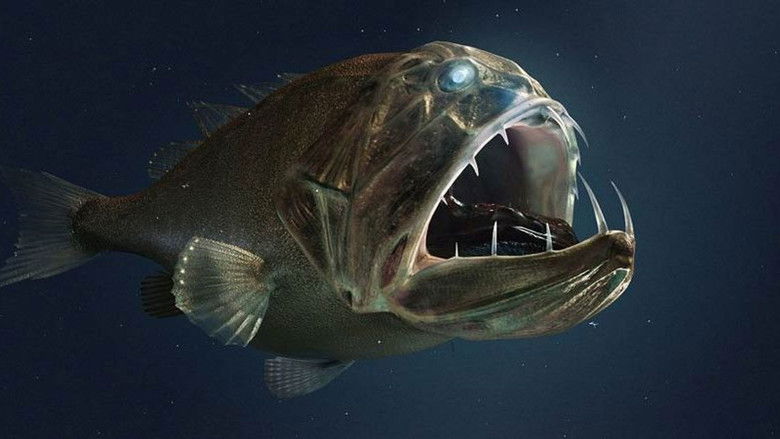
Extreme der Tiefsee - Abysses (2018)
The deep waters of the Southern and Pacific Oceans still hold many mysteries. Two international teams of scientists set out to explore the icy depths of Antarctica and the abysses of the Mariana Trench. Filmed for the first time, creatures seemingly from another galaxy cohabit with champions of survival in extreme conditions.
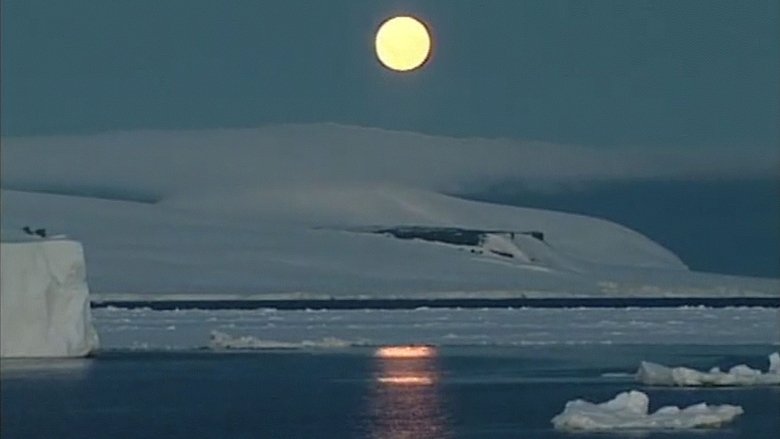
Antarctica: A Frozen History (2002)
Antarctica: A Frozen History takes a look at the history and stories of the human explorations in the Antarctic. Although quite slow paced and relatively old, the documentary film successfully incorporates reconstructed film material and original Antarctic expedition footage to fully illustrate the hardships of the heroic and extreme arctic explorations. Human endurance is tested to the maximum, as the documentary takes a look back at those who have tried, failed and conquered this most unforgiving landscape. Some of these stories entail Robert Falcon Scott, a Royal Navy officer and explorer who led two expeditions to the Antarctic regions: the Discovery expedition of 1901–1904 and the ill-fated Terra Nova expedition of 1910–1913. Scott reached the South Pole in January 1912 only to find he had been beaten to the spot by 33 days. His entire party died on the return journey; eight months later, a search party discovered some of their bodies, diaries and photographs.
Blue Water, White Death (1971)
Peter Gimbel and a team of photographers set out on an expedition to find and film, for the very first time, Carcharodon carcharias—the Great White Shark. The expedition lasted over nine months and took the team from Durban, South Africa, across the Indian Ocean, and finally to southern Australia.
The Living Sea (1995)
The Living Sea celebrates the beauty and power of the ocean as it explores our relationship with this complex and fragile environment. Using beautiful images of unspoiled healthy waters, The Living Sea offers hope for recovery engendered by productive scientific efforts. Oceanographers studying humpback whales, jellyfish, and deep-sea life show us that the more we understand the ocean and its inhabitants, the more we will know how to protect them. The film also highlights the Central Pacific islands of Palau, one of the most spectacular underwater habitats in the world, to show the beauty and potential of a healthy ocean.
Lewis & Clark: Great Journey West (2002)
Explorers Meriwether Lewis and William Clark lead a U.S. expedition to the Pacific Ocean and back.
The Great Achievement (1958)
A documentary about New Zealanders in Antarctica: researching International Geophysical Year, and supporting the Trans-Antarctic Expedition by laying supply depots for Vivian Fuchs’ overland crossing.
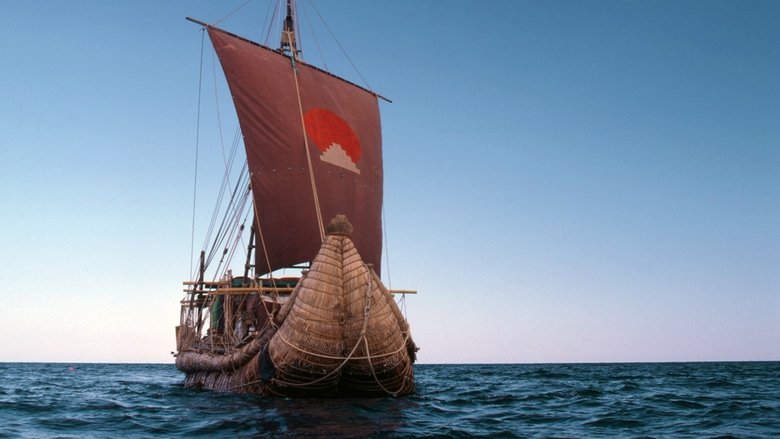
The Tigris Expedition (1979)
Explorer Thor Heyerdahl and his ten-man crew sailed their reed boat, the Tigris, over routes he believes were followed by Sumerian traders 5,000 years ago. The film goes beyond science to focus on the man, Heyerdahl, in an effort to explain what motivates him to risk his life in the search for knowledge.
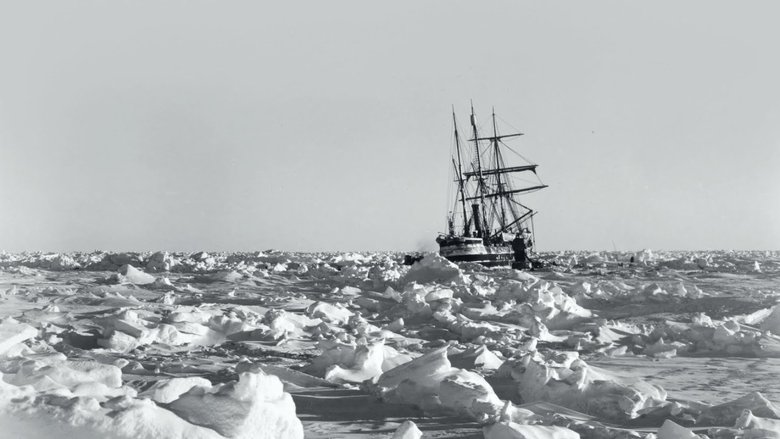
South (1919)
The story of the 1914-1916 Antarctic exploration mission of Sir Ernest Shackleton.
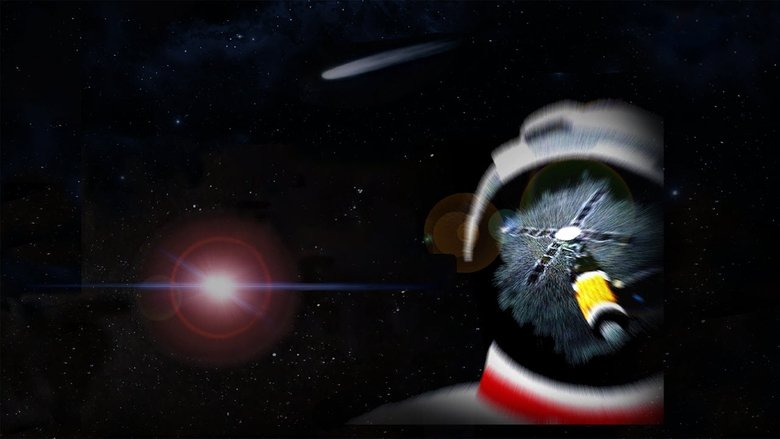
Searching for Skylab, America's Forgotten Triumph (2019)
The first American space station Skylab is found in pieces scattered in Western Australia. Putting these pieces back together and re-tracing the Skylab program back to its very conception reveals the cornerstone of human space exploration.
Sealab (2019)
The Sealab project, launched in 1969 off the shore of northern California, was the brainchild of a country doctor turned naval pioneer who dreamed of pushing the limits of ocean exploration like NASA did space exploration. The massive, 300-ton tubular structure was a pressurized underwater habitat, complete with science labs and living quarters for divers who would live and work there on the ocean floor for days or even months at a time. During the height of the Space Race, this daring program also tested the limits of human endurance and revolutionized the way humans explore the ocean.
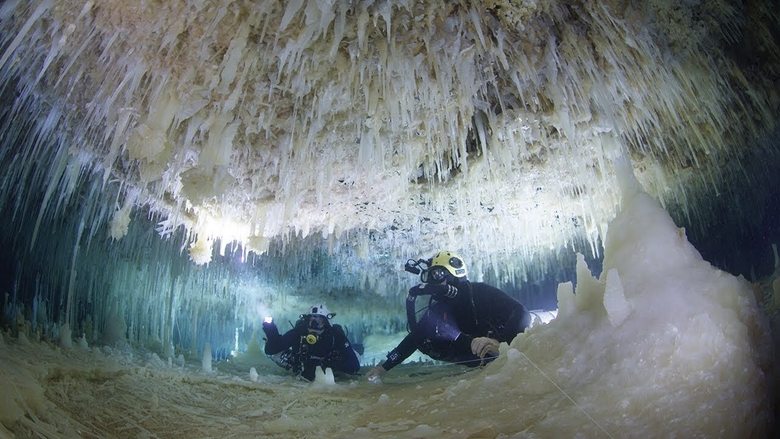
Ancient Caves (2020)
Ancient Caves brings science and adventure together as it follows paleoclimatologist Dr. Gina Moseley on a mission to unlock the secrets of the Earth’s climate in the most unlikely of places: caves. Moseley and her team of cave explorers travel the world exploring vast underground worlds in search of stalagmite samples – geologic “fingerprints” – that reveal clues about the planet’s climate history. Their quest leads them to some of the world’s most remote caves, both above and below the water, in France, Iceland, the Bahamas, the U.S. and Mexico’s Yucatan Peninsula. Together, they go where very few humans will ever go, revealing the incredible lengths scientists will go to study the unknown.
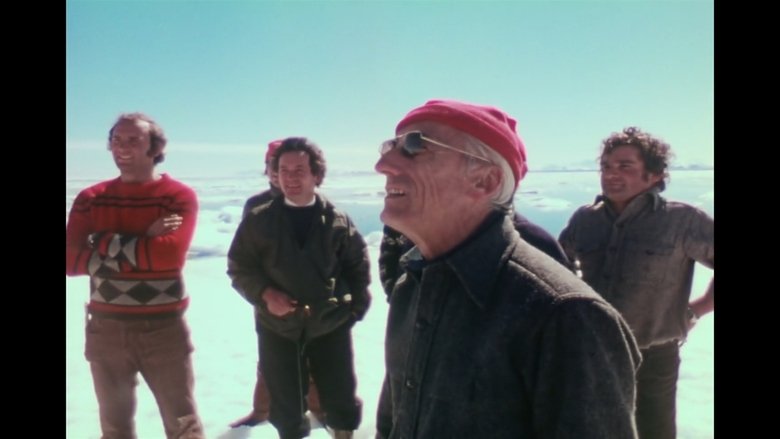
Voyage to the Edge of the World (1976)
On his ship "Calypso," as well as in a submarine, Jacques Cousteau and his crew sail from South America and travel to Antarctica. They explore islands, reefs, icebergs, fossils, active volcanic craters, and creatures of the ocean never before seen. This voyage took place in 1975, and Captain Cousteau became one of the first explorers ever to dive beneath the waters of the frozen South Pole.

Rodez (2017)
An exploration of Rodez Cathedral and its stained glass windows: praying figures and scientific imagery. A study on color, repetition and flickering consisting of 292 photographs.
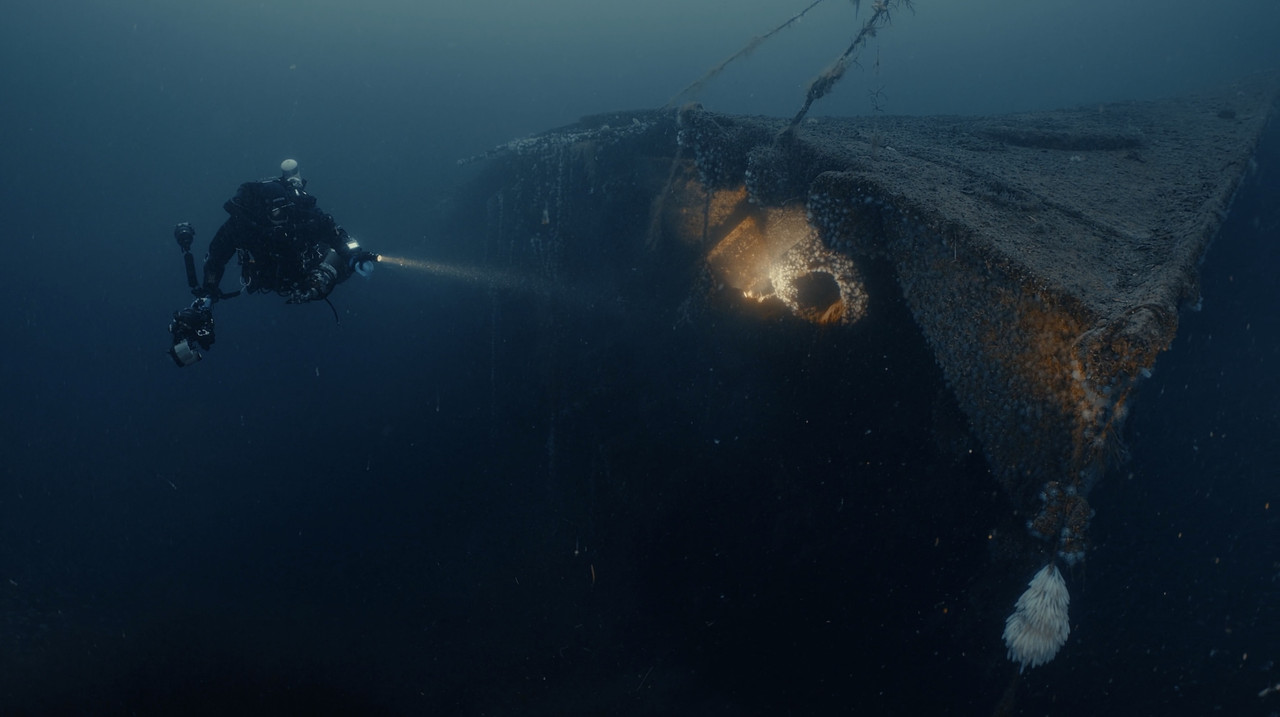
Y1: Silence of the Deep (2020)
14 September 1943: The legendary submarine Y1 “Katsonis” was sunk north of the island of Skiathos by the German submarine chaser UJ 2101. Through the book of XO Elias Tsoukalas who escaped capture and had to swim for nine hours to reach shore, secret documents, and crew members’ diaries, the documentary unfolds the human stories woven around the submarine. Seventy-five years later, with the support of the Hellenic Navy, we search for the submarine sunk at 253 metres depth and film the wreck for the very first time.
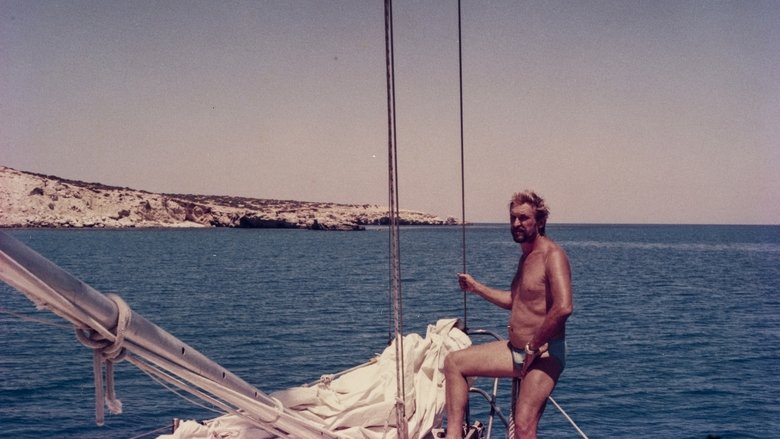
Belov: A Life at Sea (2025)
The first biographical documentary film about the greatest Brazilian sailor by miles traveled. Setting sail from Salvador - Bahia - Brazil, Capital of the Blue Amazon, the Ukrainian Brazilian personality Aleixo Belov has already circumnavigated the globe five times, three of them alone, aboard a little sailboat built in his own backyard.