
Kalabaka (The Secrets of Unknown Europe) (1928)
A reporter travelling in the Balkans is trying to gain a deeper understanding of the region, which is a melting pot of cultures, languages and religions.
A reporter travelling in the Balkans is trying to gain a deeper understanding of the region, which is a melting pot of cultures, languages and religions.
Fred von BohlenHimself
After moving to Oregon and falling in love with the ability to explore the outdoors with ease with his wife and two kids, Rashad Frazier knew he had to extend the invitation to others. Driven by the magic of his experiences, his background as a chef, and his love of good food and connecting people to incredible places that open up to conversation, he created Camp Yoshi, which curates custom outdoor adventures centered around shared meals and shared experience with the goal of creating a space for Black people and allies to unplug and in turn reconnect with the wilderness. By virtue of being in these places, Camp Yoshi's trips transform historically segregated spaces into safe havens for the community, conversation, and nourishment.
Pelicans move
A military horseback riding event from 1897.
Released on October 4, 1896 in Lyon ( France ) under the title “ Fêtes de l'inauguration du monument de Guillaume Ier à Breslau : II. - Le voile tombe (Lyon républicain, 4 octobre 1896)”. (catalogue-lumiere.com)
Teasing tigers with meat.
The Boxing Kangaroo is an 1896 British short black-and-white silent documentary film, produced and directed by Birt Acres for exhibition on Robert W. Paul’s peep show Kinetoscopes, featuring a young boy boxing with a kangaroo. The film was considered lost until footage from an 1896 Fairground Programme, originally shown in a portable booth at Hull Fair by Midlands photographer George Williams, donated to the National Fairground Archive was identified as being from this film.
This scene is a part of the very first film shot produced by the Manaki Brothers. Despina, the Janaki and Milton Manaki's grandmother, was recorded weaving in one high-angle shot. For no apparent reason, the first shot made in Macedonia, in the Balkans in fact, made by these two cinematography pioneers, contains peculiar symbolics: at the moment when the grandmother Despina spins the weaving wheel, film starts rolling in our country.
Almost 200 women file by a device on the wall from which they take their time checks. A man runs half-way across the screen at the end of the film.
A camera on an overhead crane travels down a large, long aisle where men are shown working on large machinery on either side. Carts carrying equipment are shown traveling on rails down the aisles. There are also men walking in the aisles. From Bitzer's Westinghouse Works series.
On the left of the screen, a small group of men lift the top off of what appears to be a turbine with a crane and continue to check the machine, tightening various parts with wrenches. On the right side, a few men appear to be testing the workings of what may be a turbine.
On 4 September Frederick Albert Cook (1865-1940) arrived in Copenhagen on the ship 'Hans Egede'. He received a hero's welcome as the first man to set foot on the North Pole. He was greeted by the king, and given an honorary doctorate at the University of Copenhagen. Only a few days later, however, his endeavour was questioned, and in December the University rejected Cook's documentation. Carl Th. Dreyer is seen as one of the journalists taking notes. (DFI)
Footage of the German airship Hansa over Copenhagen.
The opening of the Kiel Canal in Germany by Kaiser Wilhelm II on 20 June 1895.
Reel 1, an oil field is located, drilled, brought in, and pumped. Shows the Garber Field in Oklahoma. Reel 2 shows how pipe is laid and cleaned. One section crosses the Red River. Includes views of an oil camp and of a casinghead gasoline extraction plant. Reel 3, oil is distilled at a refinery. Reel 4, wax is removed from oil, processed, and prepared for distribution. Oil products are carried in tank cars, trucks, barges, and ships.
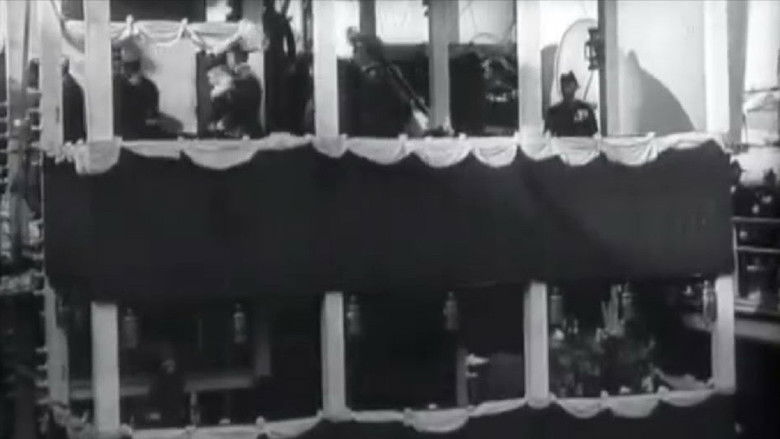
Sovereign Nicholas II, Alexandra Feodorovna and President Félix Faure, walking by, followed by their respective escorts.
A battalion, preceded by three riders and a military marching band, parades in front of the crowd. A man is manoeuvring a handcart bearing the inscription "Sunlight Soap" in the foreground.
Panorama film shot floating down the Seine.
Marquesas in their sedan chairs.
A crowd of spectators listen to President William McKinley's speech during his inauguration ceremony outside the U.S. Capitol in Washington, D.C.
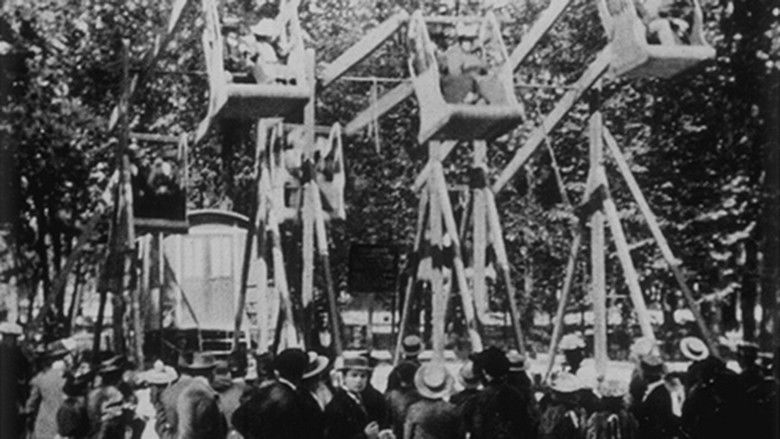
19th century carnival ride.