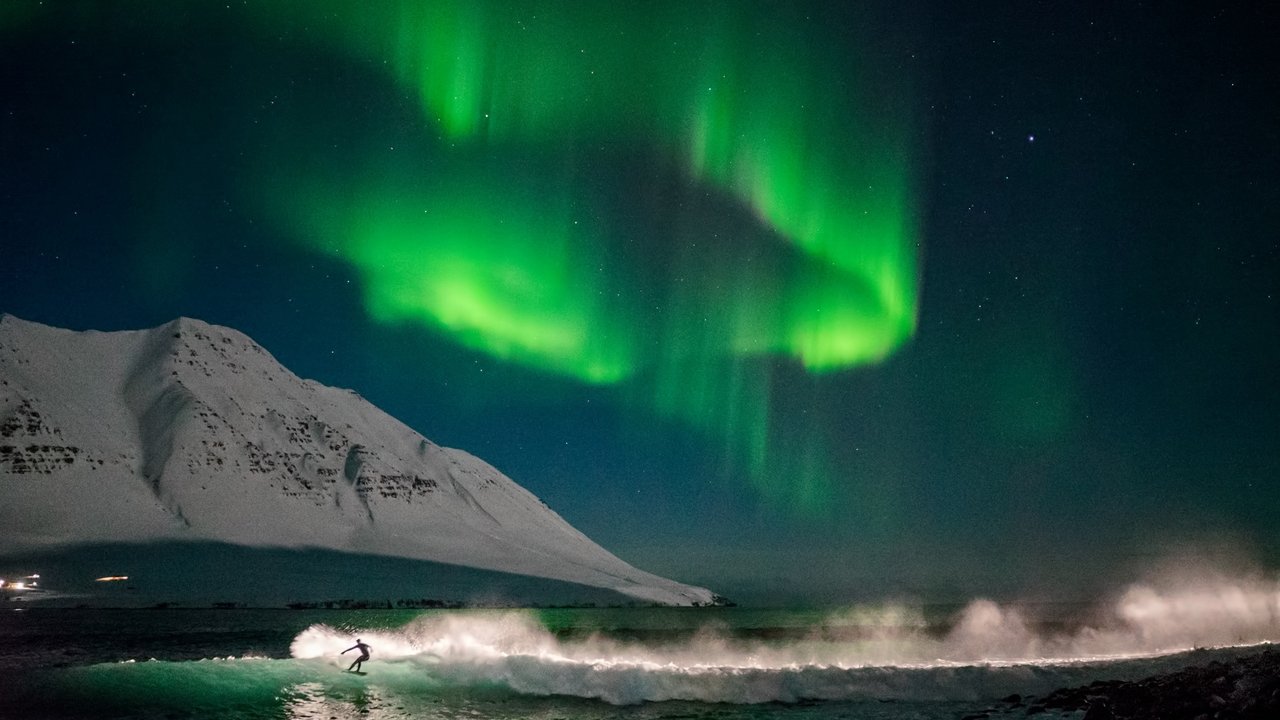
Under an Arctic Sky (2017)
Six fearless surfers travel to the north coast of Iceland to ride waves unlike anything they've ever experienced, captured with high-tech cameras.
Six fearless surfers travel to the north coast of Iceland to ride waves unlike anything they've ever experienced, captured with high-tech cameras.
 Chris BurkardHimself
 Sam Hammer
Schoolboy Hinata has a big crush on his classmate Shigure, but is too shy to tell her. On the day Shigure is leaving, Hinata flies off on the wings of a bird chasing after her to tell how he feels!
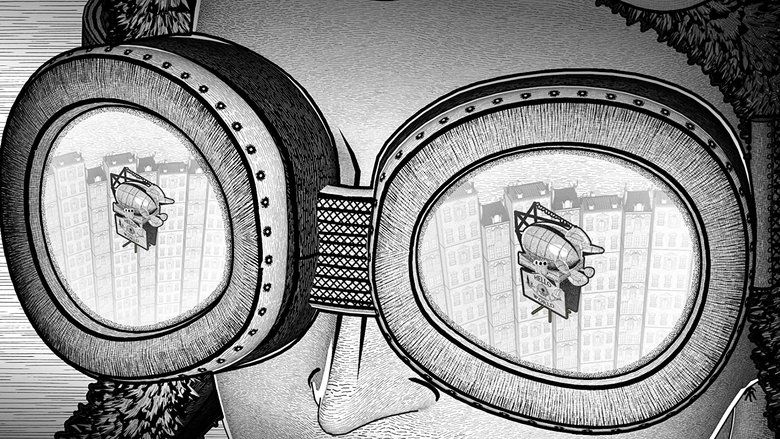
A pampered gentleman's seamlessly automated life is thrown into chaos when he pursues a free-spirited woman, against the advice of his robot butler.
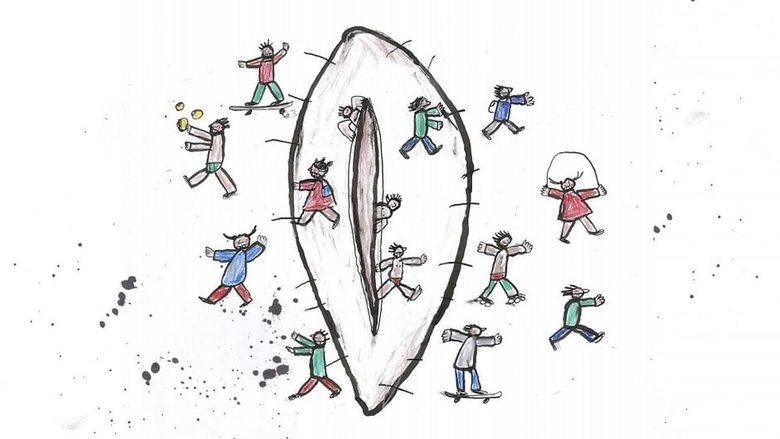
A trip into grandma's intimate life shows the status of Slovenian women in the first half of the 20th century.

Alva receives news from her long-lost husband, Russell, and goes to Africa in search of him. There, she finds that her husband is being "held prisoner" by a naked native princess, called Loma. Now, in order to bring Russell back home, Alva must show that she's better than the princess.

Set to a classic Duke Ellington recording "Daybreak Express", this is a five-minute short of the soon-to-be-demolished Third Avenue elevated subway station in New York City.

Rhys Day presents NO DIVIDE - a sticky mashup biopic/ videofeast.
The Dreamers (1985) is a posthumous short film assembled by Oja Kodar from unfinished footage directed by Orson Welles in 1982. Edited after Welles’s death, the film derives from fragmentary material intended for an uncompleted adaptation of stories by Isak Dinesen. The 1985 version represents an editorial assembly rather than a completed work authored by Welles, presenting selected footage in a reconstructed form for archival circulation. (Note: This is a posthumous editorial reconstruction. The original 1982 project exists separately as an unfinished Welles work and was never completed or released by him.)
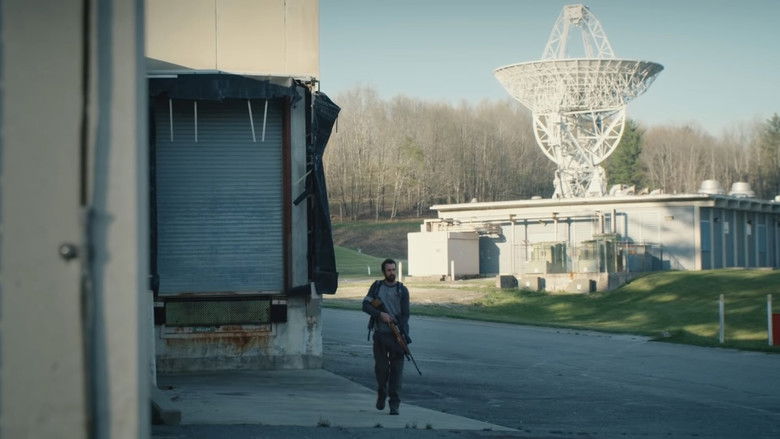
In a near-future post apocalyptic world, a father must cross a dangerous landscape to reunite with his wife and daughter.
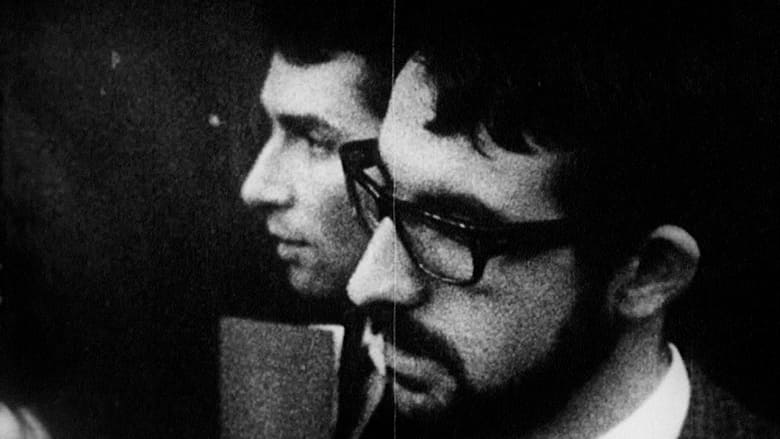
Spain, 1968. An analysis of the political and social situation of the country, suffocated by the boot of General Franco's tyrannical regime. (Filmed clandestinely in Madrid and Barcelona during the spring of 1968.)
In 1977, Prince Charles was inducted as honorary chief of the Blood Indians on their reserve in southwestern Alberta. The ceremony, conducted in the great Circle of the Sun Dance, commemorated the centennial anniversary of the original signing of Treaty 7 by Queen Victoria.
A short featurette available on the DVD for Once Upon a Time in Mexico (2003), released in January 2004.

Edwin’s Restaurant is determined to become one of America’s top French restaurants, with a staff unlike any other in the country. Brandon Edwin Chrostowski prepares to open his Cleveland, Ohio fine dining establishment with a staff composed nearly entirely of recently released prisoners in search of an opportunity to get their lives back on track. They sign up for a classical French food boot camp to learn the ins and outs of fine wine, sauces, and more.
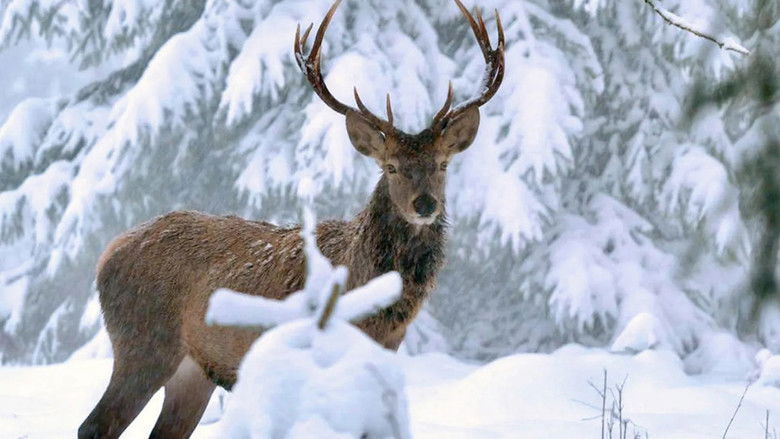
In southern Germany, winter can still be admired in all its glory every year. With its white coat of snow and icicles and myriads of small crystals that look like geometric works of art. In the valleys and on the slopes the snow is still so thick every year that the alpine huts are snowed in up to the windows. Cows and dairymen are safe in their farms at lower altitudes. But not the wild creatures of the mountains! They need strategies to survive the cold season and to defy snow masses, cold and ice. And some seem to do it so easily that they even raise their young in the middle of winter. But how do animals, plants and fungi cope with the annually recurring ice age, which from our perspective is a time of need? The many adaptations in nature prove that winter is an integral part of the natural cycle of the year and the living environment of species. They are adapted to cold and frost. That is why the animals and plants at the edge of the Alps suffer particularly from climate change!

A young autistic woman defies her doctor's prognosis of lifelong mutism and finds her voice through showing cats.

In Mashin Sentai Kiramager: Episode ZERO, a princess from the land of jewelry and Kirama Stones comes to Earth in search of people with a "shining spirit" called Kiramental, a source of outstanding charm and talent to transform them into heroes, the Kiramagers to fight the evil Yodon Army.
Experimental film of a trip around Iceland, filmed on the circular highway with a wide angle lens camera registering one frame every 12 seconds.

For 100 years, we have waged war on wildfire in the United States, and ironically, have created a more volatile landscape than ever.
Who is Jocky Wilson? 20 years ago every child in Kirkcaldy, on the east coast of Scotland, could answer this question. One of the best darts players ever, world champion in 1982 and 1989 - a national hero. But in '95 Jocky paid the price for his self destructive life style. In search of his myth, we follow the forces that shaped Jocky's hometown and its inhabitants as we discover lost memories of the man who once inspired the nation.
Documentary on the former border patrol sergeant Klein. Klein deserted in 1961, defected to the enemy and betrayed state and military secrets. He was caught by the security forces.
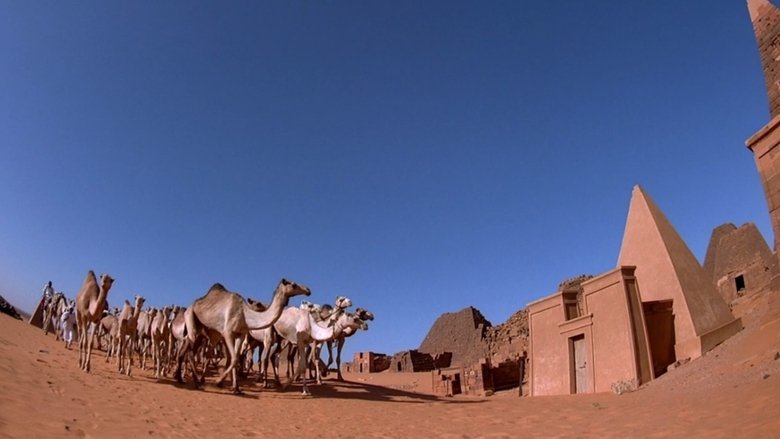
Filmed in IMAX, a team of explorers led by Pasquale Scaturro and Gordon Brown face seemingly insurmountable challenges as they make their way along all 3,260 miles of the world's longest and deadliest river to become the first in history to complete a full descent of the Blue Nile from source to sea.