
Helen of Troy (2005)
British historian Bettany Hughes tours the eastern Mediterranean in search of facts behind the legends of "the face that launched a thousand ships," exploring the ways Greeks made love and war circa 1300 B.C.
British historian Bettany Hughes tours the eastern Mediterranean in search of facts behind the legends of "the face that launched a thousand ships," exploring the ways Greeks made love and war circa 1300 B.C.
 Bettany HughesHerself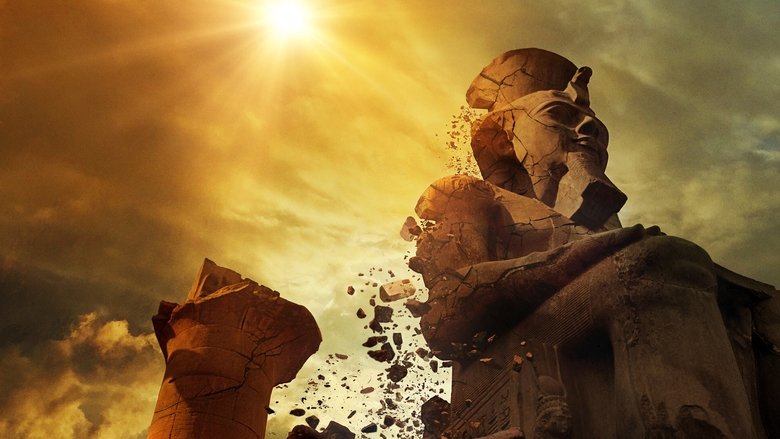
This explores the mysterious and catastrophic collapse of ancient civilizations during the late Bronze Age, from the Hittites to the Mycenaeans and the Egyptians, revealing the tumultuous events that brought an end to a thriving era of human history, and warns we may be facing similar threats today.

Alexander, the King of Macedonia, leads his legions against the giant Persian Empire. After defeating the Persians, he leads his army across the then known world, venturing farther than any westerner had ever gone, all the way to India.
Pheidippides, a brave soldier and messenger of ancient Athens, is ordered by the Athenian general, Miltiades, to run to Sparta and request aid to confront the Persian army led by King Darius the 1st, in the Battle of Marathon.
This is the true and astounding saga of the Spartans at Thermopylae. It is among the greatest tales of war ever recounted. All the glory and grit of these warriors' last stand is captured in this exceptional documentary. It is almost impossible to understand how 300 Spartans managed to hold off the million-man Persian army for even a moment, much less seven days. To a man they paid with their lives but their stunning Last Stand assured that their sacrifice would resonate throughout history. Transporting dramatizations and incisive graphics put you in the heat of the battle and show the lay of the land. The complications and strategies of the conflict are revealed through careful analysis, and critical moments are reconstructed to show exactly what happened. Discover what the Spartans were fighting for, what made them capable of such heroics and what drove them to such sacrifice.
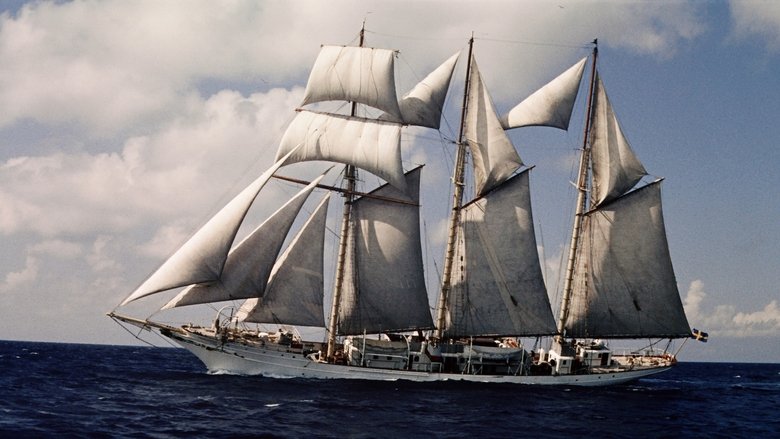
A 1962 West German documentary film directed by Hermann Leitner and Rudolf Nussgruber.
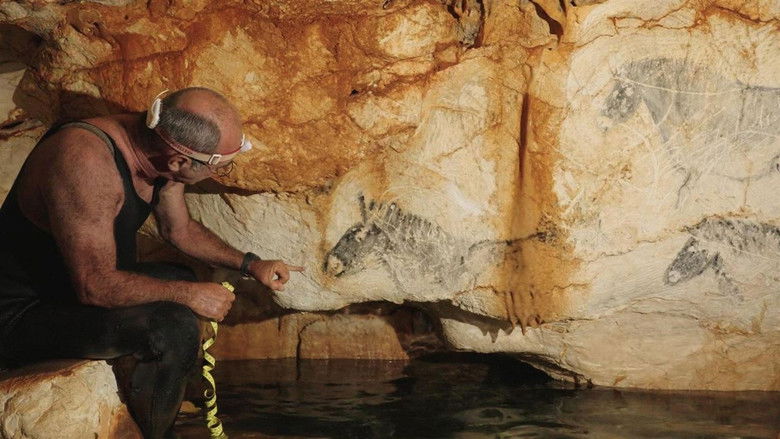
A short distance from Marseille, at Cape Morgiou, in the depths of the Calanques massif, lies the Cosquer cave, discovered only about thirty years ago by a diver, Henri Cosquer. With its bestiary of hundreds of paintings and engravings - horses, bison, jellyfish, penguins - the only underwater decorated cave in the world allows us to learn a little more about Mediterranean societies 30,000 years ago. Today, threatened by rising water levels accelerated by global warming, this jewel of the Upper Paleolithic is in danger of being swallowed up. To save the cave from disappearing, the Ministry of Culture has chosen to digitize it. From this virtual duplicate, a replica has been made on the surface to offer the public a reconstruction that allows them to admire these masterpieces.
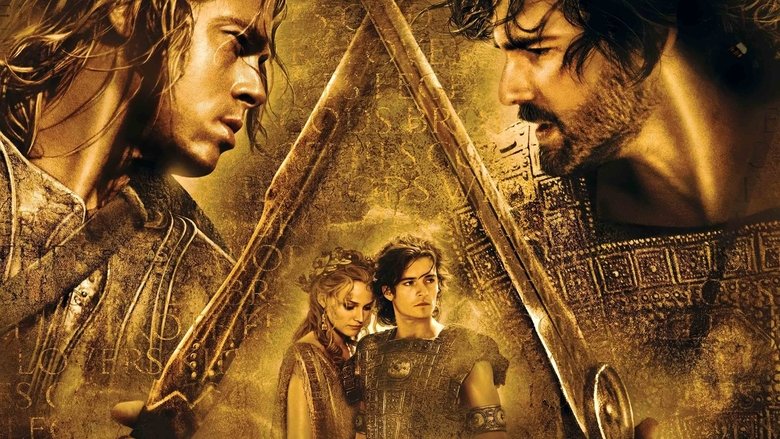
In year 1250 B.C. during the late Bronze age, two emerging nations begin to clash. Paris, the Trojan prince, convinces Helen, Queen of Sparta, to leave her husband Menelaus, and sail with him back to Troy. After Menelaus finds out that his wife was taken by the Trojans, he asks his brother Agamemnon to help him get her back. Agamemnon sees this as an opportunity for power. They set off with 1,000 ships holding 50,000 Greeks to Troy.
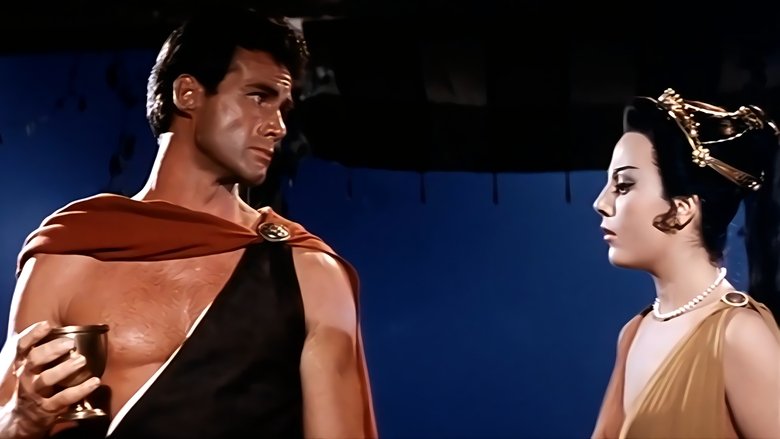
A Greek soldier leads the fight against an invading Persian army.
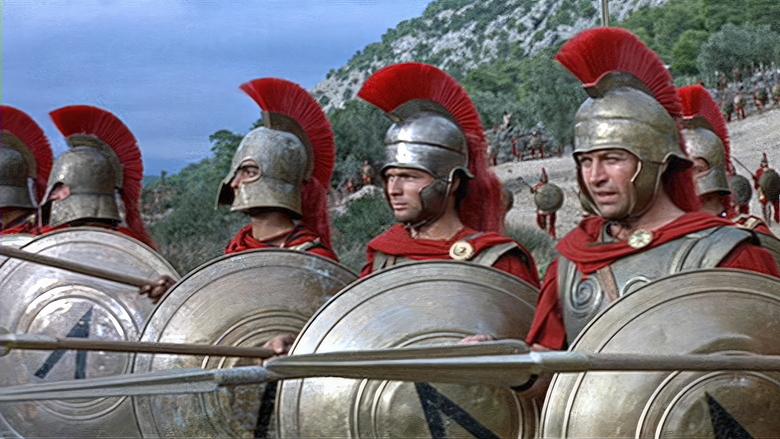
The 300 Spartans is an account of the 480 B.C. Battle of Thermopylae, in which the Greek Spartan King Leonidis, played by Richard Egan, led a remarkably small number of Greek Sparta to victory over an invading Persian army led by evil King Xerxes that was thought to number over 25,000. This spectacular conflict gave the Grecians enough time to organize a force to ultimately repel the Persians, and thus change the course of Western civilization.
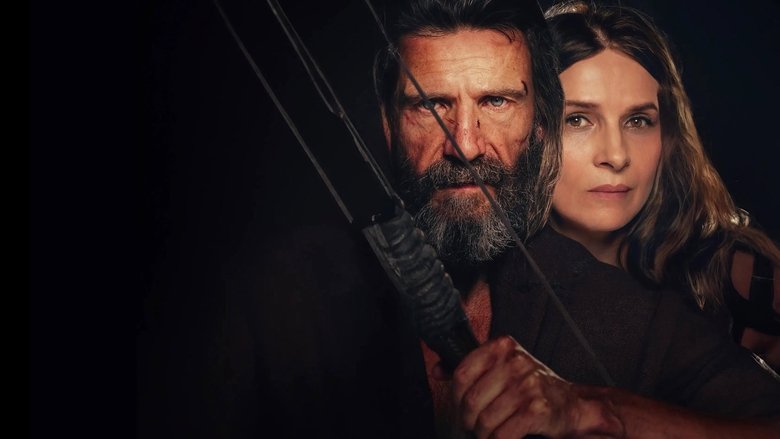
After twenty years away, Odysseus washes up on the shores of Ithaca, haggard and unrecognizable. The king has finally returned home, but much has changed in his kingdom since he left to fight in the Trojan war.
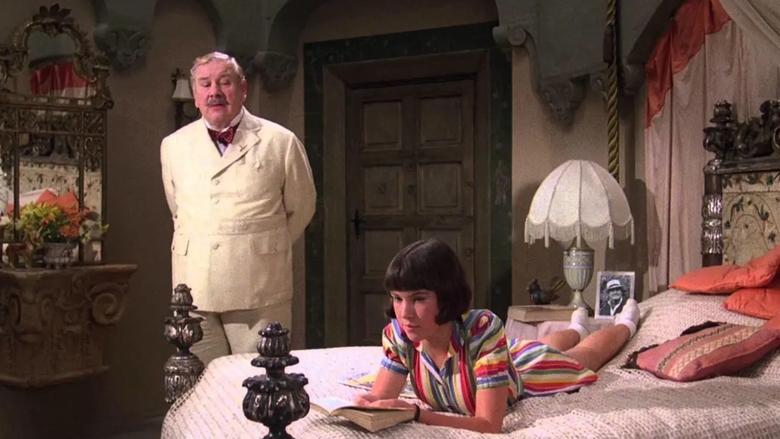
Director Guy Hamilton and several of the stars of Agatha Christie's "Evil Under The Sun" walk you through the making of the film.
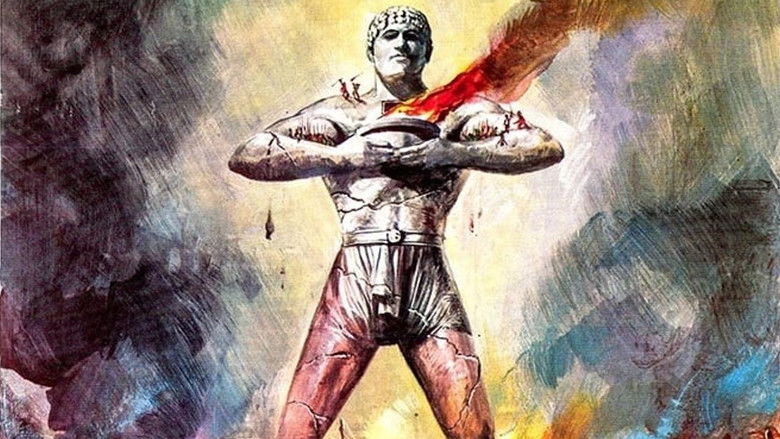
While on holiday in Rhodes, Athenian war hero Darios becomes involved in two different plots to overthrow the tyrannical king, one from Rhodian patriots and the other from sinister Phoenician agents.
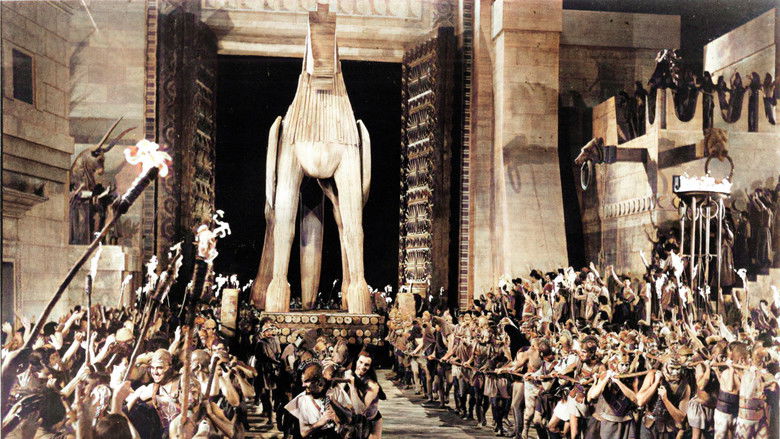
Prince Paris of Troy, shipwrecked on a mission to the king of Sparta, meets and falls for Queen Helen before he knows who she is. Rudely received by the royal Greeks, he must flee...but fate and their mutual passions lead him to take Helen along. This gives the Greeks just the excuse they need for much-desired war.
Over twenty-five hundred years ago, the ancient citizens of Athens, Greece built the most magnificent temples that mankind has ever been inspired to create. These towering shrines, shrouded with unworldly spirits, were home to mysterious cults that performed bold sacrifices and evoked unspeakable wonders. And yet, from the citadel of the Acropolis came the very hallmarks of civilization, ideas that remain today the highest testament to the nobility of man -- democracy, science, philosophy and theatre. Through stunning film, interviews with experts and vivid reenactments, you'll explore the haunting mysteries that still lie buried in the mystical world of Ancient Greece.
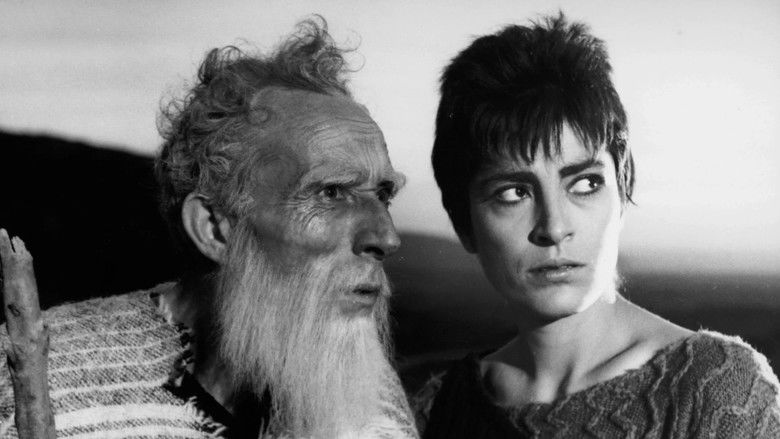
Living in exile after the death of their father, the grown children of a murdered and usurped king converge to exact eye-for-an-eye revenge.
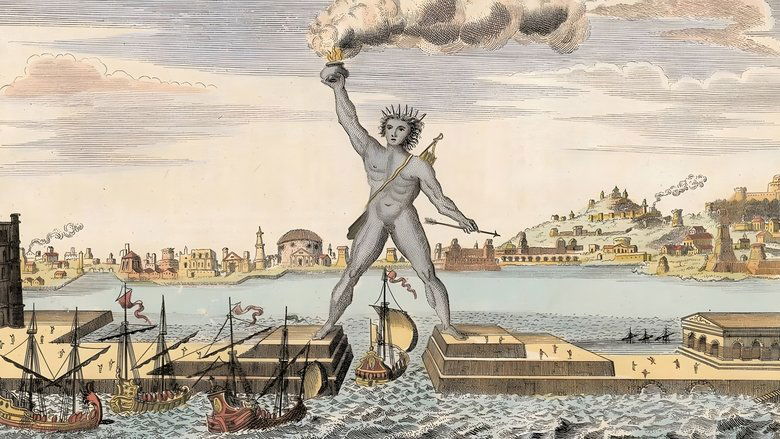
This program presents the stories of the works of architecture regarded by the Greeks and Romans as the most extraordinary structures of antiquity: the Hanging Gardens of Babylon, The Statute Of Zeus, the Temple of Artemis, the Mausoleum of Halicarnassus, the Pharos of Alexandria and the Pyramids of Egypt and more.