
Paris ou l’utopie perdue (2018)
A look at contemporary Paris through the lens of theories and ideologies of the past two centuries, with a particular focus on the utopian socialist ideas of Charles Fourier.
A look at contemporary Paris through the lens of theories and ideologies of the past two centuries, with a particular focus on the utopian socialist ideas of Charles Fourier.
Simone Debout-OleszkiewiczSelfAlanis Obomsawin’s documentary The People of the Kattawapiskak River exposes the housing crisis faced by 1,700 Cree in Northern Ontario, a situation that led Attawapiskat’s band chief, Theresa Spence, to ask the Canadian Red Cross for help. With the Idle No More movement making front page headlines, this film provides background and context for one aspect of the growing crisis.

When a Mongolian nomadic family's newest camel colt is rejected by its mother, a musician is needed for a ritual to change her mind.
A dual portrait of young drifters on the streets of Odessa, where every day seems the same and the future keeps getting further away.
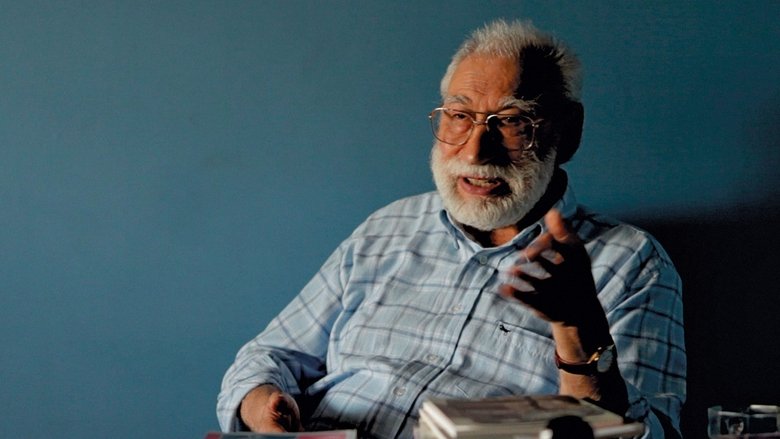
He was the most prolific within the New Portuguese Cinema generation. He would try western spaghetti, esoteric allegory, supernatural, and science-fiction. Without state subsidies, he would quit filmmaking in the 1990s. Who remembers António de Macedo?

The mavericks who pioneered the modern pit stop made it a raceday staple that takes less than two seconds.

Dan Snow, Dr Alice Roberts and Dr Albert Lin investigate a series of earth-shattering discoveries at a mighty tomb guarded by the Terracotta Warriors in China.
"A Long Journey" tells the story of three siblings who reach adolescence in the late 1960's. The documentary's storyline follows the youngest brother's travels around the world. Worried that he would enter the struggle for freedom against the Brazilian dictatorship, his family sent Heitor to London. There however, he dives head on into the "Swinging London" and, just like the European and American youth of the time period, he experiments with drugs and the mystic allure of India. In the nine years he has traveled around the world, from 1969 to 1978, he has regularly written to his family. The documentary features interviews with Heitor today, his letters and off-screen comments of Heitor's sister, Lúcia Murat, the director of the movie.
Richard Feynman was a scientific genius with - in his words - a "limited intelligence". This dichotomy is just one of the characteristics that made him a fascinating subject. The Pleasure of Finding Things Out exposes us to many more of these intriguing attributes by featuring an extensive conversation with the acclaimed Nobel Prize winner. During the course of the interview, which was conducted in 1981, Feynman uses the undeniable power of the personal to convey otherwise challenging scientific theories. His colorful and lucid stories make abstract concepts tangible, and his warm presence is sure to inspire interest and awe from even the most reluctant student of science. His insights are profound, but his delivery is anything but dry and ostentatious.

In 1953 the Canadian government relocated Inuit families from Northern Québec to the High Arctic, promising an abundance of game and fish and assuring them they could return home after two years if things didn't work out. They would not see their ancestral lands for 30 years. Abandoned in flimsy tents, the Inuit were left to fend for themselves in the desolate settlements of Resolute Bay and Grise Fiord, where the sea was nearly always frozen and darkness reigned for months on end.
Handbook of Movie Theaters’ History is a documentary about the history, the development in the present days and the future of movie theaters in the city of Turin, Italy. It mixes the documentary language with comedy and fiction, and is enriched by interviews to some of the most important voices of Turin cinematography. The film follows the evolution of movie theaters by enlightening its main milestones: the pre-cinema experiences in the late 19th Century, the colossals and the movie cathedrals of the silent era, the arthouse theaters, the National Museum of Cinema, the Torino Film Festival, the movie theaters system today and the main hypothesis about its future.
Investigates the central ideas of Marshall McLuhan using pictorial techniques and including his own comments. Examines the reaction of others to his views and points out that his interest is the impact of electronic technology on the contemporary world.

According to the U.S. Department of Veterans Affairs, one veteran dies by suicide in America every 80 minutes. While only 1% of Americans has served in the military, former service members account for 20% of all suicides in the U.S. Based in Canandaigua, NY and open 24 hours a day, 365 days a year, the Veterans Crisis Line receives more than 22,000 calls each month from veterans of all conflicts who are struggling or contemplating suicide. This timely documentary spotlights the traumas endured by America’s veterans, as seen through the work of the hotline’s trained responders. CRISIS HOTLINE captures extremely private moments, where the professionals, many of whom are themselves veterans or veterans’ spouses, can often interrupt the thoughts and plans of suicidal callers to steer them out of crisis.
In a slum in Chennai, India, a young mother of two, wants to sell her kidney so she can pay off the crippling debts of her family. If she sells Hema will be the fifth member of her family to sell a kidney for an amount that represents several years' wages. Across the world in Nanaimo, Canada, forty year old single mom Sandra's kidneys are failing and she has been on a waiting list for 5 years now. Two different people. Two journeys.
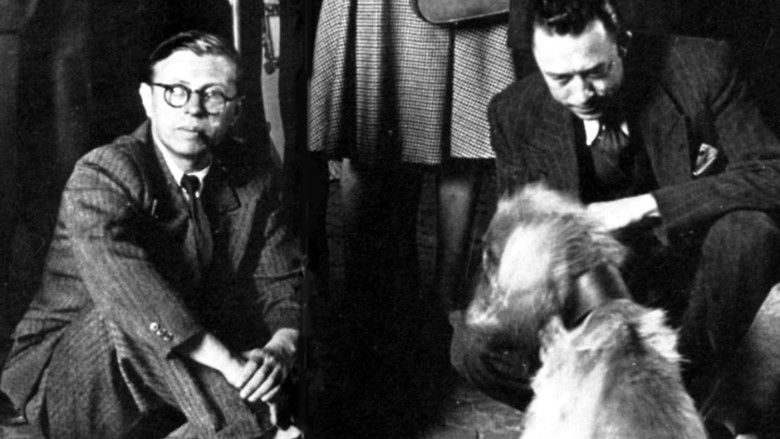
Sartre and Camus, the two most world-famous, 20th century, French writers, form a legendary and inseparable couple. The two extraordinary thinkers propelled the figure of the politically engaged writer into the limelight.
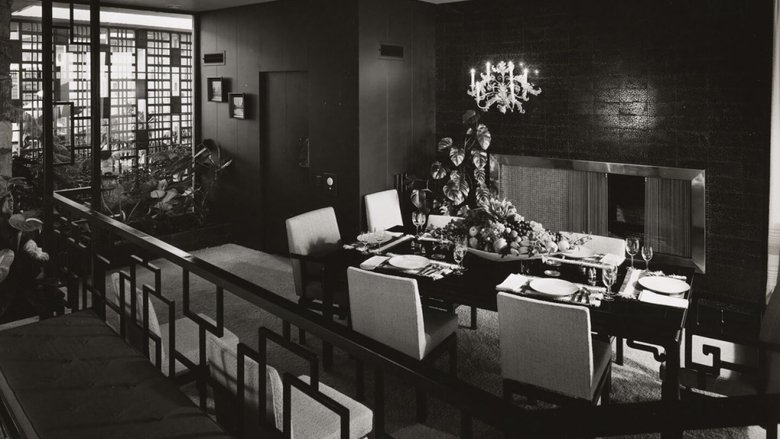
Nicknamed “Architect to the Stars,” African American architect Paul R. Williams had an incredible life. Orphaned at the age of four, Williams grew up to build mansions for movie stars and millionaires in Southern California. From the early 1920s until his retirement 50 years later, Williams was one of the most successful architects in the country. His clients included Frank Sinatra, Cary Grant, Barbara Stanwyck, William Holden, Lucille Ball and Desi Arnaz. His name is associated with icons like the Beverly Hills Hotel, the original MCA Headquarters Building and LAX Airport. But at the height of his career Paul Williams wasn’t always welcome in the restaurants and hotels he designed or the neighborhoods where he built homes, because of his race. “Hollywood’s Architect: The Paul R. Williams Story” tells the compelling, but little known story, of how he used talent and perseverance to beat the odds and create a body of work that can be found from coast to coast.
The construction of the Obelisco in Buenos Aires, Argentina.
A documentary portrait of the city of Memleben in Saxony-Anhalt, counterpointing ancient medieval history and contemporary industrial reality.
A history of Bucharest, as seen in the light of the totalitarian architecture, having as leading idea the reality that the Power always exposes its purposes through architecture. After five decades of communism, the reality on thee Dark Ages is still waiting to be revealed, and architecture is one of the most obvious embodiments of the ideology to whom it was builtÉ It is not a movie about faults or about guilty peoples, but about official edifices of thee communist Romania and their story.
Inspired by Catholic social teaching, Cesar Chavez risked his life fighting for America’s poorest workers. The film illuminates the intensity of one man’s devotion and personal sacrifice, the birth of an economic justice movement, and tells an untold chapter in the story of civil rights in America.
E-Team is driven by the high-stakes investigative work of four intrepid human rights workers, offering a rare look at their lives at home and their dramatic work in the field.