Top billed cast
 Benjamin StoraSelf
 Rabah ZanounSelf
Similar to Le Choix de mon père
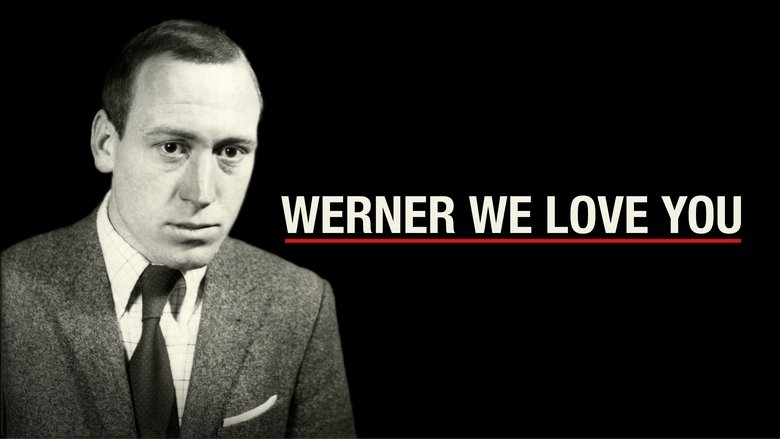
Werner We Love You (2017)
When Werner Herzog was still a child, his father was beaten to death before his eyes. His mother was overwhelmed with his upbringing and thereupon shipped him off to one of the toughest youth welfare institutions in Freistatt. This was followed by a career as a bouncer in the city's most notorious music club and an attempt to start a family. Today, the 77-year-old from Bielefeld lives with his dog Lucky in a lonely house in the country. Despite adverse living conditions, he has survived in his own unique and inimitable way.

Deborah Stratman to Nancy Holt: For the Time Being (2021)
A video letter to Nancy Holt, made in homage to a shared interest in terminal lakes, framed views, monuments and time. Filmed on and around the Great Salt Lake, Mono Lake and Meteor Crater.
Barluschke (1998)
The documentary relates how in the second half of the 20th century the agent Berthold Barluschke was first a henchman of the State Security Service of the GDR and then of the West German Federal Intelligence Service.
Die Markus Family (2001)
This film tells the story of Markus Anatol Weisse, who, astonishingly enough, became an artist, in spite of being only very partially sighted. Markus also builds strange machine-like beings and wishes that he himself were a biological robot, or cyborg.
Oscar (2016)
Brilliantly mixing animated sequences and archival footage, Marie-Josée Saint-Pierre paints a touching portrait of virtuoso pianist Oscar Peterson.
Kubota (1982)
A film featuring architect, sculptor, and musician Nobuo Kubota in a sound-sculpture performance. From within a cage-like structure filled with traditional musical instruments and sound-making devices fashioned from ordinary objects and toys, Kubota creates an aural/visual montage of musical notes and noises. Praised by music educators as a valuable tool for teaching creativity in sound exploration and musical innovation, the film reveals the infinite percussion possibilities of simple objects and presents a portrait of a versatile performer whose imagination has led him far beyond the confines of conventional music. Directed by Jonny Silver - 1982 | 20 min
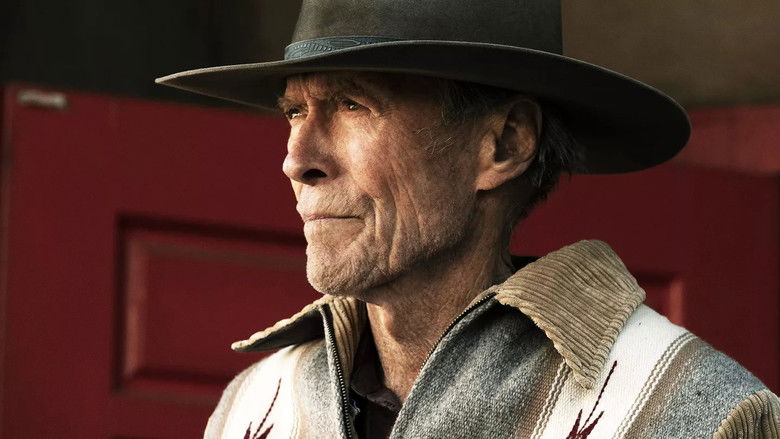
Clint Eastwood : la légende (2025)
Clint Eastwood made his mark on cinema by abandoning violent action films to turn his attention, behind the camera, to more substantial productions that were praised by critics.

Der Glanz von Berlin (2002)
Documentary about three Berlin cleaning ladies, their lives and their shattered dreams. The directors succeed in gaining deep insights into German reality, which the three women candidly reveal. Bourgeoisie, orderliness and an addiction to harmony come to the fore as well as a touching kindness and everyday wisdom.
Augusta (1976)
This short documentary is the portrait of an 88-year-old woman who lives alone in a log cabin without running water or electricity in the Williams Lake area of British Columbia. The daughter of a Shuswap chief, Augusta lost her Indian status as the result of a marriage to a white man. She recalls past times, but lives very much in the present. Self-sufficient, dedicated to her people, she spreads warmth wherever she moves, with her songs and her harmonica.
In Mansourah You Separated Us (2019)
Originally there was a silence. That of Malek, the filmmaker’s father, who for years said nothing of his childhood in Algeria. And then, the need to break the silence, with a script that he gives to his children, to start telling his story. Several years later, the father and daughter finally make the journey to Mansourah, his native village: seeing his house, meeting other men who experienced the same heartbreak. Little by little, the film reveals what Malek, like many others, has long kept quiet about.
Sylvia Kristel – Paris (2003)
Sylvia Kristel – Paris is a portrait of Sylvia Kristel , best known for her role in the 1970’s erotic cult classic Emmanuelle, as well as a film about the impossibility of memory in relation to biography. Between November 2000 and June 2002 Manon de Boer recorded the stories and memories of Kristel. At each recording session she asked her to speak about a city where Kristel has lived: Paris, Los Angeles, Brussels or Amsterdam; over the two years she spoke on several occasions about the same city. At first glance the collection of stories appears to make up a sort of biography, but over time it shows the impossibility of biography: the impossibility of ‘plotting’ somebody’s life as a coherent narrative.
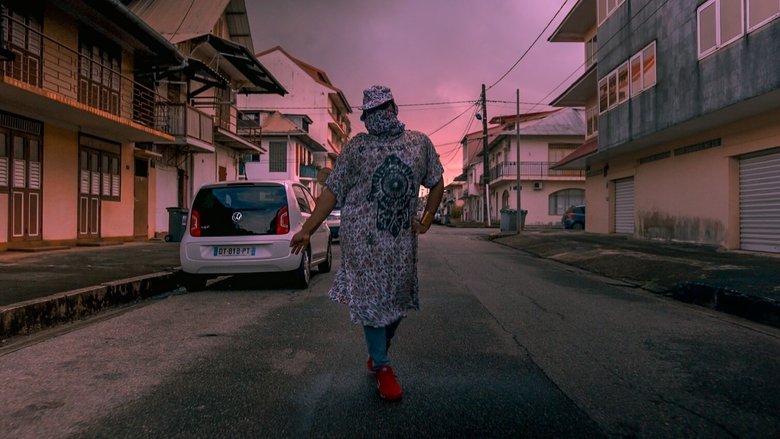
Fabulous (2019)
Ninja is famous around the world for her fierce ballroom performances, but she is not as well-known in her native country of French Guyana. But a trip home to teach a workshop might change that.
The Man Who Made Angels Fly (2013)
When the lights dim and the stage is revealed, Meschke channels life through the strings of his puppets, triggering the spiritual connection between the creator and his alter-egos: the charismatic Don Quixote, the loving Penelope, the inquisitive Baptiste, or the mysterious Antigone. THE MAN WHO MADE ANGELS FLY is a poetic story about a master of his craft that has inspired audiences to reflect upon common issues of suffering and the mortal coil. Visionary and un-biographic, imaginary tribute to the puppeteer.
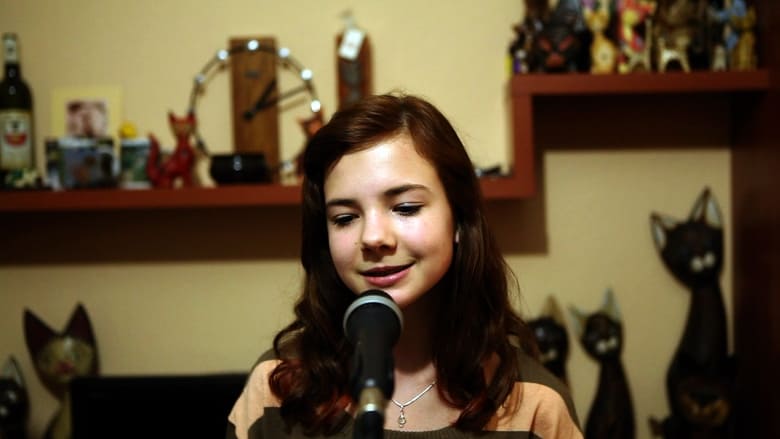
Show! (2013)
A surprisingly intimate portrait of how the dream of running one’s own business can take on monstrous contours. Managed by the father of one of the singers, over the course of five years the girl band 5Angels had reached the gates of pop fame. But it is a path paved not only with the songs of Michal David, but also with the dogged determination of a man who loses any notion of where his role as manager ends and his role as parent begins. An emotionally moved Karel Gott, five angelic girls, and one overly involved father, thanks to whom the behind-the-scenes pre-Christmas atmosphere melts away just as rapidly as the fat should disappear from the belly. “A singer can’t be a lard bucket!”
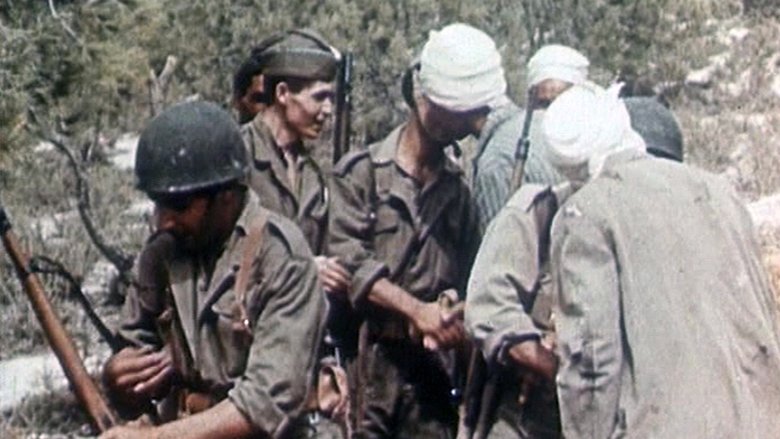
Algeria in Flames (1958)
These are the first images shot in the ALN maquis, camera in hand, at the end of 1956 and in 1957. These war images taken in the Aurès-Nementchas are intended to be the basis of a dialogue between French and Algerians for peace in Algeria, by demonstrating the existence of an armed organization close to the people. Three versions of Algeria in Flames are produced: French, German and Arabic. From the end of the editing, the film circulates without any cuts throughout the world, except in France where the first screening takes place in the occupied Sorbonne in 1968. Certain images of the film have circulated and are found in films, in particular Algerian films. Because of the excitement caused by this film, he was forced to go into hiding for 25 months. After the declaration of independence, he founded the first Algerian Audiovisual Center.
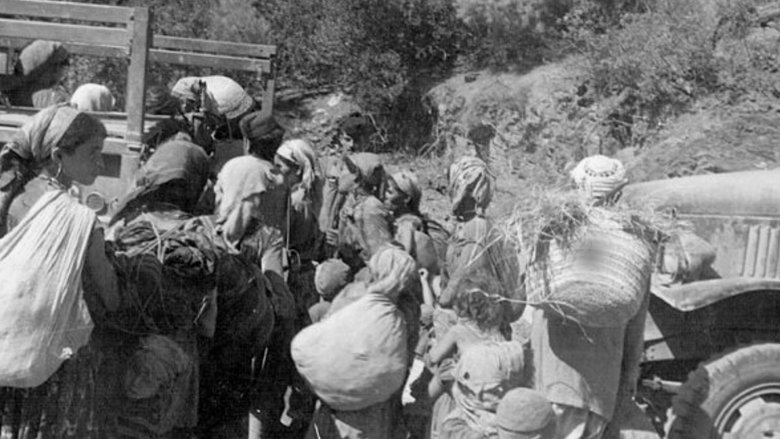
Algerian Refugees (1958)
Directed by Pierre Clément and Djamel-Eddine Chanderli, produced by the FLN Information Service in 1958, this film is a rare document. Pierre Clément is considered one of the founders of Algerian cinema. In this film he shows images of Algerian refugee camps in Tunisia and their living conditions. A restored DVD version released in 2016, from the 35 mm original donated by Pierre Clément to the Contemporary International Documentation Library (BDIC).
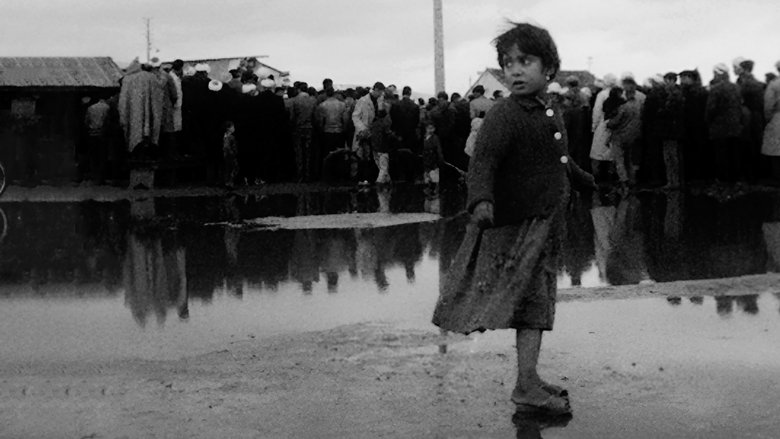
Algeria, Year Zero (1965)
Documentary on the beginnings of Algerian independence filmed during the summer of 1962 in Algiers. The film was banned in France and Algeria but won the Grand Prize at the Leipzig International Film Festival in 1965. Out of friendship, the production company Images de France sent an operator, Bruno Muel, who later declared: "For those who were called to Algeria (for me, 1956-58), participating in a film on independence was a victory over horror, lies and absurdity. It was also the beginning of my commitment to the cinema."
Stop for Bud (1963)
Stop for Bud is Jørgen Leth's first film and the first in his long collaboration with Ole John. […] they wanted to "blow up cinematic conventions and invent cinematic language from scratch". The jazz pianist Bud Powell moves around Copenhagen -- through King's Garden, along the quay at Kalkbrænderihavnen, across a waste dump. […] Bud is alone, accompanied only by his music. […] Image and sound are two different things -- that's Leth's and John's principle. Dexter Gordon, the narrator, tells stories about Powell's famous left hand. In an obituary for Powell, dated 3 August 1966, Leth wrote: "He quite willingly, or better still, unresistingly, mechanically, let himself be directed. The film attempts to depict his strange duality about his surroundings. His touch on the keys was like he was burning his fingers -- that's what it looked like, and that's how it sounded. But outside his playing, and often right in the middle of it, too, he was simply gone, not there."
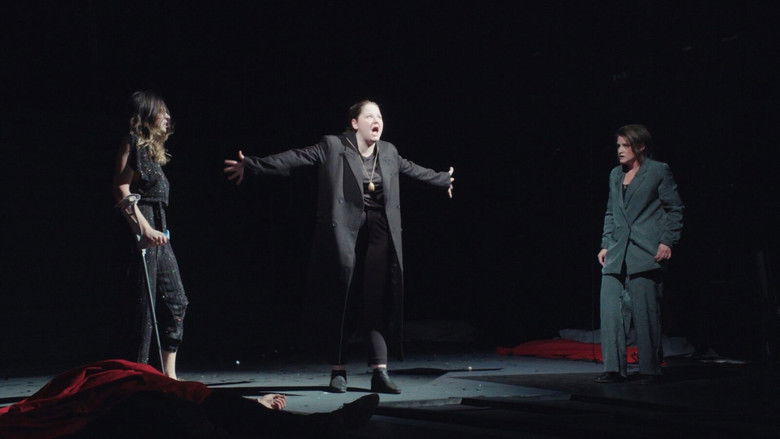
Rue du Conservatoire (2024)
In 1996 I took the conservatory exam. I missed it. A year ago I was asked to do a masterclass on acting in cinema. I went there. I met a lively, joyful and passionate youth. Among my students there was Clémence. The following year, she asked me to film their last show. I felt her urgency and the fear she had of leaving this mythical place. So I accepted. By filming this youth, I revisited mine.